
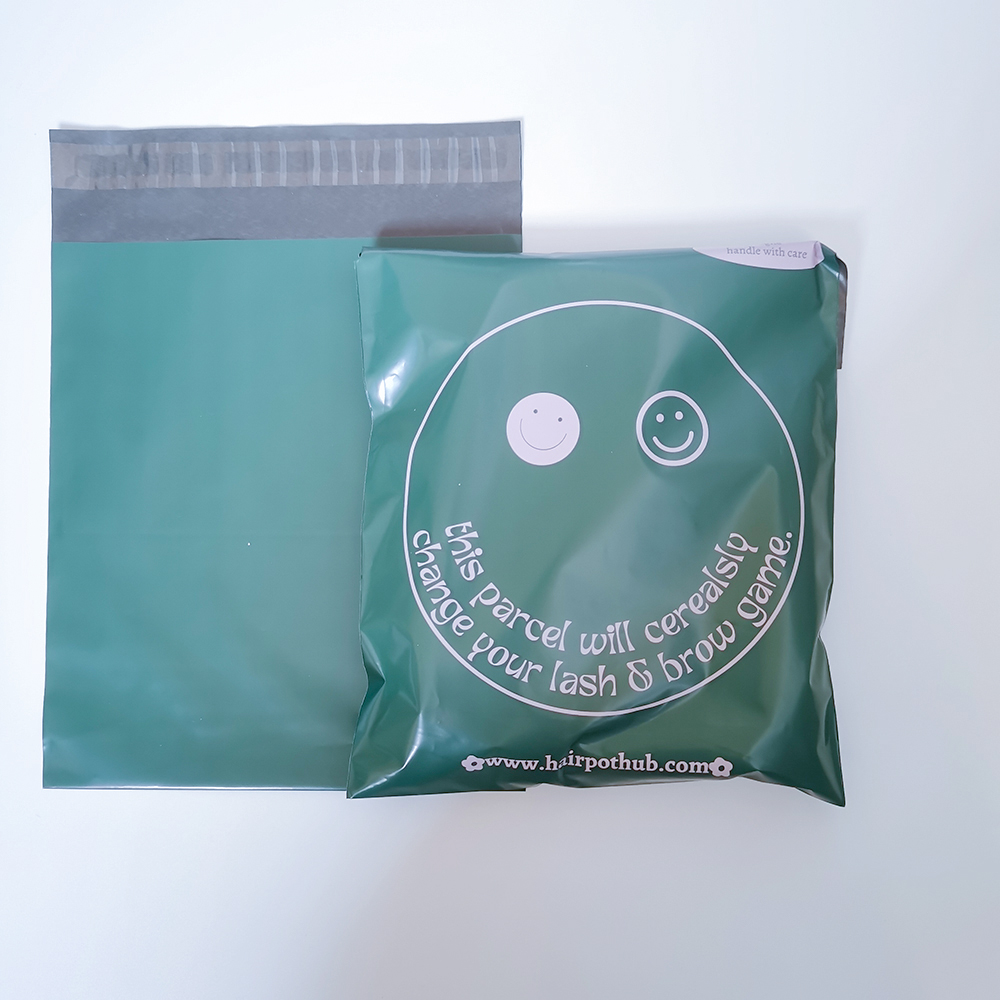
The looming problem brands rarely admit
Packaging promises a product’s first moment with the customer — and when poly mailers print poorly or remain translucent, that promise breaks. Retailers and DTC brands increasingly complain about mottled ink, ghosting, and the thin veil of translucency that exposes contents and cheapens presentation. The problem worsened as e-commerce volumes spiked during the 2020 pandemic-driven supply-chain disruptions, when speed beat refinement and many suppliers cut corners. For brands moving into functional features — like integrated handles — these failures compound. See how suppliers of poly mailers with handles can either protect your brand or erode it.
Why blown film extrusion matters (and where it breaks)
At its core, blown film extrusion defines the film’s structure: melt, bubble, cooling, and winding. Variations in extrusion parameters change opacity, print receptive surface, and mechanical strength. Yet many small converters treat the process like a commodity — a set-and-forget run — rather than a tuned system. That negligence shows up as poor ink adhesion, patchy varnish uptake, and inconsistent opacity. For apparel brands shipping premium garments, this is not a trivial cosmetic fail; it’s a tangible loss of perceived value. For those shipping via specialty options like custom apparel shipping bags, film performance is the difference between upscale delivery and disappointment.
How modern extrusion lines are closing the gap
Newer blown film lines bring tighter process controls and integrated surface treatments. Key upgrades include more precise die lips, closed-loop temperature control, and in-line corona or plasma treatment to increase surface energy — which directly improves ink adhesion. Layering strategies, using coextruded skins with higher-opacity masterbatch, can hide silhouettes without heavy grammage. These are not just marginal gains; when applied consistently, they turn fragile-looking wrappers into confident brand carriers. The difference is technical, yes, but visible at the moment a customer tears one open.
Key process levers that actually move the needle
Manufacturers who understand the problem focus on a handful of levers:
- Blown film extrusion control: stabilizing melt flow and bubble parameters to avoid gauge bands and variation.
- Surface treatment: corona or plasma to raise surface energy before printing, improving ink wetting and adhesion.
- Masterbatch formulation: using opacifying pigments or voided layers to reach target opacity without excess thickness.
These terms — blown film extrusion, opacity, ink adhesion — may sound clinical, but they translate into something very human: how your packaging feels and what it says when it arrives. Remember, technical fidelity matters more when you scale; small inconsistencies amplify into visible defects.
Common mistakes brands and converters make
Many errors repeat with alarming regularity. Brands specify a printable finish without confirming corona treatment levels. Converters quote low GSM films but neglect to test ink adhesion under real-world flex and fold. Others assume opacity will increase with thicker film — sometimes true, sometimes not if the formulation is wrong. A frequent oversight: not running pre-production prints on the actual film batch using your actual ink set. That step costs time, but it saves catastrophic reworks and returns. —
Alternatives and trade-offs worth considering
If blown-film upgrades are out of budget, there are workarounds with trade-offs. Metallized films boost opacity but add cost and recycling complexity. Lamination overprinting layers can hide prints, yet they increase weight and alter hand-feel. Switching resin types (e.g., to blends with higher intrinsic opacity) can help, but requires requalification for seal integrity and environmental claims. Each choice carries implications for sustainability, cost, and runnability on your filling lines.
Three golden rules when choosing materials and partners
To avoid costly missteps, evaluate suppliers against three hard metrics:
- Process Transparency: ask for extrusion parameters, surface treatment specs, and first-article test reports.
- Verified Print Trials: require signed print trials with your inks and printing press conditions before full production.
- End-to-End Costing: include tooling, rework, freight risk, and recycling requirements in your price comparisons.
These rules steer decisions away from the cheapest quote and toward reliable outcomes — which is what your customers will judge you on.
Bringing it back to real-world stakes
When a shipment arrives with poor print and thin film, it’s not only a packaging problem — it’s a brand crisis that touches customer retention, return rates, and social proof. The lessons from 2020’s logistics shock still apply: resilience requires both better process control and stronger vendor partnerships. For brands that want predictable quality at scale, the value sits with partners that invest in modern extrusion lines, measured surface treatment, and rigorous print validation.
Advisory: three critical evaluation metrics
When you evaluate suppliers or consider upgrades, score them on these three metrics:
- Adherence Rate: percentage of runs meeting the specified opacity and adhesion targets without rework.
- Treatment Consistency: documentary proof of corona/plasma energy levels and how they’re monitored.
- Sustainability Reconciliation: whether opacity/additives conflict with your recycling or compostability claims.
Make these non-negotiables in your RFP and your contract; they separate reactive vendors from strategic partners.
In practice, a trusted supplier that aligns process controls with your brand rules — and demonstrates them with data and samples — solves the problem at scale. WH Packing fits that pattern, delivering technical oversight and validated production that preserves brand intent on arrival. Small changes. Big difference.