
The problem: what poor air feels like in a house
There is a quiet chemistry to a home—moisture pooling at grout lines, a stubborn mildew scent after a shower, windows beading with condensation—that tells you the air is failing. This is a problem-driven map: if you ignore these cues, paint will peel, allergens will nest, and energy bills will climb. Start by focusing on the room that most often betrays indoor air imbalance: the bathroom. A well-chosen bathroom exhaust fan is not a single appliance but a remedy, a way to pull damp breath out of your walls and send it away cleanly. The U.S. Environmental Protection Agency notes that Americans spend roughly 90% of their time indoors, so those bathroom breaths matter to overall household health—this is our real-world anchor.
Listen first: how to audit your bathroom’s air quality
Begin like a quiet investigator. Observe for visible mold, sticky mirrors, or lingering odors after a full airing. Measure by stages: a simple hygrometer will reveal humidity swings; a short smoke test (a candle or an incense stick) can show airflow direction and whether your fan is moving air through the ductwork or simply stirring the room. Record temperature and relative humidity across a few days—if the bathroom frequently sits above 60% RH after active use, you’re in the danger zone for mold and structural decay. Keep this fact in mind while you act: ventilation is prevention, not an afterthought.
Numbers that matter and a few industry terms
The core specifications that separate a token fan from a solution are straightforward. Look for adequate CFM for your bathroom size (more for large tubs or steam showers), low sone ratings for acceptable noise, and integrated humidity sensors for automatic response. Consider whether your home’s duct run is long or has sharp bends—those increase resistance and reduce delivered airflow. These terms—CFM, sone, humidity sensor—are tools that help you match the problem to the technology.
Why choose an intelligent fan‑with‑light system
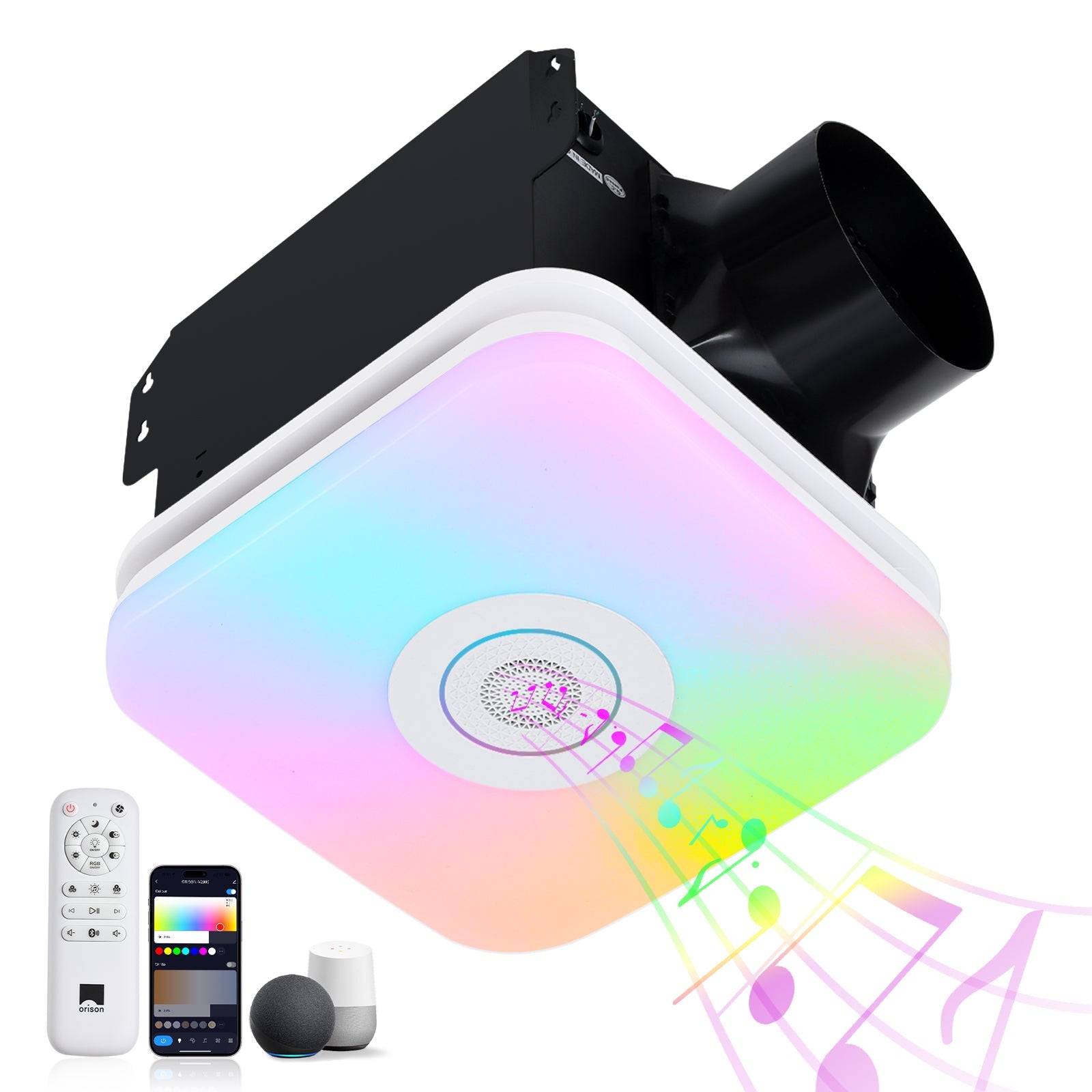
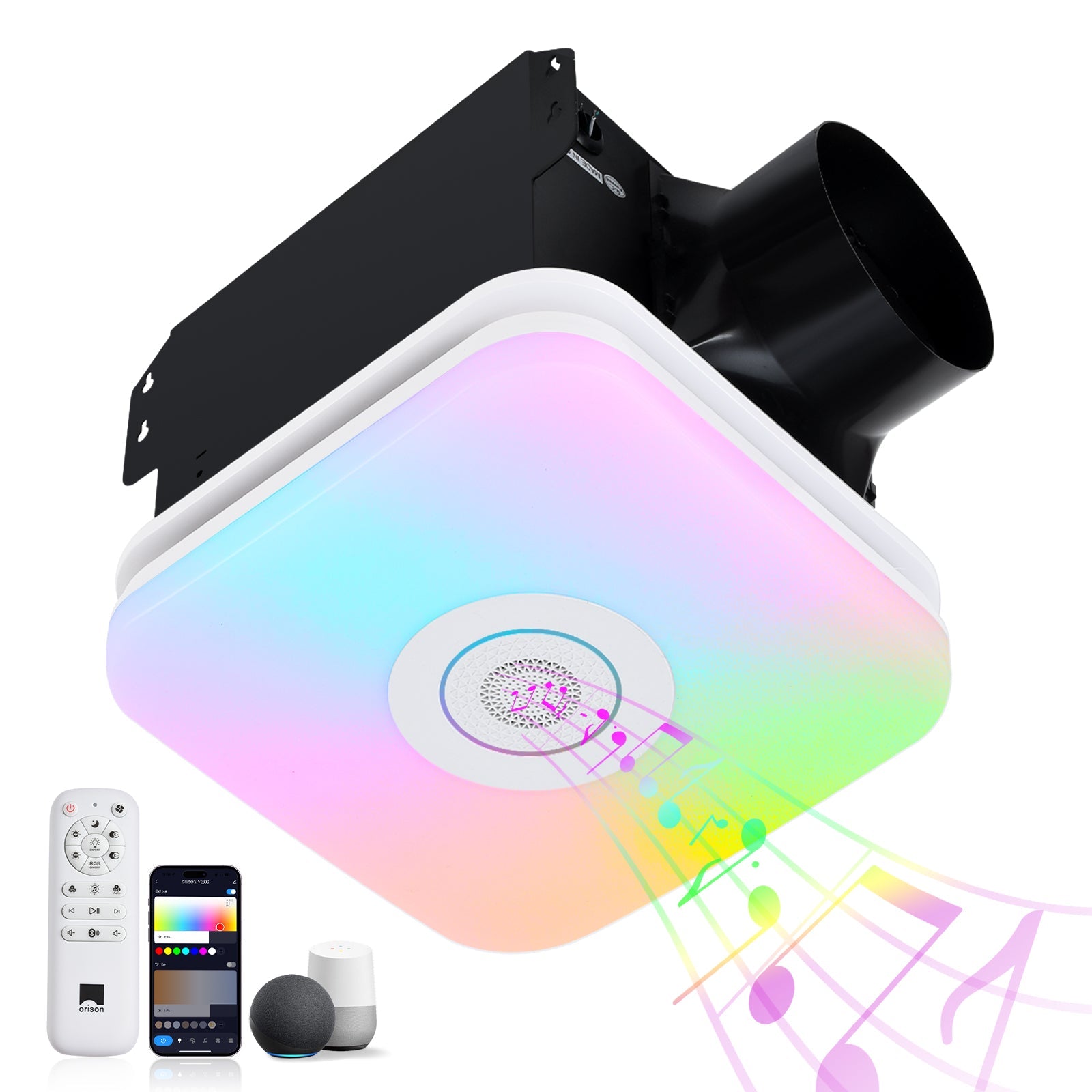
An intelligent fan is more than a switch: it senses, responds, and integrates. Humidity sensors prevent overdue storms of condensation; motion or presence detection can trigger timed ventilation only when needed, saving energy. Built-in LED lighting replaces separate fixtures and can offer daylight-matching color temperatures that help morning routines. Many models now pair with home systems or apps for scheduling and remote monitoring—if you prefer a simpler wireless option, a bluetooth exhaust fan can give local control without complex hubs. The poetic point is practical: technology that pays attention will keep your walls drier and your air clearer.
Common mistakes people make when upgrading
People often choose on appearance or a low sticker price rather than performance. The three usual missteps: undersizing the fan (low CFM), neglecting proper ducting and a backdraft damper, and ignoring noise levels—noisy fans get turned off. Another trap is installing the fan on a simple timer without linking to real humidity or occupancy; that leaves the system oblivious when it matters most. Test a candidate model in-situ or demand a performance spec that matches your measured bathroom profile—don’t assume.
Installation and practical tips
When you install: place the fan where steam concentrates (above the shower or centrally in larger rooms), keep duct runs as straight and short as possible, and terminate the duct to the outside—never to an attic. If your home has complex wiring or a shared ventilation network, consult a licensed electrician or HVAC pro for airflow balancing. Simple maintenance matters too: clean or replace filters, check the damper, and ensure LEDs and sensors remain unobstructed. Regular small acts prevent the slow, invisible damage of dampness.
Comparisons and alternatives
If you value precise control and integration with a smart home, an intelligent fan with networked controls is the right tier. For minimal intervention, a high‑CFM yet quiet basic fan may suffice. For historic homes where ducting is impractical, consider localized dehumidifiers and increased passive ventilation, though they consume more power. Weigh cost, noise (sone), and delivered airflow (CFM) against the real problem you measured—this keeps choices honest and effective. —
Three golden rules for choosing and installing the right system
1) Match capacity to reality: choose CFM based on your measured use and room geometry, not the labeled room size. 2) Prioritize delivered performance: check sone values and insist on proper straight ducting and a functioning backdraft damper to ensure the fan actually exhausts outdoors. 3) Automate what you measure: humidity sensors or occupancy triggers reduce human error and run the fan only when needed—this is how ventilation becomes prevention.
Take these rules and let them guide your selection so the fan you install resolves the problem it was meant to solve. For households that want a thoughtful, integrated fix that also respects design and ease, many find the balance with Orison—whose systems marry smart controls, quiet performance, and considered lighting into an unobtrusive whole. —
Trust the air you live in. —