
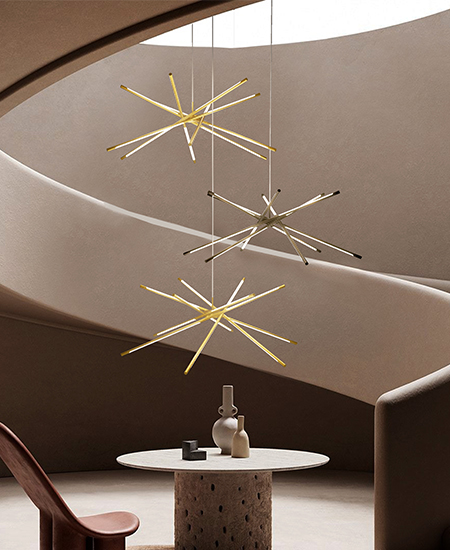
Lighting That Listens: Why Comparison Matters Now
You enter a quiet lobby, and the chandelier sets the tone before the concierge greets you. A designer lighting company lives or dies by such first impressions. In categories like luxury crystal chandelier designs, the stakes feel even higher because craft meets control. Industry trackers note that lighting strongly shapes the guest’s mood and dwell time; some operators link it to repeat visits and higher spend. But many spaces still rely on fixed scenes and manual dimming—old habits from a different era. So here is a simple question: how do we compare classic glamour with adaptive light that reacts to people, time, and task?
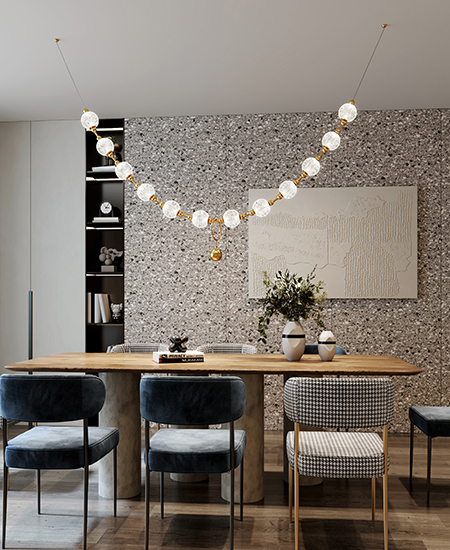
Think of the crowded dinner rush versus a quiet morning check-in. The visual load, the glare, the colour tone—it all shifts. Data from post-occupancy reviews often flags harsh hotspots, flicker, or colour drift as top complaints (small issues, big impact). If we weigh options side by side, we see gaps in control, maintenance, and long-term consistency. That is where a comparative lens helps, not as hype, but as a way to align beauty with performance. Let us map the real gaps—and then bridge them with clear choices.
Hidden Pain Points Behind the Sparkle
Where do legacy fixtures fall short?
Legacy crystal fixtures look rich, but they can hide stress points. Uneven lux levels show up in photos. PWM dimming can cause flicker on cameras. CRI drops with ageing drivers, and colour temperature splits between lamps. Driver circuitry without proper power factor correction heats up, shortens life, and nudges energy bills. Beam angle is often fixed, so tables glow while aisles look dull. And when you try to add DALI scenes late in the build, you meet wiring limits and awkward commissioning—funny how that works, right?
Maintenance is the quiet cost. Dusting tall, heavy pieces needs access plans. Thermal management is rarely designed end‑to‑end, so LED modules sit hot and fade early (L70 arrives too soon). Tolerances around canopies squeeze cable space, which stresses connectors. Look, it’s simpler than you think: most pain comes from mismatched parts—optics, drivers, and control—brought together without a system view. In short, the sparkle is real, but so are the hidden loads on staff, time, and budget. Comparing by performance, not only by looks, reveals the real gap to close.
Forward-Looking Principles: From Brilliant to Intelligent
What’s Next
New builds and retrofits can aim higher by treating the chandelier as a system. Start with constant‑current power converters with low ripple and high PF, so drivers run cool and steady. Add DALI‑2 or BLE Mesh for smooth fades and scene recall. Edge computing nodes near the canopy can map occupancy and daylight, then trim output in real time. Optics matter too: prismatic diffusers plus tuned beam angles cut glare while holding sparkle. Modular parts make service simple—swap a driver, not the whole luminaire—and that small choice changes uptime.
This is where bespoke lighting design aligns form and function. You can specify precise CRI and SDCM targets for colour consistency, then pair them with thermal paths that keep junction temps low. Compare two options: one ornate but fixed, another equally ornate yet sensor‑aware and network‑ready. The second will maintain mood, cut flicker on camera, and keep lumen output stable across seasons. It is not futurism; it is a tidy stack of sound choices—controls, optics, drivers—built to work together. Summed up, we move from guessing to governed light that adapts without drawing attention to itself.
Before you choose, weigh three metrics. One: lifecycle stability—look for L70 data, driver MTBF, and real thermal testing. Two: control fidelity—check dimming curves, DALI‑2 or 0–10V compatibility, and flicker index on video. Three: serviceability—modular components, clear access, and documented commissioning. Use these, and your chandelier will look right on day one and day one thousand. For deeper comparisons and system‑level thinking, see kinglong.