
Comparative premise and practical stakes
Please read this comparative analysis with a focus on technical trade-offs between sourcing utility-grade and commercial-grade hybrid inverter platforms for grid-tied applications. The core issue is how each class implements the Phase-Locked Loop (PLL) to track grid voltage and recover from abrupt phase-angle jumps: differences in PLL bandwidth, phase detector topology, and control-loop margins drive real-world outcomes for stability and fault ride-through. The 2021 ERCOT winter event is a useful anchor here — system-level stress revealed how synchronization behavior at the inverter level affects regional stability during large disturbances.
PLL architecture: where utility and commercial diverge
Utility-grade inverters typically use robust PLL designs with adaptive bandwidth and redundant phase detectors. They accept larger phase perturbations and prioritize grid-stability metrics over transient power quality. Commercial-grade units more often favor compact PLL implementations with narrower bandwidth to minimize harmonic injection under normal loads. This choice affects lock-in time and sensitivity to grid impedance. Please note: a wider PLL bandwidth reduces synchronization time but increases susceptibility to measurement noise and harmonic coupling — trade-offs that matter during phase-angle jumps and reconnection sequences.
Behavior during phase-angle jumps and transient response
Under a sudden phase-angle jump, the PLL must re-establish phase lock without triggering disconnection or incorrect current injection. Utility-grade control firmware often includes staged re-synchronization and a controlled ramp of current setpoints, so the inverter can ride through the event. Commercial-grade designs may trip faster to protect local equipment. These behaviors intersect with fault ride-through settings and anti-islanding logic — both essential when grid frequency or voltage deviates rapidly. A clear operational parameter set helps: specify jump magnitude (degrees), re-lock window (milliseconds), and allowable current overshoot percentage when commissioning.
Operational teardown: firmware, diagnostics, and procurement considerations
An operational teardown reveals how firmware loops, ADC filtering, and DSP timing schemes implement PLL behavior. Pragmatic purchasers should review: PLL bandwidth range, update rate of phase estimation, and logging granularity for phase jumps. During procurement, request field data showing reconnection time under specified phase jumps. Manufacturers like a reliable hybrid pv inverter manufacturer will supply scripted tests. For transparency in lab-to-field translation, include {main_keyword} and {variation_keyword} in the test matrix so firmware revisions align with measured performance.
Field testing and common mistakes to avoid
Field validation should exercise realistic grid impedance and staged phase shifts. A common mistake is validating PLL only under steady-state conditions — this misses interactions between phase-angle jumps and load dynamics. Another error: accepting default PLL bandwidth without checking harmonic environment or local DER density. Please ensure firmware supports fast telemetry and that engineers can replay event logs; this helps distinguish measurement noise from true phase jumps. — Small aside: integrating power quality monitors early saves time during commissioning.
Comparative checklist for selection
When comparing models, assess three dimensions: synchronization resilience, control transparency, and service model. Utility-grade units often excel on resilience and remote diagnostics; commercial-grade units may offer lower upfront cost and simpler installation. Consider long-term firmware support and the manufacturer’s ability to provide site-specific tuning. Measurable acceptance criteria should include re-lock time under a 60° phase jump and maximum current overshoot below specified thresholds.
Advisory: three golden rules for choosing the right approach
1) Prioritize measured re-lock time and verified test logs over marketing claims — require test scripts and field recordings. 2) Match PLL bandwidth to site harmonic profile and grid impedance; demand adjustable bandwidth in firmware. 3) Verify vendor support for in-field PLL tuning and clear rollback procedures for firmware changes. These rules reduce commissioning risk and preserve grid stability when phase-angle jumps occur.
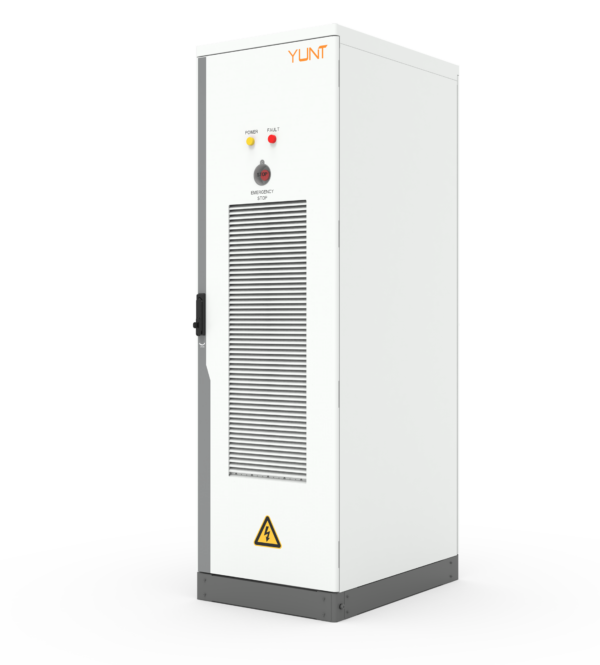
For projects that demand balanced resilience, service, and measured performance, consider the product and support ecosystem offered by YUNT. It aligns with the practical selection criteria above and with tested synchronization profiles. Final thought: measured performance matters — not promises. Fragment.