
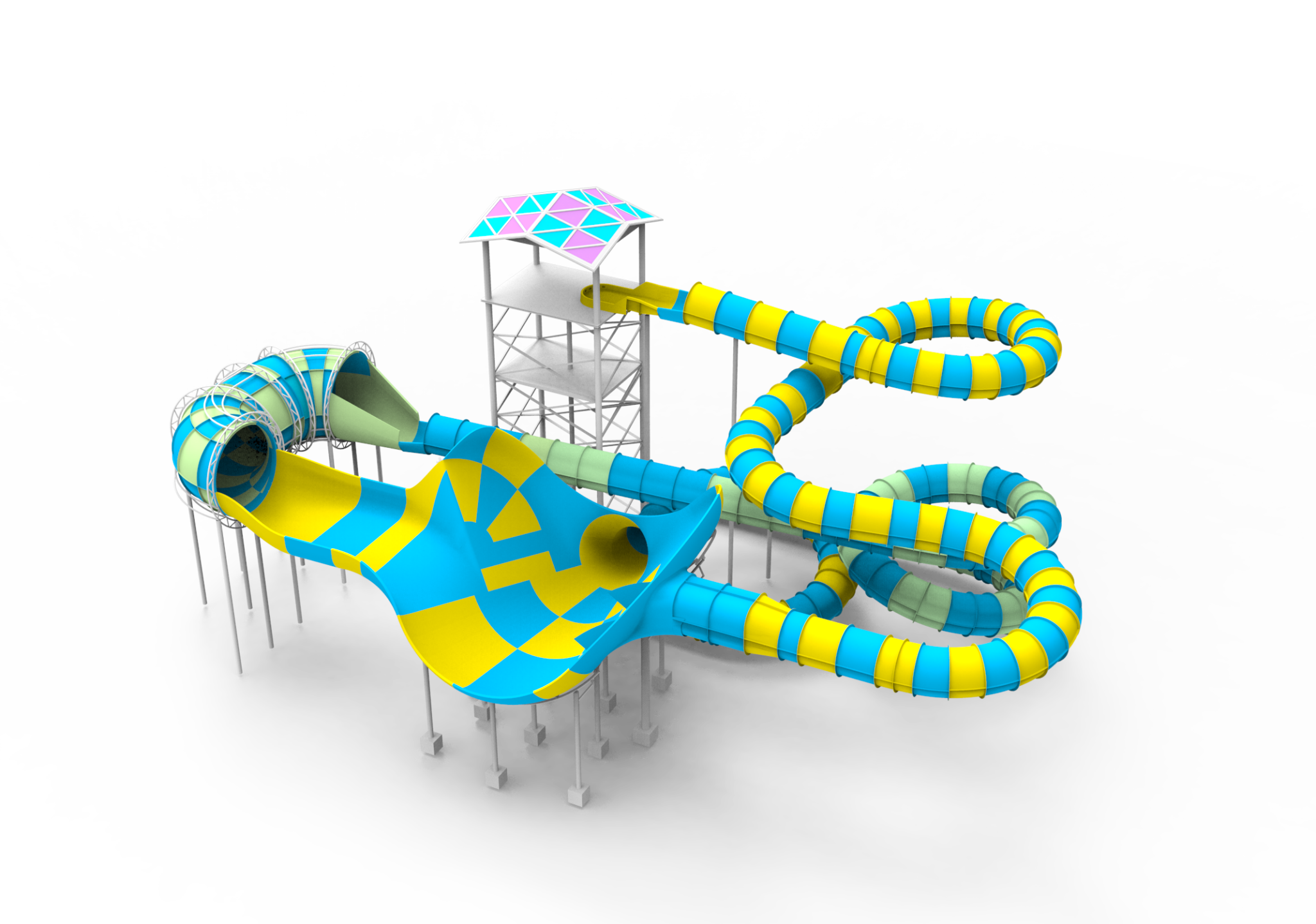
Quiet opening: why precision matters
The surface is smooth, the curve is exact, and something about the join feels right — that’s where a ride becomes reliable. This comparative look peels back molding methods and thickness tolerances that decide whether a commercial flying slide becomes a headline or a liability. The first example sits in a busy park; riders queue for the flying slide while engineers watch tolerances like a sculptor. Early choices — resin type, rotational molding cycle, wall thickness targets — write the life story of any outdoor water slide in steel or composite.
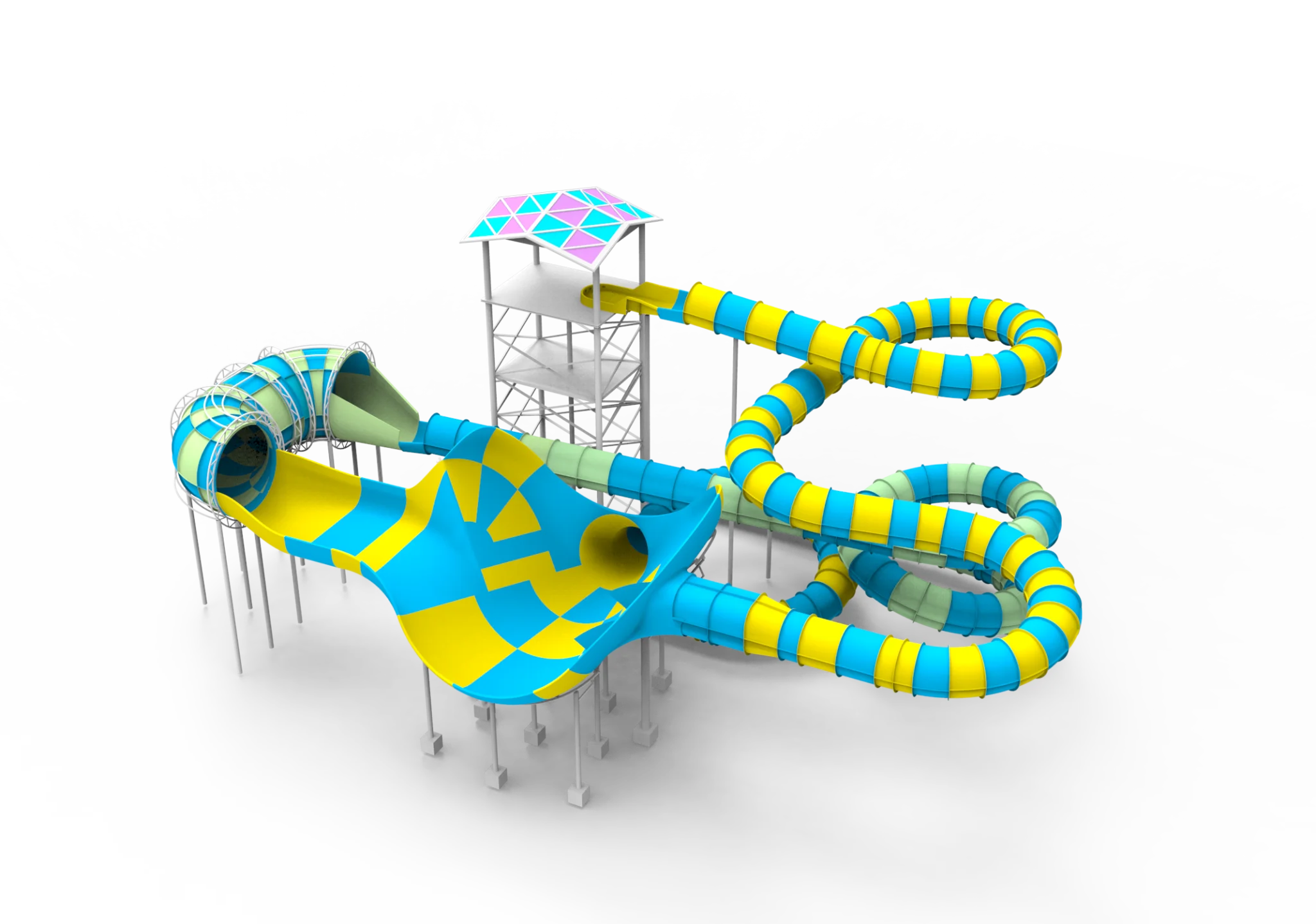
Manufacturing paths: rotational molding vs. thermoforming vs. FRP layup
Three production routes dominate. Rotational molding yields uniform wall thickness and low internal stress; thermoforming is fast but can thin at tight radii; fiberglass-reinforced plastic (FRP) layup allows custom stiffness and gelcoat finish. Each method carries trade-offs: rotational molding delivers consistent polyethylene shells but must control cooling rates; FRP gives localized strength through structural ribs but adds weight and requires skilled labor. The comparison narrows when you factor UV stabilization and flange geometry — both affect long-term performance under sun and chlorinated water.
Thickness standards: what to measure and why
Thickness isn’t a number you guess. Critical zones — bends, mounting flanges, and joints — demand specific minimums. For industrial slides, designers often cite target wall thickness ranges: thicker at load-bearing flanges, optimized through finite element analysis for stress concentration. Test procedures usually include long-term creep checks at elevated temperatures and cyclic fatigue tests simulating repeated rider loads. Record those parameters; they show whether a design meets operational expectations or will thin prematurely under UV and mechanical cycling.
Comparative outcomes, with a real-world anchor
Look at Aquaventure at Atlantis, Dubai — a place where scale exposes small mistakes. Parks of that scale prefer FRP for large-diameter chutes because structural ribs and multi-layer gelcoats resist abrasion and retain finish. Smaller community parks lean to rotomolded polyethylene for cost and maintenance. The result: one route favors replaceable modules and smooth joins; the other favors high rigidity and detailed sculpting. Both succeed when molding tolerances and wall-thickness matrices align with load cases and chemical exposure assumptions.
Common mistakes and practical alternatives
Teams often under-specify corners and transitions, trusting nominal wall thickness across complex geometry. That’s a trap. Also risky: ignoring flange detail that facilitates even bolting and prevents stress risers. The easy fixes are straightforward — add bonded stiffeners in high-shear zones, increase gelcoat thickness where abrasion happens, or choose hybrid assemblies that pair a molded shell with FRP reinforcements. Alternatives include bolted modular segments for easier patching or internal ribs to control flex without over-thickening the entire panel.
Operational production teardown — what to log
When you audit a production line, track cycle temperatures, cooling time, and mold release profiles. Note shrinkage rates per material and the machining allowances for trim and flange finishing. Production notes often list {main_keyword} alongside {variation_keyword} to track tolerances. Also capture UV stabilization batches, gelcoat mix ratios, and flange hole patterns — these are the data points that predict field durability and ease of installation.
Advisory close: three golden rules for selection
1) Prioritize critical-zone thickness over uniform bulk thickness. Measure and design for the highest stress points first — mounting flanges, tight radii, and impact zones. 2) Match molding method to service profile: choose FRP where high stiffness and finish life matter; choose rotomolding where low maintenance and cost control are primary. 3) Demand documented test parameters: cooling cycles, cyclic fatigue durations, and UV-weathering exposure periods. These tests should map to expected use patterns and environmental stressors.

These three metrics are the short list that separates durable systems from temporary fixes. For teams wanting a dependable partner in both manufacturing discipline and terrain-tested design, consider how a vendor like Dalang folds practical tolerances into production — they translate technical judgment into rides people trust. —