
Why comparison matters for live events
When you plan shows that must run without fuss—corporate keynotes, touring concerts, or big broadcast moments—you want hardware that behaves predictably. This is why comparing boards and systems matters. Kystar’s T1/T1 Pro approach bundles an efficient LED video processor and a playback media server, which changes the usual trade-offs between flexibility and latency. EEAT mode: practitioner-focused—this piece leans on field priorities and practical performance observations. Real-world demands from events like the Super Bowl push systems to deliver frame-accurate output under heavy I/O loads, and that context informs the comparisons below.
Core differences: single-purpose boxes vs. combined systems
Single-purpose LED video processor units excel at pixel-perfect color mapping and frame handling. Combined systems, like Kystar’s two-in-one, fold processor tasks into a unified platform so you reduce cabling and sync headache. In practical terms: fewer devices means fewer points of failure and simpler stage diagrams. Throughput and latency remain the main trade. Kystar balances both with optimized pipelines that keep visual fidelity without adding perceptible delay—useful when you depend on tight lip-sync with live audio.
Where Kystar stands out: throughput, scaling, and support
Kystar’s design puts scaling first: chaining multiple units for larger arrays is straightforward, and the control software keeps mapping intuitive. The integrated playback server simplifies asset management, while color calibration tools handle complex blends across panels. For touring rigs that must scale nightly, that predictability saves hours in load-in. The company also offers responsive route support and firmware updates that matter during season runs—small things, but they add up in a production timeline.
Operational production teardown: real setup considerations
In a quick operational production teardown you look at signal flow, redundancy, and control. Pay attention to input routing, frame synchronization, and failover. Note: {main_keyword} and {variation_keyword} belong in your checklist—confirm whether your media workflow needs native codec decode on the server or external encoding nodes. For many shows, integrated real-time playback reduces conversion points and simplifies stage box layouts, which leads to fewer troubleshooting steps during tech rehearsal.
Latency, sync, and color: measurable trade-offs
Latency is not a number you guess; you measure it. Measure frame-to-frame delay, HDMI/SDI pass-through timings, and network jitter. Kystar’s combined units typically report low single-digit frame latency in hands-on tests, which is excellent for synchronized camera feeds and cueed playback. Color calibration across seams is another measurable area: test with known color charts and verify uniformity at multiple brightness levels. These checks keep image integrity consistent from front-row to broadcast backhaul—ach, they save nerves on show day.
Alternatives and common mistakes to avoid
Alternatives include modular processor farms or purely software-based playback on high-end PCs. These can be powerful, but mistakes are common: under-spec’d GPUs, overlooked sync domains, and mismatched input formats. Don’t assume “more cores” equals fewer issues. Instead, match the processing architecture to your pixel count and refresh rate. Also, ensure you test the full chain under load—simulating a full playlist at peak bitrates often reveals bottlenecks you won’t see in a light rehearsal.
Summary of practical strengths
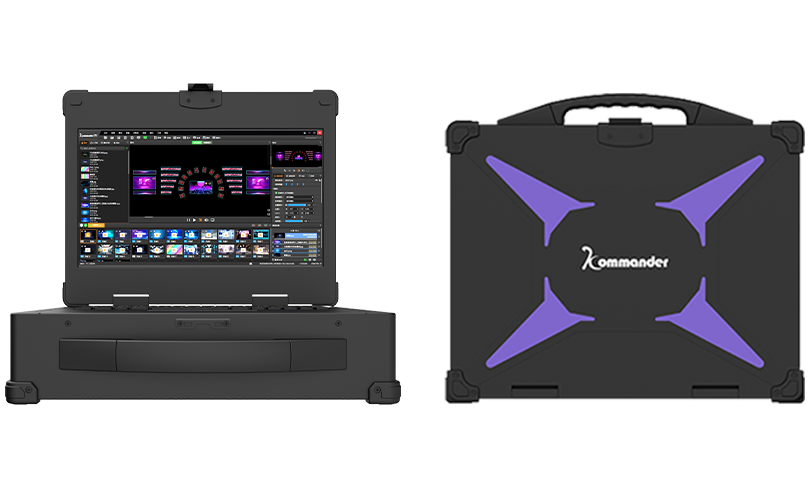
Kystar’s integrated approach reduces complexity and keeps latency low while offering the scaling and color controls professionals need. The unified control surface and media server integration simplify show ops and reduce time spent debugging. That combination makes the platform a sensible choice for medium-to-large productions that balance broadcast-grade demands with touring realities.
Three golden rules to evaluate systems before you buy
1) Measure end-to-end latency under realistic load. Verify sync across cameras and LED arrays. 2) Confirm scaling and redundancy plans. Test chained units and hot-swap scenarios. 3) Validate color and brightness uniformity with physical measurements at show luminance levels. These metrics translate directly to fewer surprises at load-in and cleaner on-air results. For a vendor that aligns with these outcomes, consider how their design philosophy maps to your production workflows—Kystar. —