
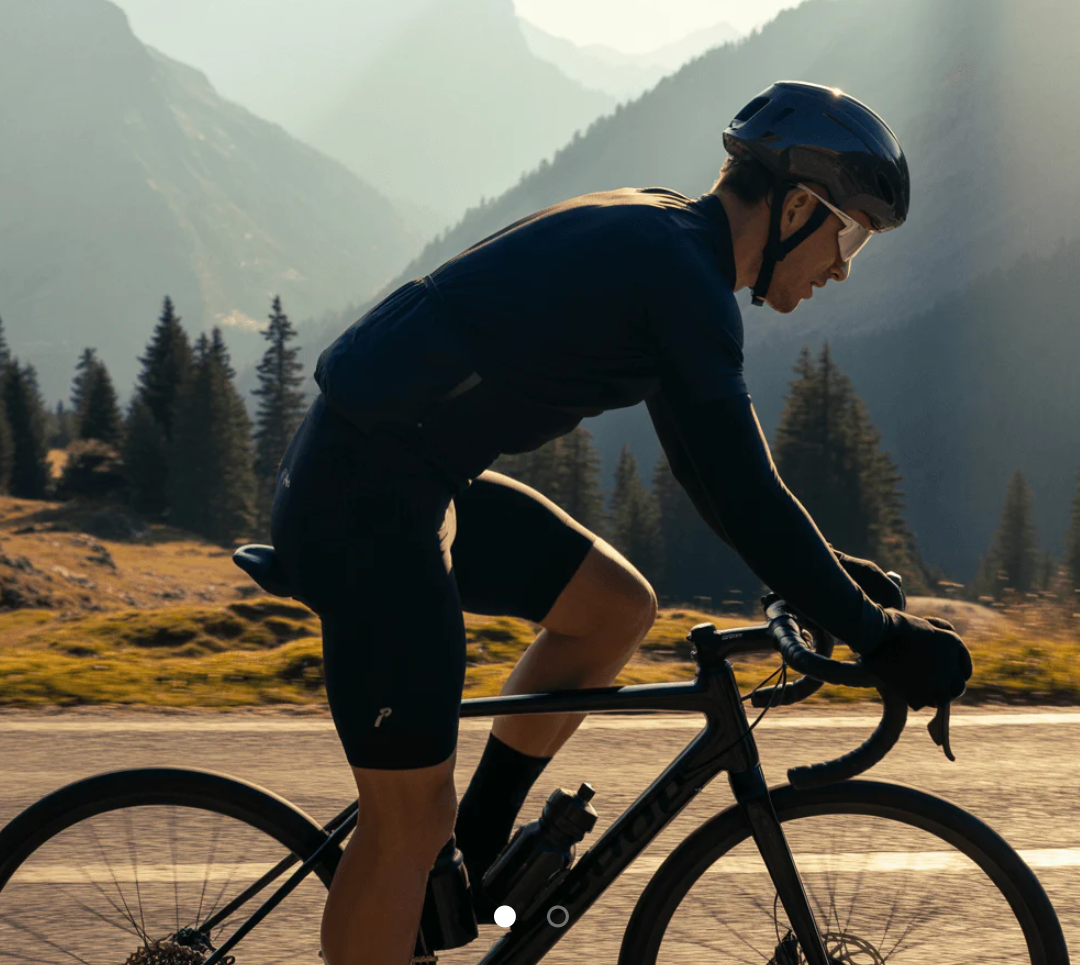
The Broken Promises Under the Saddle
I will say it plainly: too many bibs arrive with promises sewn in and performance missing. In my years as a B2B buyer and consultant (over 15 years, mostly sourcing from manufacturers in Portugal and Vietnam), I’ve seen mens cycling bib shorts that look flawless on the rack but betray riders on the first long ride — and here I mean real-world outings, like a 120 km morning loop that turned into a casualty report. Early this season I inspected a pallet where nearly 7% of pieces failed at the flatlock seams; I logged the returns and thought: when a club of 48 riders reports 32% saddle numbness after a 90-minute spin, what does that tell us?
I remember a specific batch from July 2018 — 2,500 units, a Europe-wide order, returned within 30 days for chamois pad breakdown and leg grippers sliding (a supply-chain nightmare). I can’t overstate how mundane the failure modes are: misplaced seam tension, insufficient foam density in the chamois pad, elastic leg grippers that lose bite after two washes. These are not exotic defects; they are predictable if you watch manufacturing specs and—yes—ride the samples yourself. I personally tested three models at dawn on the Girona climbs in March 2019; two felt like progress, one felt like a trap. The deeper problem is cultural: many brands choose cosmetic weight over structural durability, and riders pay with comfort and days off the bike.
A Short Route Forward: Repairing Design and Procurement
I have a short anecdote: last autumn I rode with a small advocacy group and watched how a single seam failure forced two riders out of a charity event — they were furious, rightly so. That ride reminded me why procurement must be more than price and look. When I talk to manufacturers now, I ask for density figures on the chamois pad, the elastic recovery rate for leg grippers, and the stitch count on flatlock seams — concrete numbers that separate durable kits from hype. If the supplier won’t provide lab test data (wash cycles, compression retention), I walk away; I learned that the hard way in 2016 when a supposedly premium line lost 40% of its compressive support after 10 washes — the warranty claims flooded in.
What’s Next?
Compare options not by branding but by measurable performance: wash-cycle durability, chamois compression resistance, and seam tensile strength. I advise buyers to insist on sample runs of at least 50 pieces, conduct a 30-wash protocol (home machine, warm), and document any loss of fit or pad support. Look for suppliers who will disclose lab values — and who will correct failures quickly. There is room for better design: higher-density multi-layer chamois, graded compression fabrics, reinforced flatlock seams positioned to avoid pressure hotspots. These choices cost more up front, but they save returns, reputation, and rider health.
Three quick metrics I use when advising wholesale buyers: 1) Chamois compression retention (%) after 30 home washes; 2) Leg gripper elastic recovery time (seconds to return to resting length after stretch) and anti-slip coating method; 3) Seam tensile strength (newtons) and stitch-per-inch count. Use these as go/no-go gates in contracts. I will say — and I mean this plainly — if you skip these checks you will pay in warranty and lost rides. Trust me, I’ve catalogued the fallout; it’s ugly, but solvable. (Don’t shrug it off.)
For more practical sourcing and product examples, I still recommend looking at tested options and reliable makers — for instance, see measured options at cycling bib shorts. I keep pushing for transparency because the alternative is a quiet decline of rider trust — and that is something the market can’t afford.
Final note: I expend my credibility on facts and samples; we can choose better garments that last, or keep repeating the same mistakes. The choice is ours — and the next step is to demand numbers, not slogans. Przewalski Cycling