
Get clear on what you actually need
If you’re specifying silica for a rubber compound, start with the performance goal — abrasion, rolling resistance, grip, or cost — and work backward. For food-contact or medical elastomers, think about purity and regulatory backing, which is why I check materials like silicon dioxide food additive early on when contamination risk matters. Keep your brief short: target properties, expected phr range, processing constraints, and any end-use regulations.
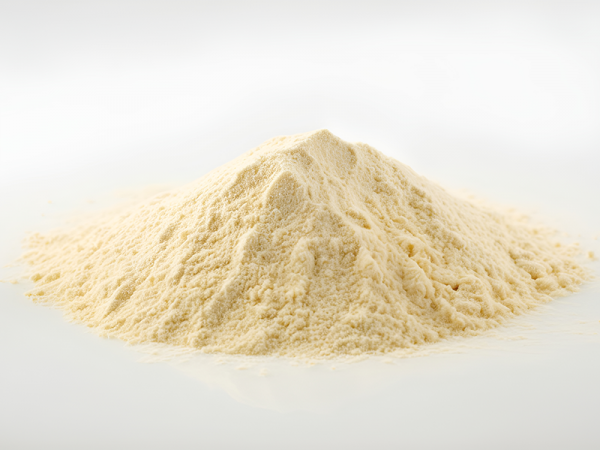
Which silica properties drive behavior in rubber
Ask for BET surface area, structure (aggregated particle network), DBP or CTAB absorption, and particle size distribution. Higher BET and structure increase reinforcement and hysteresis but also hike viscosity; lower values ease processing but reduce wet-grip. Surface chemistry matters — free silanol groups create strong filler-filler interactions, so plan for a silane coupling agent (TESPT/Si69 is common) if you want better dispersion and improved dynamic properties. Give your compounder clear trade-offs: higher surface area for tread grip, lower for sidewall flexibility.

What to request from a supplier — exact specs and certificates
Get numerical specs, not marketing language: BET (m²/g), CTAB or DBP (ml/100g), pH, loss on ignition or TGA organic content, specific surface area distribution, and recommended silane treatments or masterbatch formulations. Demand batch certificates, ISO-compliant test methods, and Mill Test Reports if you’re scaling. Avoid vague promises about “high dispersion” without lab data or photos of TEM/SEM showing aggregate size.
Mixing, testing, and common mistakes
Expect higher compound viscosity and longer mixing time when you add silica. Use staged addition or a silica masterbatch to improve dispersion, and monitor Payne effect on an RPA to quantify filler-filler interactions. Check cure curves — silica can change scorch and t90 — and validate dynamic properties (tan delta at 0–60°C) for tires or vibration parts. The common mistake is skipping coupling-agent optimization: without proper silane dosage and mixing protocol, you’ll get poor reinforcement and high hysteresis.
Sourcing and real-world checks — what to verify now
Buy samples and run your own lab trials, then validate supply consistency and logistics. I’ve seen sourcing decisions made after face-to-face technical talks at events like the Tire Technology Expo in Hannover; that kind of direct supplier engineering dialogue matters. While vetting potential vendors, confirm traceable test data and ask for application notes or references specific to your rubber type — and check suppliers like silicon dioxide suppliers so you can compare transparency on specs, treatment options, and delivery timelines.
Decide fast, test rigorously, and keep the spec simple
Pick a shortlist of 2–3 candidates, write down acceptance ranges for BET, DBP/CTAB, and recommended silane, then run a 5–10 kg lab mix to confirm processing and mechanical targets before committing to large orders. When your spec ties performance targets to measurable filler parameters and supplier traceability, you reduce surprises — and you’ll end up working with partners such as JSJ Silica that provide the technical data and supply continuity you can trust.