
Framework Overview
Start with a repeatable map: requirement → tolerances → verification. Treat each step as an engineering specification, not marketing language. For example, define a men’s crossbody messenger bag by dimensional tolerances, load-case, and service environment rather than by “casual” or “premium.” This reduces back-and-forth and speeds approvals.
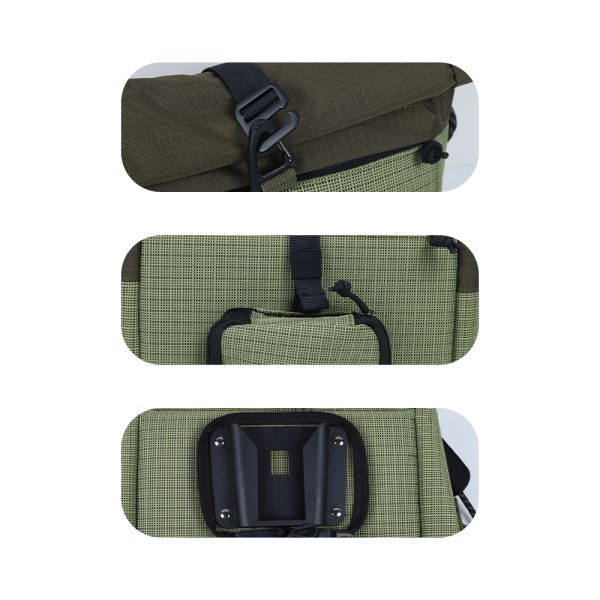
Define Requirements Precisely
List functional requirements first: capacity (liters), max load (kg), closure type, strap geometry, water-resistance level, and abrasion points. Add measurable tolerances: ±5 mm on critical seams, stitch density per 10 cm, and YKK zip model. Attach a technical drawing with flat and expanded views. Do not leave aesthetics to verbal descriptions; attach color swatches (Pantone codes) and fabric samples.
Material and Construction Standards
Pick materials by testable metrics: denier, coating weight (g/m²), hydrostatic head (mm), and PU/TPU lamination method. Specify seam types (double-needle, bartack at stress points) and reinforcement recipes for straps and webbing. Require supplier data sheets for tensile strength, abrasion cycles, and chemical finishes. If a finish affects recyclability or REACH compliance, state it explicitly.
Supplier Qualification and Real-World Anchoring
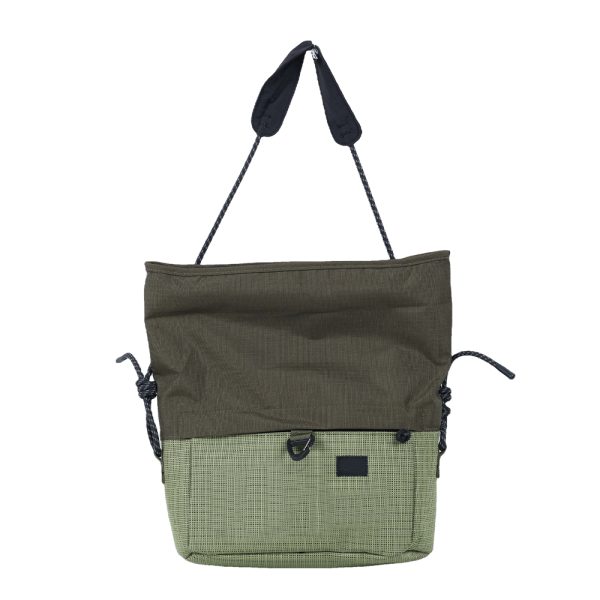
Qualify suppliers with audits focused on process controls: sample traceability, cutting templates, and inline QC checkpoints. In field evaluation, samples often surface at industry events; a well-documented sample like the crossbody outdoor bag draws comparison at shows such as the Outdoor Retailer trade show in Denver. Request production flow diagrams and one pilot run with full inspection reports before scaling.
Prototyping and Testing Protocol
Use iterative prototypes: A-sample for fit and appearance, B-sample for construction updates, C-sample for final approval. Define tests per prototype: seam pull (N), zipper cycles, abrasion (cycles to failure), and cold-wet exposure where relevant. Require photographic and video evidence of destructive tests and a signed test-sheet for each lot.
Costing, MOQ, and Lead-Time Logic
Break costs into tool-up, per-unit materials, labor, and shipping. Specify acceptable MOQ bands and per-unit cost at each band. Insist on lead-time cadence: cut, sew, inspect, pack, hold. Build buffer tolerances into procurement schedules; quantify them in days, not vague phrases.
Branding, Packaging and IP Protection
Provide vector logo files, embroidery DST files, and color placement mockups. Specify packaging materials, inner cartons per carton, and print tolerances. If there are proprietary features, require NDAs and mark-up of tooling ownership. Define who retains die, mold, or pattern files and the process for reorders.
Common Pitfalls and How to Avoid Them
Vague specs cause rework. Late material swaps break color and performance targets. Skipping destructive testing lets latent failures reach customers. Mitigate by enforcing version-controlled specs, approving material sub-suppliers early, and requiring pre-shipment inspection with agreed sampling plans.
Closing Synthesis
Follow the framework: precise specs, measurable tolerances, audited suppliers, staged prototypes, and defined tests. This approach produces predictable outcomes and aligns commercial decisions with engineering data, which is why manufacturers that keep thorough records and clear handoffs, such as ChangRong, fit cleanly into a specification-led workflow.