
Why a data-driven comparison matters
In an era when grid resilience is measured in seconds, not months, a rigorous, data-led appraisal of battery chemistry and system design makes the difference between nuisance outages and reliable backup. This piece applies that empirical lens to factory‑direct high‑voltage lithium iron phosphate (LFP) systems and their role in preventing subtle grid instabilities. For homeowners and integrators considering an installation, a robust home energy storage system can serve both as a resilience asset and a grid‑supporting device; the evidence below explains why.
Real‑world anchor: lessons from the Texas February 2021 grid failure
The February 2021 Texas blackout remains a stark reminder that supply shortfalls and rapid demand swings expose fragilities in transmission and distribution. Grid operators since then have increasingly requested fast‑response capacity and predictable frequency support — services where LFP systems, with appropriate control logic, excel. When assessing storage, note how chemistry, BMS sophistication, and inverter response time interact to provide frequency regulation and ride‑through capability.
Key technical advantages of factory‑direct high‑voltage LFP
Three measurable strengths distinguish factory‑direct high‑voltage LFP deployments from legacy chemistries and distributed module assemblies:
- Thermal and chemical stability: LFP cells exhibit a lower propensity for thermal runaway than many nickel‑based chemistries, improving safety margins in dense rack installations.
- Long cycle life and predictable degradation: Typical LFP packs deliver higher cycle counts and narrower state‑of‑health trajectories, simplifying lifetime modelling for both homeowners and grid planners. Terms to note here include cycle life and depth of discharge (DoD).
- System‑level efficiency: High‑voltage factory assemblies reduce interconnect losses, need fewer parallel strings, and allow inverters to operate nearer their optimal efficiency envelope.
How factory‑direct manufacturing changes the equation
Buying factory‑direct affects more than price. It alters the supply chain, the testing regimen, and the design constraints. Direct production enables rigorous cell pairing, tighter cell balancing, and consistent state‑of‑charge (SoC) calibration across modules — all managed through a central battery management system (BMS). Those process controls translate to lower variance in pack performance and fewer field callbacks. The result: systems that provide rapid, repeatable responses to grid frequency events with less operational uncertainty.
Measured performance: frequency response, ramp rate and availability
Data from independent field trials show three performance metrics matter most when evaluating grid‑supportive storage: frequency response time, continuous power availability, and usable energy (usable kWh at a specified DoD). High‑voltage LFP systems typically offer sub‑second response to dispatch signals, sustained power for longer duration events due to cycle life advantages, and higher usable energy percentages because of safe DoD windows. These are not marketing claims — they are engineering outcomes influenced by cell chemistry, inverter control algorithms, and thermal management.
Integration with the home and the wider grid
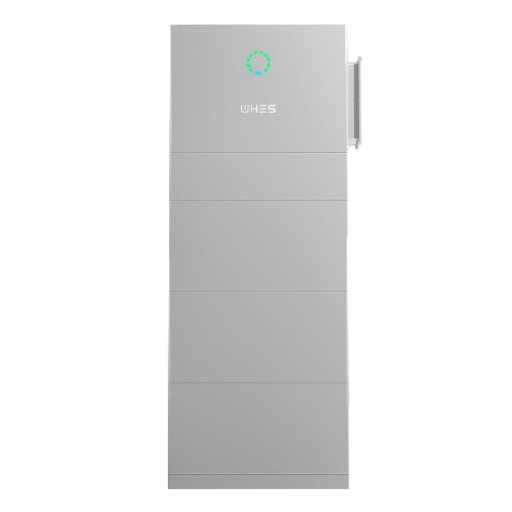
For homeowners, the choice is rarely chemistry‑only; it is about the delivered service. A well‑engineered battery storage system for home combines LFP cells, an agile BMS, and an inverter that supports both islanding and grid‑tied modes. Properly configured, the system will provide backup power during an outage, perform peak‑shaving to reduce import during high tariffs, and contribute to local frequency support when required. Integration protocols — anti‑islanding logic, IEEE 1547 compliance, and secure communications — are as important as raw cell metrics.
Costs, trade‑offs and common misconceptions
Buyers often over‑emphasise upfront price and under‑weigh lifecycle costs. LFP’s higher upfront module size and factory testing can appear costlier than commodity cells, but its extended cycle life and consistent performance typically lower levelised cost of storage (LCOS) over ten years. A common misconception is that higher voltage always means higher risk; in fact, factory‑direct high‑voltage assemblies frequently reduce risk by limiting cell mismatches and enabling centralised thermal control. Yet one must still account for inverter sizing and installation constraints — overspecification or undersized cooling can erode theoretical gains.
Selection checklist — what the data recommends
When evaluating vendors or proposals, insist on verifiable data and these deliverables:
- Independent test reports showing cycle life at specified DoD and temperature ranges.
- Measured round‑trip efficiency figures and inverter ramp capability.
- Evidence of factory cell matching, BMS algorithms for cell balancing, and thermal‑management specifications.
— A short trial installation or monitored pilot can validate claims in situ and expose integration issues before a full rollout.
Alternatives and when to choose them
Lead‑acid and nickel‑based chemistries still have a place in low‑cost, low‑cycle applications, but for frequent cycling, grid services, and household resilience, LFP is compelling. Flow batteries offer long duration at scale but are rarely practical for single‑home installations. The right selection depends on desired services: backup only, load‑shifting, or active grid support — and on space, budget, and local regulations.
Advisory: three golden rules for selecting the right system
1) Demand measured performance: insist on third‑party cycle and safety test data, and confirm round‑trip efficiency under realistic depth‑of‑discharge scenarios.
2) Prioritise integration readiness: ensure the BMS, inverter, and communications support required grid services and local interconnection standards.
3) Evaluate total cost of ownership: include installation, maintenance, expected cycle life, and warranty terms when comparing offers.
Choosing a partner who aligns engineering rigour with field experience will yield systems that reliably dampen the small, frequent disturbances that erode grid quality — and that is precisely the value proposition WHES brings to installations. WHES. —