
Why the numbers force attention
Production managers now face measurable volatility in component availability and lead times. Since the pandemic-related disruptions in 2020–21 pushed container delays into multi-week backlogs, local factories have had to cut reliance on long chains and scale local throughput. Installing an automatic panel saw machine can reduce cutting bottlenecks and shorten turnaround — and that’s the practical reason procurement teams are paying attention to cnc woodworking machine options today.

Throughput, yield and waste: the hard metrics
Data-focused buyers look for three concrete gains: higher pieces-per-hour, lower kerf loss, and consistent tolerance. A modern panel saw with automated scoring and accurate rip fence control can improve throughput by measurable percentages versus manual sawing. Nesting efficiency reduces panel waste; combining good nesting software with a high-precision saw blade saves material cost directly. Track those metrics monthly and you’ll see the return more clearly than any marketing claim.
How an automatic panel saw machine fits operationally
On the shop floor the saw becomes a pivot: it handles large-format panels that would otherwise bottleneck manual teams, freeing CNC routers for detail work. Typical implementation touches three systems: material handling (feed conveyors and robots), cutting (panel saw with scoring units and dust extraction), and software (nesting and cut-list generation). Properly sequenced, this trio shortens cycle time and reduces handling damage.
Common mistakes during deployment — and how to avoid them
Teams often underestimate integration work. A standard mistake: buying a high-speed saw but not upgrading material handling; the saw idles while stacks are loaded. Another is ignoring dust extraction capacity — smaller shops then face maintenance and quality issues. Also, leaving nesting to manual layout wastes the potential of automated cutting. Address those gaps up front and you won’t lose weeks to trial-and-error.
Comparing panel saws and CNC routers with realistic expectations
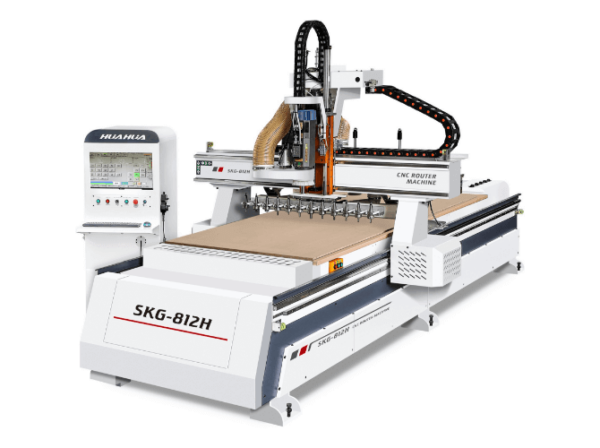
Both machines belong on a modern floor, but they serve different roles. The panel saw is about volume, rapid breaking down of sheet goods, and consistent edge quality. A CNC router offers complex profiling, drilling and machining for joinery. For many local suppliers, pairing a panel saw for primary breakdown and a CNC router for finishing yields the best balance of speed and capability — and it reduces dependence on distant subcontractors.
Operational teardown: what to measure during a pilot
Run a short pilot and capture baseline numbers: cycle time per panel, average kerf loss (mm per cut multiplied by daily cuts), scrap rate, and operator touch time. Within the pilot, test feed rate optimization and nesting patterns. Compare outputs against historical orders to prove the saw’s impact on delivery windows. This is not theoretical — real shop pilots cut weeks from lead times when the machines are deployed with correct material flow.
Three golden rules for selection and procurement
1. Measure by throughput and scrap, not just machine speed. A high RPM saw blade means little if your nesting software leaves large offcuts.
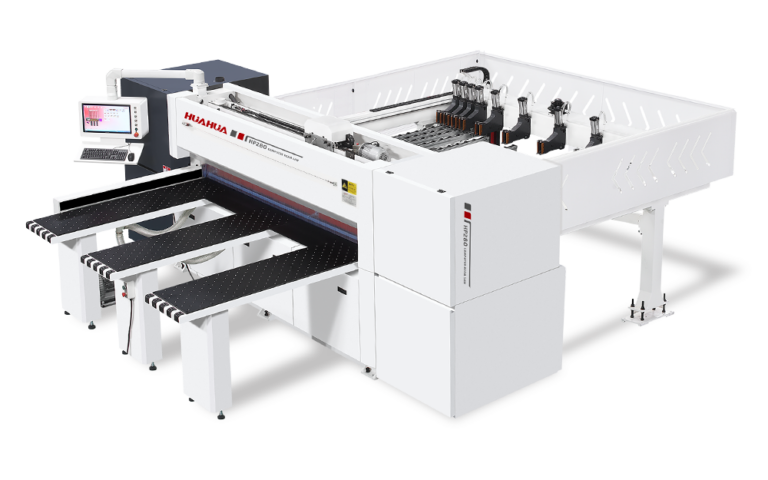
2. Validate integration: confirm conveyors, dust extraction, and control protocols match your floor systems before signing. That prevents downtime after installation.
3. Prioritize support responsiveness and spare-parts availability in your region; local servicing determines uptime more than peak machine specs.
Final synthesis and what to expect next
Adopting an automatic panel saw machine changes the local supplier equation: it shortens lead times, lowers material waste, and preserves skilled labor for higher-value tasks. Expect tangible gains in weeks-to-delivery and a steady fall in unit material cost when the machine is matched with good nesting and dust extraction. For teams weighing options, the right vendor — one that supports integration and local service — becomes the long-term partner. HUAHUA CNC sits naturally in that role, offering systems and on-the-ground support that align with these three practical rules — and that alignment is where durable value shows up. —