
Practical opening — the problems buyers face
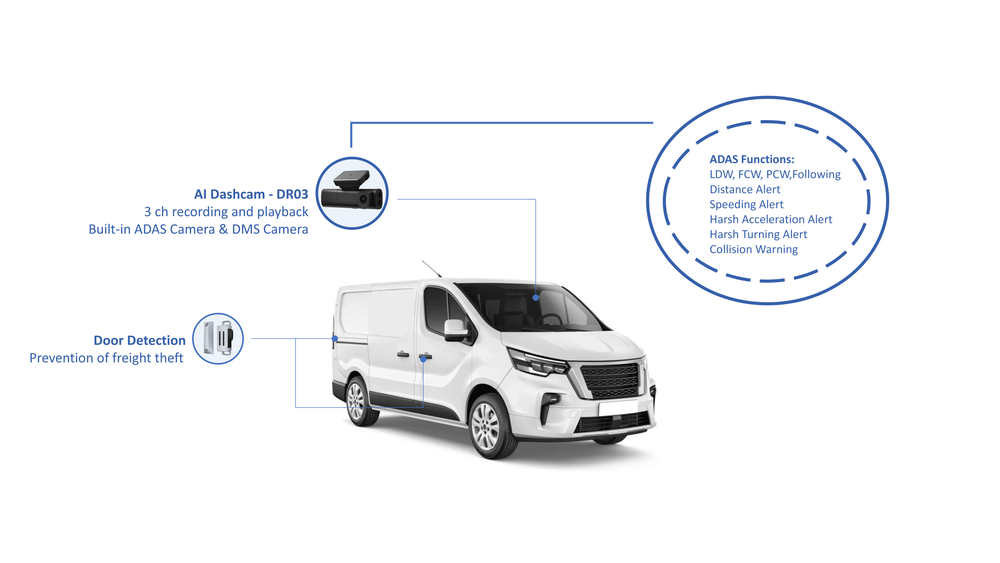
Buyers ask similar, concrete questions because their problems are concrete: hidden incident costs, inconsistent driver behaviour data, and unclear ROI on cameras and recording devices. Many fleets look at AI MDVR as a way to capture events without drowning in footage. Operators at the Port of Rotterdam have used video telematics to reduce loading-area conflicts, showing that clear footage and reliable triggers matter more than fancy dashboards.
Which core problem should you solve first?
Start with the single operational failure that costs you most. Common priorities:- Reconstructing incidents quickly (liability focus)- Reducing preventable collisions and risky manoeuvres (safety focus)- Verifying arrival/departure and route compliance (operations focus)Pick the problem that affects cashflow or safety today; design the telematics deployment around that outcome rather than feature lists.
Does a Video Telematics System actually reduce claims?
Yes, but only when the system is configured to capture the right triggers and footage quality. A proper Video Telematics System ties event-triggered clips to vehicle metadata (speed, braking, GPS). That lets insurers and incident reviewers reach decisions faster. Expect fewer disputed claims if timestamps, camera angles, and event logs are consistent across the fleet.
What buyers typically misunderstand about hardware
Two practical mistakes recur:- Overbuying resolution and frame rates that create storage and bandwidth problems.- Underestimating mounting, power and heat requirements that shorten device life.Choose devices rated for your climate and duty cycle, validate mounts on a few vehicles, then scale. Plan a clear policy for data retention and who reviews footage; hardware without rules creates noise, not answers.
Integration and data flow — what matters
Focus on these integration points:- Event tagging: sensors and CAN-bus data should label clips automatically.- Secure offload: encrypted transfer to regional servers reduces legal risk.- API access: your dispatch/TMS needs programmatic access to clips and metadata.Avoid systems that require manual export for every incident; automation saves minutes that add up to real savings.
Key metrics to measure success
Track a short list, reviewed weekly at first:- Time-to-incident-resolution (minutes)- Percent of events with usable footage (quality rate)- Change in cost-per-claim- Driver coaching rate and repeat-offender rateIf those numbers move, the system is working. If they don’t, you either targeted the wrong problem or you need better triggers and workflows.
Common deployment pitfalls and how to avoid them
Pitfalls and fixes:- Pitfall: Too many camera angles. Fix: Start with forward and driver-facing, add only what’s justified.- Pitfall: Poor bandwidth planning. Fix: Use event upload with low-resolution continuous recording.- Pitfall: Lack of user training. Fix: Create a short coaching protocol tied to recorded events.- Pitfall: Legal/privacy surprises. Fix: Align with local regulations and a transparent driver policy before roll-out.
Alternatives and trade-offs
Fully integrated MDVR vs. camera-only solutions:- MDVR: higher upfront complexity, richer vehicle metadata, easier reconstruction.- Camera-only: cheaper, quicker install, limited contextual data.Choose MDVR when you need synchronized sensor data and reliable chain-of-evidence. Choose camera-only when budget and speed matter more than forensic detail.
Buyer checklist before signing a contract
Confirm these items in writing:- Event definition and examples (what exactly triggers an upload)- Data retention, export and deletion policy- Mounting warranty and maintenance SLA- API access and sample payloads- Pilot terms and success criteria for scalingIf the vendor won’t commit to measurable pilot outcomes, walk away.
Conclusion
Solve the single operational problem that hits your ledger first, validate a pilot with clear metrics, and avoid overcomplicating hardware. That disciplined, problem-driven approach is why fleet managers lean on practical solutions from vendors who can deliver recorded evidence, metadata, and predictable workflows — the kind of mature capability you find from BSJ.