
Why Your Stage Keeps Going Dark (And What That Says About the Market)
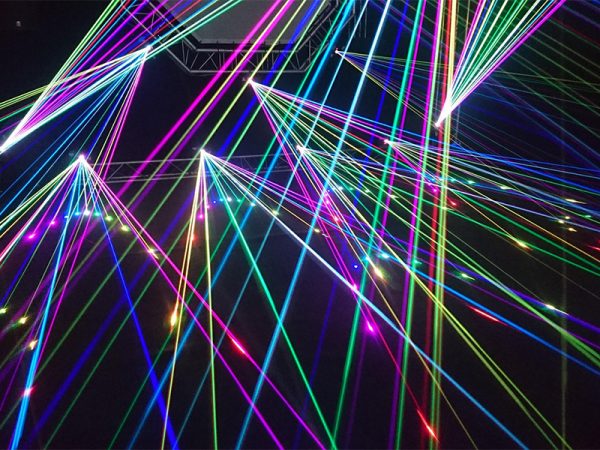
We rolled into a county fair last fall, set to light up the ridge, and the beam fizzled before the second chorus. The laser light manufacturer stamped on the case looked fine on paper. But the air was damp, temps dropped, and the cooling fans whined like a worn-out truck. Data tells the same story: more than half of field failures tie back to heat, dust, or rushed setup—conditions folks like us see every week, not once in a lab. So here’s the rub: if specs say “bright,” why do rigs still dim, drift, or stall when the crowd leans in? Is it poor thermal management? Bad beam divergence? Or just marketing trying to be louder than the fixture?
Out here, we need gear that keeps its promise after midnight, in mist or grit, with cables run long and power sketchy. That’s the real test. And when shows stumble, it ain’t just bulbs and brackets—it’s choices made upstream. (Bless their hearts.) Let’s walk through what separates reliable makers from loud ones, and how you can spot the difference before loading the trailer—funny how that works, right?
Hidden Friction: What Buyers Miss When Picking a Projector Partner
Where do legacy fixes fall short?
Look, it’s simpler than you think. A seasoned light show projector manufacturer doesn’t just sell wattage; they design for real-world jitter, rain, and long duty cycles. Traditional fixes look shiny on a spec sheet. Larger fans, thicker housings, and “rugged” stickers. But field failures often come from the motion path and control stack. If galvanometer scanners are tuned for showroom sweeps, you’ll get wobble on windy risers. If the DMX protocol parser is fragile, a dirty line can freeze cues. Power converters that sag during bass hits? That ghosting you see isn’t “mood”—it’s voltage ripple the firmware doesn’t smooth.
Here’s what hurts most buyers: they assume IP65 housing solves everything. It doesn’t. Moisture still creeps in through cable glands. Dust rides on truss. Optical alignment drifts when mounts flex. And quick-fix “calibration modes” hide the real issue—control loops can’t recover fast enough when the load shifts. Ask how the unit handles thermal derating, how often it recalibrates scan offsets, and whether protection interlocks are hardware, not just software. That’s where you separate a field-ready unit from a pretty demo. And yes, better monitoring and power-headroom costs a bit—yet it’s cheaper than a refund on a rained-out headliner.
Leaning Ahead: How New Builds Beat the Old Trade-Offs
What’s Next
The new wave isn’t only brighter; it’s smarter. Instead of bolting on bigger parts, solid makers distribute the brain. Think edge computing nodes tucked near scan heads to shorten feedback loops, plus FPGA control to time-align modulation with mirror swing. That pairing drops flicker and tightens corners at speed. A dependable laser projector supplier will also harden the chain: shielded signal runs, fast-protection interlock circuits, and firmware that can throttle gracefully instead of hard-failing. Compare that with older rigs that chase heat after it builds—reactive, not predictive. With onboard sensors reading temperature, vibration, and current, derating can start before your beam blooms or shifts. Small detail. Big save.
Field case, quick: an outdoor amphitheater swapped a mixed fleet for units with closed-loop thermal management and real-time scan health checks. Same haze, same throw, fewer artifacts. They cut setup tweaks by 30%, and cue reliability went up because the control stack filtered DMX noise at the edge. Different brand, same math—when your firmware watches current draw and plate temps, your optics stay true. And no, you don’t need a PhD—just ask better questions.
Three evaluation metrics to keep you honest—then you can sleep easy, even if the weather won’t:
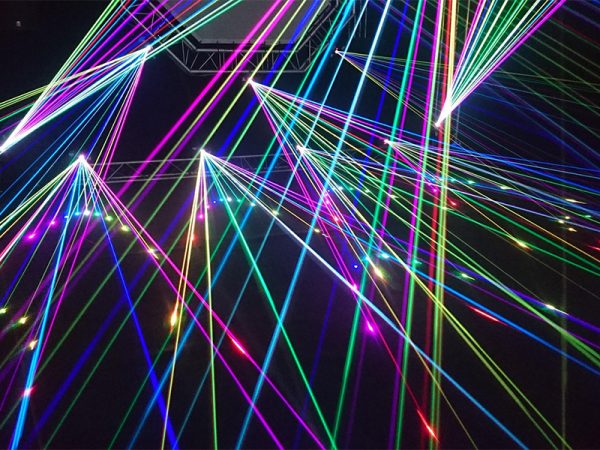
1) Control resilience: Do scanners hold geometry under vibration and fast moves? Any FPGA or similar timing control in play?
2) Power integrity: How do power converters handle transients and long duty cycles? Show logs, not claims.
3) Environmental defense: Beyond IP rating, what protections cover dust ingress, thermal derating strategy, and hardware interlocks?
Stack these side by side across makers, and the winners stand out—quietly, consistently, over months not minutes. That’s how you keep a crowd looking up instead of looking for refunds—funny how that works, right? Showven Laser