
Introduction: Why Names Still Slow Meetings
A modern meeting runs on identification: who is who, who speaks next, and who signs off decisions. A digital name plate can serve as the common interface for that flow, linking people, roles, and agenda in near real time. Picture a quarterly review with guests, remote joiners, and rotating chairs; printed tents buckle, updates lag, and seating charts go missing (yes, even in small rooms). Field reports show that 8–15% of meeting time slips to set‑up and clarification tasks. Now add late arrivals and hybrid seating—coordination costs rise fast. If your board uses conference table name plates, the promise is simple: reduce friction, standardize roles, and make edits instant. But adoption often stalls because systems feel heavy or brittle. The problem is subtle: identity at the table is dynamic. Titles shift per agenda item; access flags change with confidentiality levels; and audio queuing prefers machine-readable names. Can we cut the delay without loading IT with tickets? Look, it’s simpler than you think—if we fix the right layer. Let us examine the hidden pain points and how they differ from the old paper workflow.
Hidden Pain Points with Conference Table Name Plates
What keeps breaking?
People expect name plates to “just work,” but the table is a live network—funny how that works, right? The first pain point is identity drift. Roles switch mid‑meeting, yet manual cards cannot. Even basic Bluetooth tags stumble when a chair rotates to “Moderator” for one agenda slot. Second, power is messy. Batteries die at the worst time; unmanaged power converters create cable clutter; and no PoE fallback means scrambling for chargers. Third, visibility is uneven. Glare, camera angles, and varied seating make small fonts useless; even a crisp plate fails if its contrast does not meet the room’s light profile. Fourth, updates are fragile. Without over‑the‑air updates and a clear rollback plan, a single typo or late guest name triggers hallway fixes. Finally, logistics scale poorly. RFID provisioning per device, seat mapping, and name privacy controls demand a real policy, not sticky notes. These are not “IT problems” alone. They are design gaps between human flow and system flow, where latency budgets, font legibility, and low‑power SoC choices collide with how people actually sit and speak.
Comparative Insight: New Principles for the Next Meeting Table
What’s Next
The forward path is not to add more menus. It is to make the plate an adaptive node. Start with a reflective display and a duty‑cycled radio. An e-ink meeting name tag draws power only on change, so idle states cost near zero. A low‑power SoC can cache roles and agenda states locally, then sync over a BLE mesh to a room hub. Edge computing nodes at the table merge seat presence with schedule, so a late arrival inherits a prepared profile in seconds. Fonts shift by viewing angle, not by guesswork, using measured lux and camera framing (simple heuristics beat manual tap‑through). Meanwhile, PoE cradles under the desk provide silent charging and cable discipline, with clean power converters that do not hum on audio lines. Over‑the‑air updates handle name corrections, while snapshot rollback protects the record during a vote.
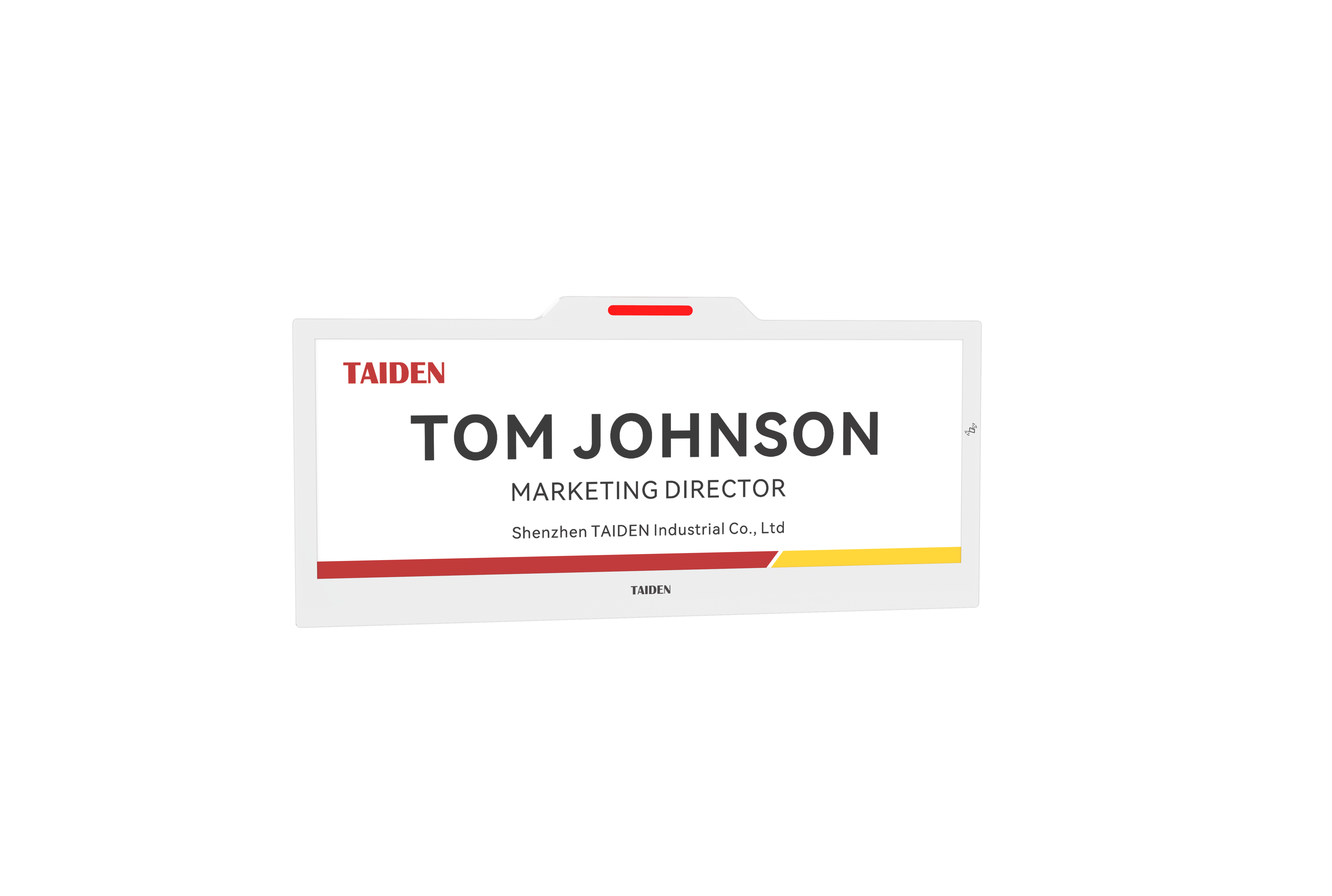
Compared with paper, this stack is calmer under change. Compared with generic tablets, it is easier to read on camera and kinder to batteries. And compared with DIY kits, it bakes policy into the workflow: who can edit titles, how long a role persists, and which seats mask names during closed sessions. Summing up the earlier issues—identity drift, glare, dead batteries—these principles close the gaps without asking users to learn more clicks. Choose with care. Use three metrics as your guide: 1) legibility across angles and lighting, measured by contrast ratio and camera preview; 2) power strategy, including PoE fallback, expected cycle life, and real standby draw; 3) fleet control, with OTA, seat mapping, and audit logs that bind to agenda items. Do this, and your table stops being a tangle—it becomes a quiet system that helps people decide faster, together. For a deeper look at integrated conference solutions, see TAIDEN.