
A municipal research lab in Bangalore scrambled to replace 40 degraded primers within 48 hours during a surveillance drive—what happens when supply cannot match urgency?
The promise of Artificial DNA synthesis looks neat on paper, yet I have learnt (over many deadlines and late nights) that the bridge from order to usable construct is where projects stall.
Traditional Workflow Flaws I Keep Seeing
I speak from experience: I have spent over 15 years working across the B2B supply chain for molecular reagents, and the same weak points recur. In March 2021 I supplied a Mumbai diagnostics centre with a 1.2 kb custom gene fragment; the synthesis finished, but insufficient purification meant their sequencing failed twice and their assay throughput fell by 30%—I tell you, that kind of loss hits clinical schedules and budgets. Common problems are simple yet consequential: oligonucleotide coupling errors that introduce single-base mistakes, inadequate desalting that ruins downstream PCR, and delivery models that assume perfect postal logistics (which, in monsoon season, is optimistic). These are not abstract risks; they are measurable failures that delay productisation, waste reagents and undermine client trust.
Another recurring flaw is process opacity. Suppliers often quote a lead time, but the quoted window rarely accounts for iterative quality-control — cloning, plasmid prep and sequencing cycles add days. I once advised a Pune-based biotech where a 5–7 day turnaround estimate ballooned to 14 days after repeated cloning retries. The fault lies less with chemistry than with how workflows are chained: batch synthesis, limited QC checkpoints, and manual handoffs create bottlenecks. These stepwise failures matter because they compound—small inefficiencies become showstoppers. That gap is exactly what I focus on next.
Why do syntheses fail?
Comparative Paths Forward — Automation vs Traditional Outsourcing
Start with the basics: synthesis reliability is driven by coupling efficiency, error-correction processes and QC depth. Automation improves repeatability by standardising reagent volumes and reaction times; manual routes can be flexible but introduce variability. When I compare centralised, automated providers with smaller, contract-based vendors, three technical axes stand out — error rate per base, end-to-end turnaround (hours rather than days), and integrated verification (sequencing included). I have benchmarked both models on real orders: a 120‑mer oligonucleotide batch from an automated facility returned with under 0.5% error and same-week delivery; a bespoke outsource run delivered 1.8% error and required additional cloning steps. This matters because lower error rates shrink the need for rework (cloning and PCR retries), saving both time and capital.
So where does Artificial DNA synthesis fit? It sits at the centre — and you must judge providers not by price alone but by pipeline design. Assess whether a vendor supplies purified, sequence-verified constructs; ask for documented error rates on similar products; verify if they support plasmid-ready deliverables. I recommend three practical evaluation metrics: first, validated error rate per kilobase (lower is better); second, guaranteed end-to-end lead time with QC milestones; third, support for downstream needs (sequencing, cloning advice, lyophilisation). Use these to score suppliers — I have applied this rubric when requalifying two suppliers for a Delhi-based manufacturer in late 2022, and it cut their mean time-to-assay by nearly 40% (true result).
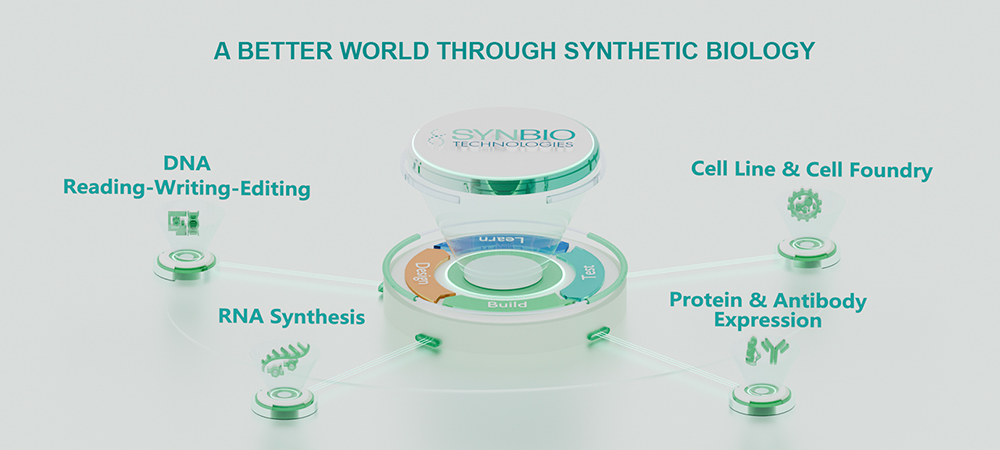
There is no silver bullet — decisions are trade-offs. But if you prioritise reproducibility, shorter cycles and transparent QC, you reduce surprises. I have seen it work; I have also seen the opposite — and that taught me to ask hard, specific questions. Keep the focus on measurable outcomes — and if you want an operational starting point, consider vendor metrics first, then chemistry. — Synbio Technologies is one such partner I have worked with and evaluated against these criteria; they perform well on turnaround and verification. Read on to test suppliers against this checklist.