
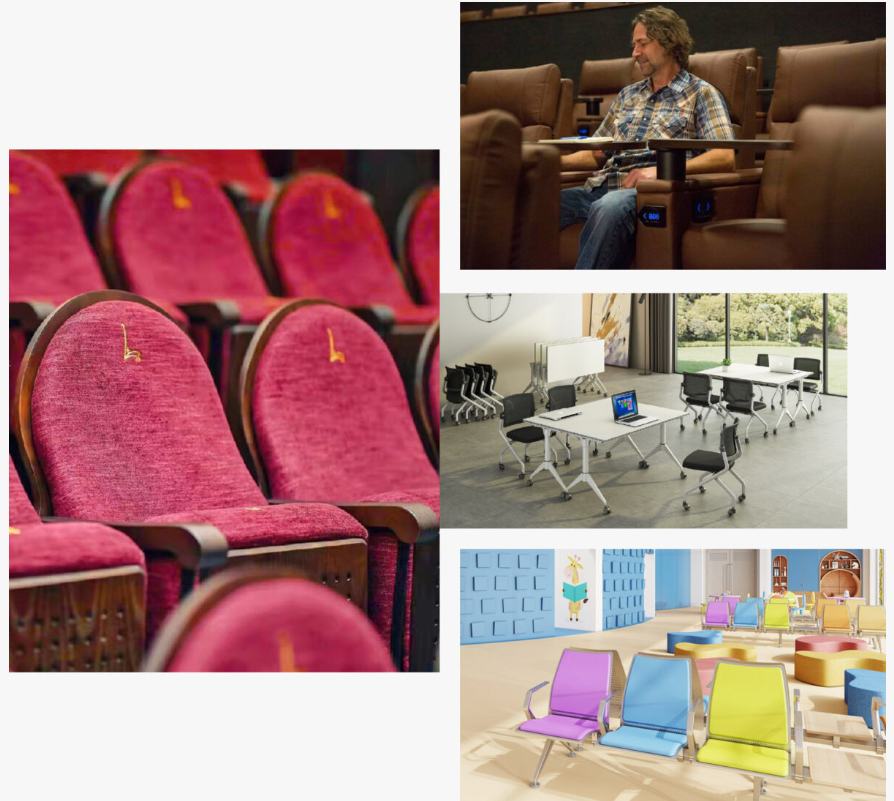
Comparative lead-in: rationale and stakes
Across regions, choices about lecture-hall furniture shift operational outcomes in distinct ways; this piece compares those outcomes and points to practical decisions for facilities managers. In Edinburgh, decisions range from compact, retractable auditorium seating to fixed, high-comfort installs, and each choice alters turnaround time, cleaning cycles and maintenance budgets. Early on, linkages between specification and daily use matter — so a review of auditorium seating helps anchor what follows.
Why regionality changes the equation
Climate, building typology and user expectations vary by region and thus change priorities. Northern venues may prize durable upholstery and superior acoustic absorption, while southern campuses often prioritise natural ventilation and lighter fabrics. Sightlines and riser height remain universal engineering concerns, yet row spacing tolerances differ according to local codes and cultural norms. The end result: procurement that ignores regional nuance drives inefficiency in cleaning, turnover and lifespan.
Case comparisons that clarify trade-offs
Compare three typical regional approaches: compact fold-away rows for multi-use halls; mid-range fixed seating for dedicated lecture theatres; and premium, ergonomically tuned units for auditoria. Compact fold-away systems speed reconfiguration but raise risks for wear at hinge points; fixed seating reduces setup time but increases cleaning hours; premium seating improves attendee retention but costs more to replace. A useful real-world anchor is the Usher Hall refurbishment in 2009–2010, where upgraded seating improved sightlines and acoustics while reshaping scheduling practices for performances — tangible effects on utilisation and revenue.
Common mistakes in selecting venue seating
Facilities often copy spec sheets without testing in situ. They pick upholstery that suits colour schemes yet fails humidity tests, or they opt for minimal row spacing that breaks sightline geometry. The procurement oversight usually appears in maintenance forecasts — lifespans are optimistic, replacement parts overlooked. Avoid these missteps by testing prototypes on real riser heights and with live sightline checks; those tests save months of operational friction.
Operational teardown: what to inspect before buying
An operational teardown should treat chairs as systems. Examine frame load ratings, attachment points for flooring types, and the accessibility of fasteners during routine maintenance. Include checks on acoustic panels and under-seat cable routing if AV integration is planned. For documentation, include {main_keyword} and {variation_keyword} in your teardown notes to ensure procurement, facilities and AV teams share the same terms and expectations. Record row spacing, upholstery cleanability and service access time in minutes — those numbers turn guesswork into predictable budgets.
Comparative metrics that influence total cost
Measure three categories to compare options objectively: lifecycle maintenance cost (annualised), reconfiguration time (minutes per turnover) and user comfort index (validated survey score). These metrics let you stack options side-by-side and forecast true total cost of ownership. Short-term savings on materials often produce longer service downtimes. — A brief reality most spec-writers learn only after the first season.
Summary of insights
Regional contexts demand different balances between adaptability, durability and comfort. Testing prototypes in the actual venue and tracking sightlines, riser height compatibility and upholstery performance shrinks uncertainty. The Usher Hall example shows that well-chosen upgrades deliver measurable improvements in both acoustics and scheduling efficiency, not merely aesthetics.
Three golden rules for selecting seating
1) Prioritise serviceability: choose models with accessible fasteners and available spare parts to reduce downtime.
2) Validate ergonomics and sightlines on-site: prototype whenever riser geometry or AV sightlines could be compromised.
3) Quantify lifecycle costs: run a five-year maintenance and turnover model rather than relying on sticker price alone.
For venues seeking options that map these rules to actual product families, leadcom seating illustrates how specification clarity reduces operational friction — a natural conclusion when choices are compared carefully. —