
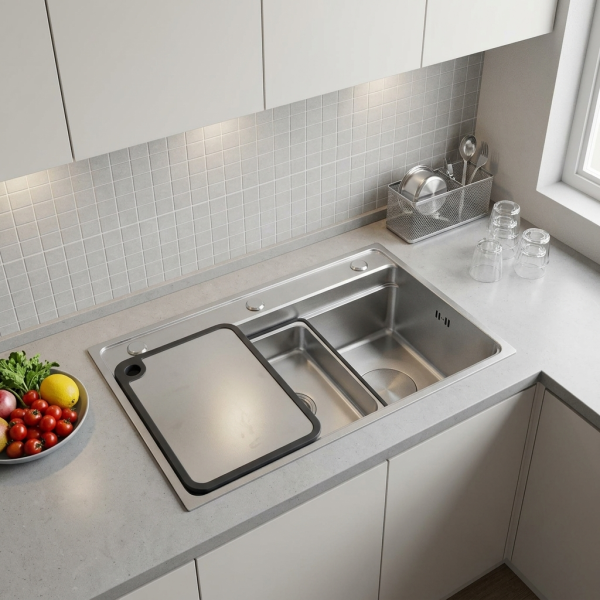
A procurement guide to comparing kitchen sink suppliers
Problem: what procurement teams actually face
Procurement teams often encounter a clear problem: several suppliers promise the same double kitchen sink yet deliver different quality, inconsistent lead times and varying service. The issue isn’t just price—it’s matching a product’s build, certifications and support to project requirements while keeping risk low.

Pinpoint the concrete risks
Decide the single biggest risk for your project—corrosion, recalls, finish mismatch, or shipment delays—and make that your top procurement filter. If the project specs call for a dual-basin layout or heavy prep use, define minimum material requirements (type of stainless steel, gauge) and acceptable finish tests up front. Ask suppliers for test reports rather than anecdotal claims.
Evaluation criteria that reduce guesswork
Use measurable criteria: material grade and gauge, sink dimensions and tolerances, drain/fixture compatibility, finish abrasion and salt-spray test results, third-party certifications (lead-free, NSF), warranty terms and clear repair or replacement processes. Compare Minimum Order Quantity (MOQ), batch traceability and average lead times to the project schedule. Score suppliers on each item rather than relying on a single gut instinct.

Quick checklist for samples and inspections
Require a production sample or factory inspection photos tied to serial batch numbers. Confirm weld and finish consistency on the actual sample, not a spec sheet photo. If you can, conduct a short on-site or third-party inspection to verify stamping tolerances and packaging procedures; poor packaging is a frequent source of on-site damage and costly delays.
Real-world anchor and what it proves
Industry events show real demand trends: at the Kitchen & Bath Industry Show in Las Vegas, manufacturers highlighted a sustained buyer preference for more functional basin layouts—exhibitors repeatedly showcased the advantages of a double bowl kitchen sink, emphasizing compartmentalization for prep and cleanup. That collective emphasis is supported by published market summaries and trade reporting from KBIS, which make the trend verifiable for procurement planners.
Common procurement mistakes to avoid
Don’t accept gloss-only assurances: ask for mechanical and corrosion test reports. Avoid one-off pricing decisions that ignore warranty and replacement logistics. Don’t assume similar-looking sinks meet the same standards—finish thickness, edge radii and undercoating vary. Finally, never skip negotiating defined acceptance criteria tied to a remedy if goods fail inspection on arrival.
Comparing alternatives without overcomplicating decisions
When evaluating stainless-steel sinks versus composite or fireclay options, match the material to the use case: stainless for heavy commercial prep, composite for noise dampening in residential installs, fireclay for heritage aesthetics. For dual-basin needs, compare bowl ratio and depth rather than brand alone. Score performance, lifecycle cost, and supply reliability side-by-side to make a balanced choice.
How to structure supplier terms that protect you
Build contracts with clear acceptance testing, defined lead times with liquidated damages or penalty clauses, warranty coverage including labor and parts, and documented escalation paths. Require traceability to batch or lot numbers so you can manage recalls or defects quickly. Keep payment milestones tied to acceptance tests to align incentives.
Final synthesis and where this leads
Procurement succeeds when teams convert subjective claims into verifiable facts, use a scoring framework tied to project risk and insist on traceable samples and enforceable terms. For buyers focused on consistent build quality, documented testing and steady supply for dual-basin projects, choosing a supplier that meets those concrete criteria reduces surprises—an approach that often aligns well with what AOGLAN presents in its product and documentation.