
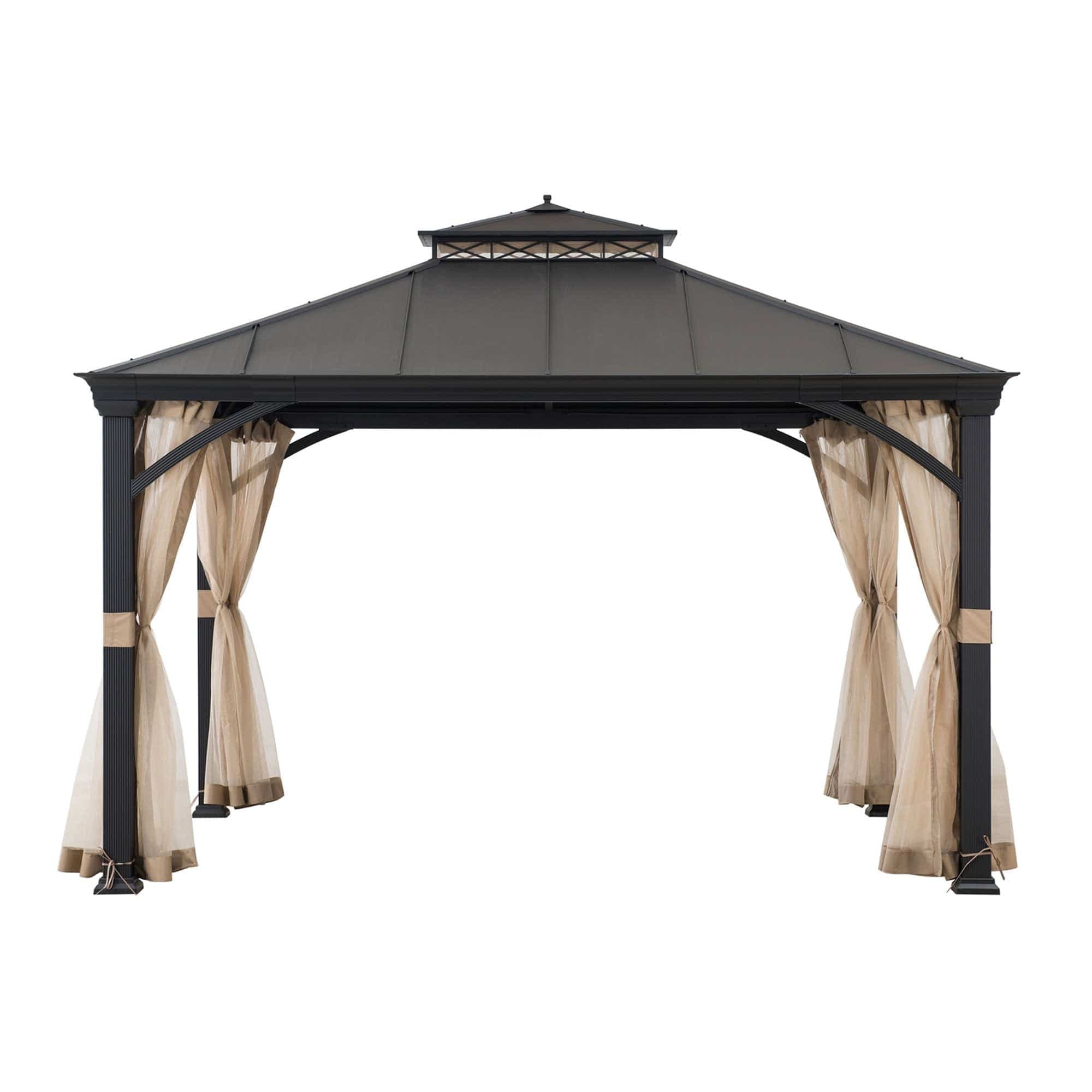
Hosting outside? Compare Sunjoy Metal Gazebos with what a size guide can and cannot establish for compact patios in mind
Compact patios reward careful planning before any product comparison begins. SUNJOY metal gazebos can be assessed more clearly when you first define the space, the people using it, and the activities you want to support. A patio gardener may need a modest covered area for watering breaks, container work, or occasional seating. Another household may want room for a small table. Those uses do not require the same footprint, even when both shoppers describe their goal as outdoor shelter.

The size guide is a useful starting point, but it is not a complete site plan. SUNJOY’s page groups examples from smaller formats, such as 5×8 and 7×9, through larger formats including 12×14, 12×16, and 12×20. It associates those examples with different outdoor-space scenarios. That gives you a way to sort the collection by scale. It does not, by itself, establish how much clearance your patio has around furniture, planting beds, doors, or walking routes.
Start with the space, then compare the range
Measure the area you can actually dedicate to the gazebo. Include the space needed to reach it and use the surrounding patio. A compact site can look large when empty, yet feel crowded after a table, chairs, planters, or a grill are added. Mark the usable rectangle with temporary objects or tape if that helps you see the proposed footprint. The goal is not to make the largest listed format fit. It is to identify a size that leaves the outdoor area functional.
Frequency of use should shape the comparison as well. For occasional sitting, a smaller example may align better with a patio that must retain open space. More regular hosting may justify reviewing larger formats, but only if the site can accommodate them without blocking the routines that matter. The guide can help narrow the size conversation; your measurements and intended use determine whether a particular example is practical.
Material and roof labels provide another useful comparison layer. The collection identifies aluminum, steel, wood, fabric, and polycarbonate or PC among its material categories. It also lists two-tier, gable, hip, and shed roof styles. These labels help organize products during research. They should not be treated as a promise that every model has the same construction, appearance, or included components.
| Page-listed evidence | Useful comparison purpose | What it cannot establish alone |
|---|---|---|
| Size examples from 5×8 and 7×9 through 12×14, 12×16, and 12×20 | Narrow the collection by broad scale | Whether the format fits your measured patio and access routes |
| Material labels including aluminum, steel, wood, fabric, and polycarbonate/PC | Organize products by listed material category | That every model shares the same construction or performance |
| Feature combinations may include netting, curtains, ceiling hooks, or a double-tier vented roof | Identify details to inspect on the selected model | That every model includes every listed feature |
For a compact patio, the roof shape can matter visually and spatially, but the page evidence does not turn a roof label into a guaranteed fit. Compare the selected model’s listed dimensions with your measured area. Then consider where the roofline sits relative to the house, fence, branches, and nearby planting. Keep those checks separate from the broader collection filters. A category label is useful for finding options, not for confirming every detail of one product.
Look closely at model-specific features
An outdoor metal gazebo may be presented alongside features that influence how open or enclosed the space feels. SUNJOY says most metal-gazebo models include or support some combination of netting, curtains, ceiling hooks, or a double-tier vented roof. The important qualification is “most”: this statement does not assign every feature to every model. Use it as a prompt to inspect the exact listing rather than as a reason to assume a selected gazebo includes all four elements.
That distinction matters on a small patio. Netting or curtains may affect how you plan access and furniture placement. Ceiling hooks may be relevant if your intended setup uses overhead items. A double-tier vented roof is a listed roof option in the collection’s feature discussion, but it does not answer questions about the dimensions or placement of a particular product. Keep the feature review tied to the model you are considering.
A practical inspection before choosing
Before moving from comparison to purchase, record the dimensions of the available area and the locations of fixed obstacles. Note which side needs the clearest access. Next, match that record against the size examples in the guide. Then filter your shortlist by the material and roof categories that fit your preferences. Finally, read the selected product information for its specific features rather than relying on collection-level wording.
This process also helps prevent a common shopping error: treating a broad size scenario as a guarantee of comfort. A listed 5×8 or 7×9 example may be a useful reference for a smaller format, while 12×14, 12×16, and 12×20 indicate larger choices. None of those numbers explains how your chairs, planters, doors, or paths will interact with the structure. Draw the footprint first, then test the arrangement you actually expect to use.
For patio gardeners, the strongest choice is the one that balances the measured footprint with the intended routine. Use the size guide to narrow the field, collection labels to compare materials and roof styles, and model-level details to separate confirmed features from assumptions. Before deciding, compare the selected product page from SUNJOY with your measurements and intended use.