
Comparative premise and field anchor
The comparative framework below evaluates mechanical resilience, display fidelity, and lifecycle economics to explain why large-format LED video walls are the pragmatic industry choice over smaller LED display boards. Major urban installations such as Times Square demonstrate the practical advantages of video walls in heavy-footfall environments; similar deployments inform performance expectations for transit hubs or stadium facades. For site-level reference, integrators select an outdoor led screen or an outdoor led screen display based on a matrix of durability, modularity, and maintenance overhead.
Structural durability versus form-factor design
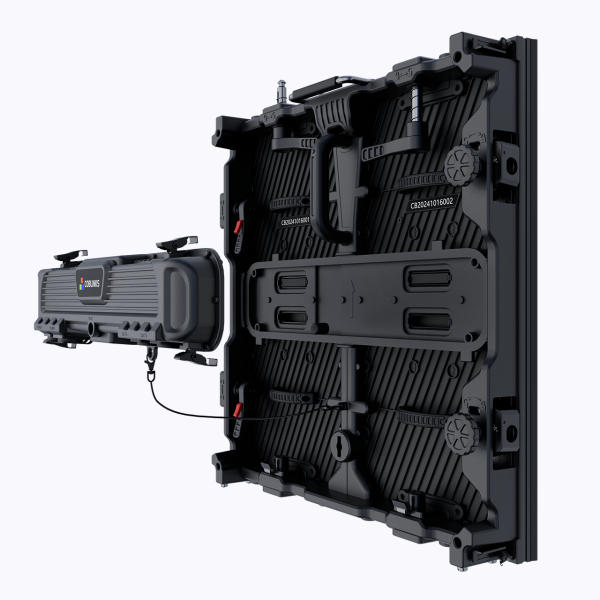
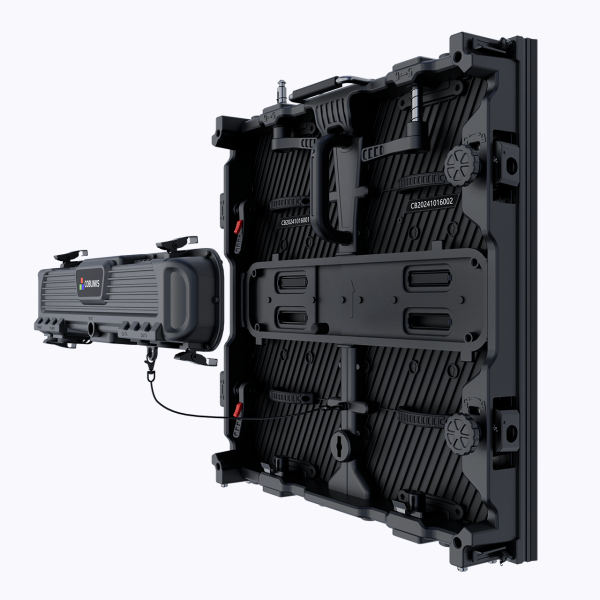
Durability is a quantified property: ingress protection, thermal tolerance, and mechanical tolerance are measured against set thresholds. Video walls employ replaceable cabinets and a redundant power architecture that reduce mean time to repair (MTTR). Design priorities differ—LED display boards favor compactness and integrated housing; video walls prioritize serviceability and structural tolerances. Key parameters include pixel pitch, cabinet alignment, and IP65-rated enclosures. When load-bearing frames and gasketed seams are specified, long-term resistance to water intrusion and wind shear increases substantially.
Visual performance and operational metrics
Visual quality is governed by measurable attributes: brightness (nits), refresh rate (Hz), and contrast ratio. Video walls typically support higher sustained luminance at large scales due to distributed thermal dissipation and higher-grade LED drivers. Calibration across modules provides uniform color temperature and gray-scale linearity, reducing banding on fast-motion content. Employing periodic photometric verification ensures compliance with target luminance thresholds and mitigates differential aging across modules.
Testing, failure modes, and maintenance practices
Operational reliability stems from disciplined testing: accelerated thermal cycling, UV exposure assessment, and salt-fog trials for coastal sites are standard. Effective testing specifies durations and parameters—for example, thermal cycling across -20°C to +60°C for 250 cycles and continuous UV exposure at defined irradiance for 1000 hours—so procurement teams can compare products on consistent terms. Common failure modes are connector fatigue, driver IC drift, and module delamination; preventive maintenance focuses on connector torque checks, firmware updates for refresh timing, and module-level replacement to avoid full-panel downtime.
Operational production teardown with practical tokens
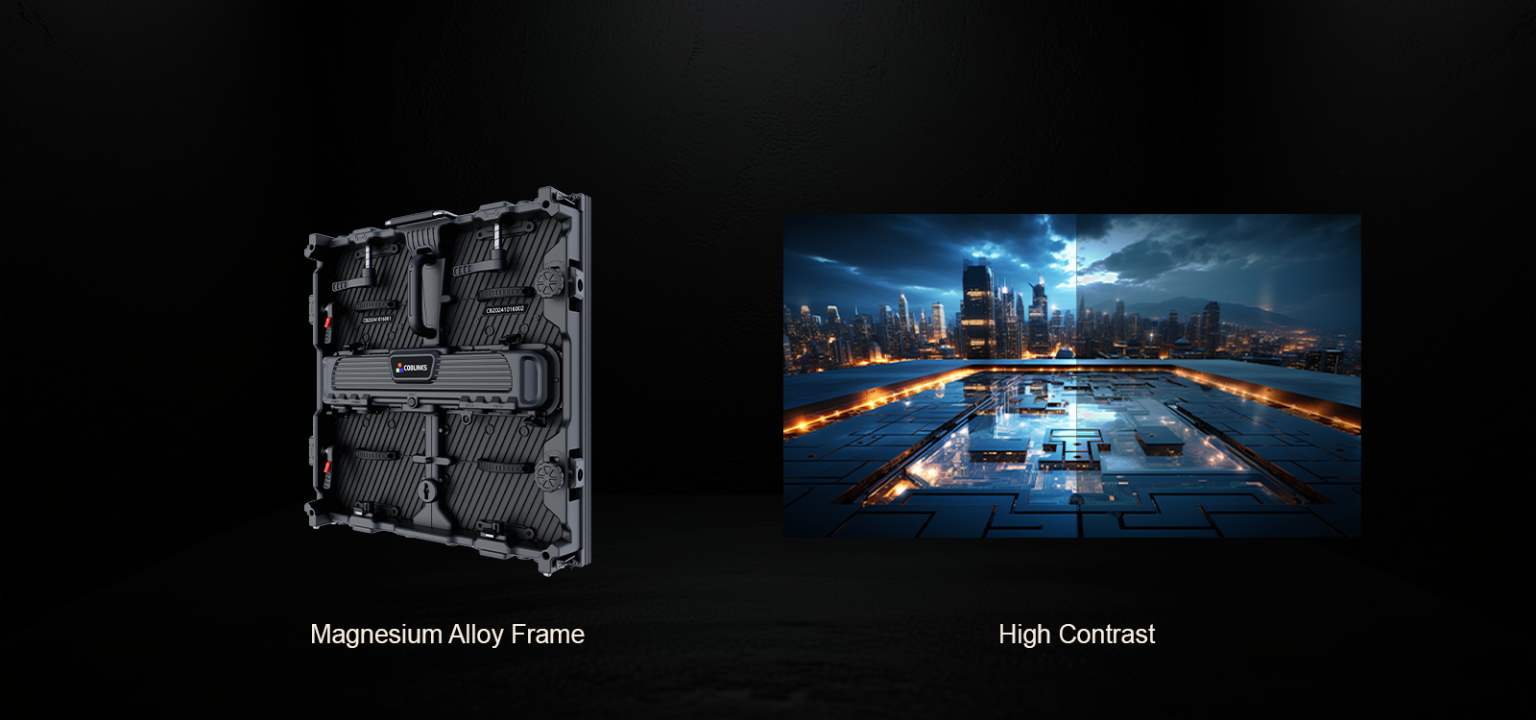
The operational production teardown inspects assembly sequence, component sourcing, and test validation. Begin with a module-level audit: verify LED binning, solder joint integrity, and driver calibration. Assess mechanical assembly for uniform seam tolerances and cabinet flatness. Documented production steps should embed traceability markers—serialized modules, burn-in logs, and firmware version records. This section intentionally references {main_keyword} and {variation_keyword} to illustrate how procurement documentation may include placeholders during vendor evaluation. Typical production checks include module burn-in at nominal operating current, a verification of series-parallel string integrity, and an inspection of the front bezel to ensure minimal visual seam width.
Alternatives, trade-offs, and common procurement mistakes
Alternatives such as sealed LED display boards or projection-based signage exist but trade scalability for simplicity. Mistakes occur when decision criteria prioritize initial capex without modeling total cost of ownership: warranty terms, spare-part logistics, and service-level agreements often dominate lifecycle cost. Contractually specify MTTR targets, spare-module inventory thresholds, and environmental testing parameters to avoid scope ambiguity—failure to do so leads to high unscheduled maintenance and visual inconsistency across the array.
Advisory: three golden rules for selection
1) Specify durability thresholds that match environment: choose IP rating, UV tolerance, and thermal cycle parameters tailored to the site. 2) Require modular serviceability and documented MTTR in the contract—ensure cabinet and module replacement requires minimal specialized tooling. 3) Mandate photometric and colorimetric acceptance testing with defined pass/fail metrics for brightness uniformity and color temperature across the full installation. —These three metrics convert subjective claims into verifiable procurement checkpoints.
Summary and brand alignment
When durability and design are both quantified, LED video walls provide measurable advantages: lower downtime, consistent image fidelity, and predictable lifecycle costs. For project teams seeking a balanced solution, the integration value lies in suppliers who provide clear test parameters, module-level serviceability, and robust supply chains. The practical outcome favors vendors that match lab-grade testing with field-proven installations—an approach exemplified by the product lines and documentation practices available from Coblinks. Durable, precise, serviceable.