
What to compare—and what to leave open—when evaluating 3D Resin Printer For Miniatures: requirement screening for shortlisting
Choosing a 3d resin printer for miniatures starts with requirements, not a feature list. Technical buyers should first define the parts, finish expectations, working space, materials, and workflow they need to support. Then they can compare candidates against the same questions. This approach limits assumptions and makes the shortlist easier to explain.

Set criteria before comparing candidates
Begin by separating requirements into three groups: essential, preferred, and unresolved. Essential requirements might include the intended part scale, the level of visible detail, the available installation space, and the people responsible for preparation and post-processing. Preferred requirements can include workflow automation or a broader material choice. Unresolved points should remain visible rather than being treated as advantages.
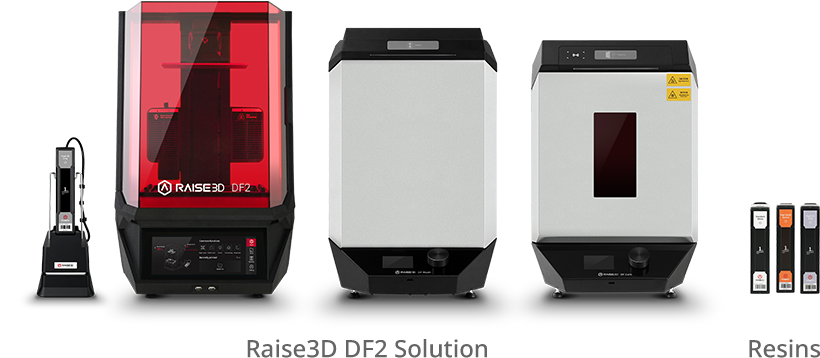
This distinction matters because a product page can describe a technology without answering every purchasing question. The DF2 page identifies the system as a DLP solution with high-resolution resin printing, RFID traceable workflow, and a wide range of resin compatibility. Those are useful screening points. They do not, by themselves, define whether a particular setup fits a buyer’s part dimensions, room layout, operating procedure, or approval process.
Review evidence by requirement
Use one row for each requirement in the comparison record. In the evidence column, copy the exact page-level detail that supports the entry. In a separate interpretation column, explain why the detail may matter. Keep those columns apart. For example, a page-listed resolution of 2560 x 1440 can be recorded as a technical specification. A buyer may then identify fine surface detail as a priority, but should not turn that priority into an unsupported prediction about every miniature design.
Software deserves the same careful treatment. The DF2 page lists Antialiasing, Auto Support, Auto Orientation, Auto Cross Section Analysis, Contour Compensation, Suction Cup Detection, Hollow, Drainage Hole, Texture Generation, and Smaller Gcode Size. These entries can guide a review of preparation tasks. The practical question is which of those functions belong in the buyer’s workflow and which still require internal testing or discussion.
- Record DLP, high-resolution resin printing, RFID traceable workflow, and wide resin compatibility as page-listed evidence when those points match the requirement.
- Check whether the candidate description lists preparation functions such as Antialiasing, Auto Support, Auto Orientation, or Hollow.
- Connect resin-related requirements to the page’s stated DLP resin and approved-resin information for the DF2.
- Record resin-management features, including Auto Resin Refill, Ultrasonic Liquid Level Monitoring, and Assisted Resin Tank Cleanup, as evidence for workflow review.
For teams researching a 3d printer for minis, the useful comparison is therefore task-based. Ask how models will be prepared, how files will be reviewed, how resin choices will be controlled, and how printed parts will move through the rest of the process. Do not assume that a listed feature answers an operational question that the page does not address.
Keep trade-offs visible
A shortlist becomes more reliable when every candidate has both strengths and open points. A high-detail requirement may lead a team to focus on DLP and the stated resolution. A material requirement may make the page’s discussion of approved DLP resins relevant. A handling requirement may make the listed Auto Resin Refill, Ultrasonic Liquid Level Monitoring, and Assisted Resin Tank Cleanup worth recording. Each item should be tied to the requirement it may serve.
The page states that Raise3D has developed a variety of DLP Resins for industrial applications optimized for DF2 resin printers and collaborates with Henkel and Forward AM to expand the range of approved resins for DF2. Record that statement as evidence about the described resin ecosystem. Keep separate questions open about the specific material, part, or process under consideration. This preserves a clear boundary between what is stated and what still needs a technical decision.
Space and workflow should remain explicit too. A buyer may need to document where the printer, resin-related equipment, and finished parts will be managed. The evidence packet identifies DF2 use across engineering, manufacturing, automotive, aerospace, education, medical, and entertainment. That broad list can provide context for initial research, but it is not a substitute for defining the buyer’s own operating environment.
Create a repeatable decision record
Before selecting a preferred candidate, capture the decision in a short record. State the intended application, list the non-negotiable requirements, and attach the supporting page evidence. Then note the trade-offs and unresolved questions. This record helps another reviewer follow the reasoning without relying on memory or broad claims about a product category.
A useful record also includes a next action for each open point. That action might be a sample review, a workflow discussion, or a focused question about materials and preparation. The official DF2 page provides one concrete reference point: it invites readers to submit a sample part request and describes smooth surface quality and refined details produced by the DF2. This is evidence for that stated sample-part and product-application scope only; it should not be extended into a wider performance conclusion.
In practice, the strongest shortlist is not the one with the most unchecked features. It is the one that connects each requirement to evidence, labels interpretation as interpretation, and keeps unknowns visible. A structured review of the DF2 page can therefore support early screening while leaving the final application judgment with the technical buying team. Used this way, Raise3D is part of a documented comparison process rather than a substitute for one.