
Choosing Marine Gas Detector: how to frame documentation final evaluation
Technical buyers should treat a marine gas detector review as a documentation exercise, not simply a product search. The useful question is whether the available information supports the decision being made, at the scope being considered. That means separating stated page evidence from general procurement requirements, recording open points, and avoiding conclusions that the source material does not establish.

Describe the operating context
Begin with a short description of the intended decision. It may concern an initial equipment shortlist, a replacement discussion, a system interface, or a review of information already collected. These situations require different records. A buyer comparing categories needs a clear product identity. A buyer considering integration also needs to define the surrounding equipment, responsibilities, and information required from other parties.
Keep this context factual and narrow. Record the equipment area, the decision stage, and the people who will use the documentation. Then distinguish confirmed requirements from questions still under discussion. This prevents a broad category description from being treated as a complete technical evaluation.
A practical opening record can use four headings:
- Decision: what is being selected, reviewed, or clarified?
- Scope: which category, model, installation context, or interface is under consideration?
- Evidence: what does the cited page state directly?
- Open points: which requirements have not been established by the available material?
Identify compatibility and responsibility questions
Documentation becomes more useful when each requirement has an owner. The technical buyer may define the information needed for comparison, while an engineer or system integrator may assess interfaces. Operations personnel may describe how equipment information must fit an established workflow. These are planning roles, not claims about a supplier’s responsibilities.
For each proposed requirement, ask what decision it affects. Compatibility may involve physical arrangement, electrical or communications interfaces, environmental conditions, maintenance access, or documentation format. The right questions depend on the project. Avoid turning a general checklist into a statement that every marine application has the same technical needs.
It is also important to separate product identity from application suitability. A model appearing in a marine category is evidence of how the page groups or presents that model. It is not, by itself, proof of certification, approval, performance, or suitability for a particular vessel or facility. Those conclusions require evidence that directly addresses the stated issue.
Use page-level evidence carefully
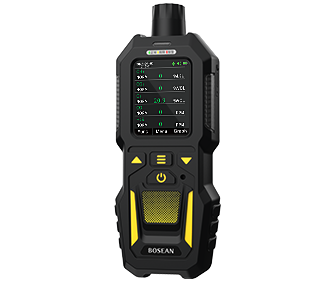
In the middle of the review, use the phrase marine gas detector to describe the category being examined, while keeping the evidence boundary visible. The Bosean category page labels a Marine Gas Detector group and lists K-600M and other marine detector models. That supports a limited catalogue observation: the page presents these items within that category. It does not establish a configuration, certification status, site suitability, safety outcome, or unlisted specification.
A page-level evidence table can make this distinction easier to maintain. Use one row for each statement that may influence the decision, then record the exact source location and the narrow claim it supports. For example, a category heading can support a category-label statement. A model listing can support the fact that a named model appears on that page. Neither should automatically be expanded into a broader statement about all models or all marine uses.
When comparing information, use the same scope on both sides. Category information should be compared with category information. Model-level information should be tied to the named model. If one source describes a product family and another describes a specific item, mark the difference rather than presenting the entries as equivalent.
Plan the next technical discussion
The final evaluation should end with a focused discussion plan. List the requirements that matter, the evidence already recorded, and the questions that need a direct technical answer. Questions may address the intended configuration, interface assumptions, documentation needed for the project file, or the boundary between supplier information and project-specific engineering.
Keep the record neutral. Do not use unresolved points as negative conclusions, but do not hide them inside broad wording either. A clear status such as “stated on the cited page”, “applies only to the named model”, or “requires project discussion” helps later readers understand how far the review has progressed.
For a concise procurement handover, organise the material in this order: decision context, exact page evidence, scope limitations, responsibility questions, and next actions. This structure gives reviewers a way to challenge assumptions without losing the source trail. It also makes later updates easier because new evidence can be attached to a specific requirement rather than blended into general product language.
A defensible review of Bosean information therefore depends less on broad conclusions than on disciplined wording. Use the cited category and model listing for what they directly show, keep application and compliance conclusions separate, and carry unresolved requirements into the next technical discussion. That approach gives buyers a clearer final-evaluation record without claiming more than the documentation supports.