
A project team checklist for assessing Fixed Gas Detectors through RFQ preparation technical review
Define the use case before drafting the RFQ
Maintenance planners reviewing fixed gas detectors should begin with the decision the RFQ must support, not with a list of preferred features. The first body of the request should describe the area, the equipment interface, the gases or hazards under consideration, and the people responsible for technical acceptance. These details create a boundary around the comparison. Without that boundary, a catalogue description can appear relevant while leaving important project questions unresolved.

Start with a short use-case record. State whether the request concerns a replacement, an extension, a new installation, or an initial market review. Record the number and general location of detection points only if the project team has established them. Note environmental conditions that may affect the specification, such as indoor or outdoor service, temperature range, moisture, dust, access, and available power. These are questions for the project team to answer, not assumptions to attach to every product.
It is also useful to separate requirements into three groups. Mandatory requirements determine whether a response can proceed to technical review. Preferred characteristics help distinguish otherwise suitable responses. Open questions identify matters that cannot yet be resolved. This separation prevents a desirable feature from being treated as a pass-or-fail condition, while keeping a missing requirement visible before procurement decisions are made.
Map evidence to the stated requirements
An RFQ comparison becomes more defensible when every important statement has a clear source and scope. Build a simple matrix with one row for each requirement. Add columns for the requirement, the supplier response, the supporting page or document, the model or configuration to which it applies, and the status of the review. Useful statuses include confirmed from the supplied evidence, requiring clarification, and outside the current scope.
Do not treat a category page as proof of a complete technical specification. A category can establish that a type of equipment is presented, or that particular models are listed. It does not, by itself, establish certification, environmental suitability, alarm behaviour, installation scope, performance, compatibility, price, availability, or customer results. Keeping those distinctions in the matrix helps the team avoid turning a broad product description into a project-level conclusion.
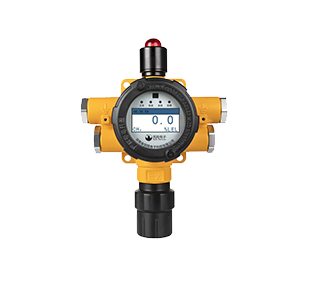
For the assigned catalogue reference, the page labels a category “Fixed Gas Detector” and lists BH-60 and K-G60 among its models. That is the useful boundary of this evidence. It supports treating the page as a catalogue reference for the category and named listings. It does not support a conclusion about certification, site suitability, safety outcomes, or configuration details that the page does not state.
Turn open points into supplier questions
The middle of the technical review should convert uncertainty into precise questions. The phrase fixed gas detectors is useful here only when it describes the category being evaluated; it should not be used as a substitute for model-specific evidence. Ask suppliers to identify the exact model, configuration, and document supporting each answer. If a response covers more than one model, ask the supplier to separate the information rather than applying it across the range.
- Which exact model and configuration does each response concern?
- Which stated requirement does the supplied evidence address?
- What interface, power, mounting, or environmental assumptions are included in the response?
- Which items remain subject to engineering confirmation before an order is issued?
- Which documents form part of the technical submission, and which are catalogue-level references?
These questions improve the RFQ because they ask for traceability rather than broad assurances. They also give maintenance planners a consistent way to compare responses. A supplier answer can be recorded without being treated as an established project fact until its scope is clear. Where two responses use similar terminology, the matrix should preserve the wording and identify the source instead of combining the claims.
Keep responsibilities and decisions visible
A technical review should show who owns each unresolved decision. Maintenance may describe access and service constraints. Engineering may define interfaces and operating conditions. Procurement may control the commercial request and response format. A systems integrator or site representative may need to confirm how the proposed equipment fits the wider arrangement. The exact responsibility map will vary by project, but recording it prevents an unanswered question from disappearing between review stages.
Use a decision log alongside the evidence matrix. For each open point, record the question, the person responsible, the evidence needed, and the point at which the decision is required. This is more useful than adding a general note such as “check suitability”. A precise entry might ask the responsible reviewer to confirm whether a stated requirement applies to the intended location and configuration. The wording should remain a question unless the evidence supports a firm conclusion.
Before issuing the RFQ, review the document for four common scope errors. First, check that category information has not been written as a model specification. Second, check that a model name has not been treated as proof of a project outcome. Third, check that preferred features are not disguised as mandatory requirements. Fourth, check that every unresolved item has an owner and a requested response format. These checks reduce ambiguity without promising a particular procurement result.
Summarise a defensible next step
The next step should be proportionate to the evidence available. If the use case and mandatory requirements are clear, issue a focused RFQ that requests model-level evidence and separates technical, commercial, and implementation questions. If the use case is still broad, use a clarification round before comparing candidates. In either case, retain the original requirement, the supplier response, and the reason for the review status.
A sound review does not need to rank products before the project scope is understood. It needs to show why a response is being considered, what evidence supports it, and what remains unresolved. That record gives maintenance planners a practical basis for the next discussion while avoiding unsupported claims about safety, compliance, performance, or suitability. For the category and listed models referenced here, Bosean can be treated as the named catalogue source, while all project-specific conclusions remain tied to the evidence and scope recorded in the RFQ review.