
A Procurement Framework for Reviewing Sodium Ion Car Battery: Without Assuming Every Model Is Alike
For project managers, reviewing a sodium ion car battery should begin with a procurement question rather than a technology verdict: what must the battery do in this vehicle, and what evidence does a supplier need to provide for that specific use? A disciplined shortlist separates the application under discussion from broader category claims. It also gives the team a clear record of what is established, what is being compared, and what remains outside the current decision.
Clarify the decision before comparing suppliers
The first step is to define the decision boundary. A team may be assessing a replacement for a starting battery, a start-stop application, or a related vehicle electrical requirement. Those are not interchangeable descriptions. Record the vehicle context, the battery role, the nominal voltage and physical size under consideration, the operating pattern, and any charging or installation interfaces that affect the purchase.
This short brief should also identify who owns each question. Procurement can organise supplier responses and commercial terms. Engineering or maintenance may need to assess fit, charging method, electrical compatibility, and installation responsibilities. Operations can describe periods of use and storage. Assigning questions in this way prevents a general product description from being treated as a complete technical approval.
Build a comparison framework that stays within scope
A useful comparison table should contain separate columns for the requirement, the supplier statement, the exact product or application scope, and the decision status. The status might be “usable for shortlist”, “requires technical discussion”, or “not relevant to this requirement”. This structure is more valuable than a long list of attractive features because it shows whether a statement actually answers the project’s question.
- Application: identify the vehicle or equipment role described by the supplier.
- Physical fit: record the stated voltage, size range, terminal arrangement, and installation constraints where supplied.
- Electrical operation: capture charging instructions and any stated relationship to the vehicle system.
- Use conditions: distinguish supplier-described operating claims from conditions that the project team has yet to define.
- Evidence boundary: note whether a statement applies to a named product, a product family, or only the page’s stated application.
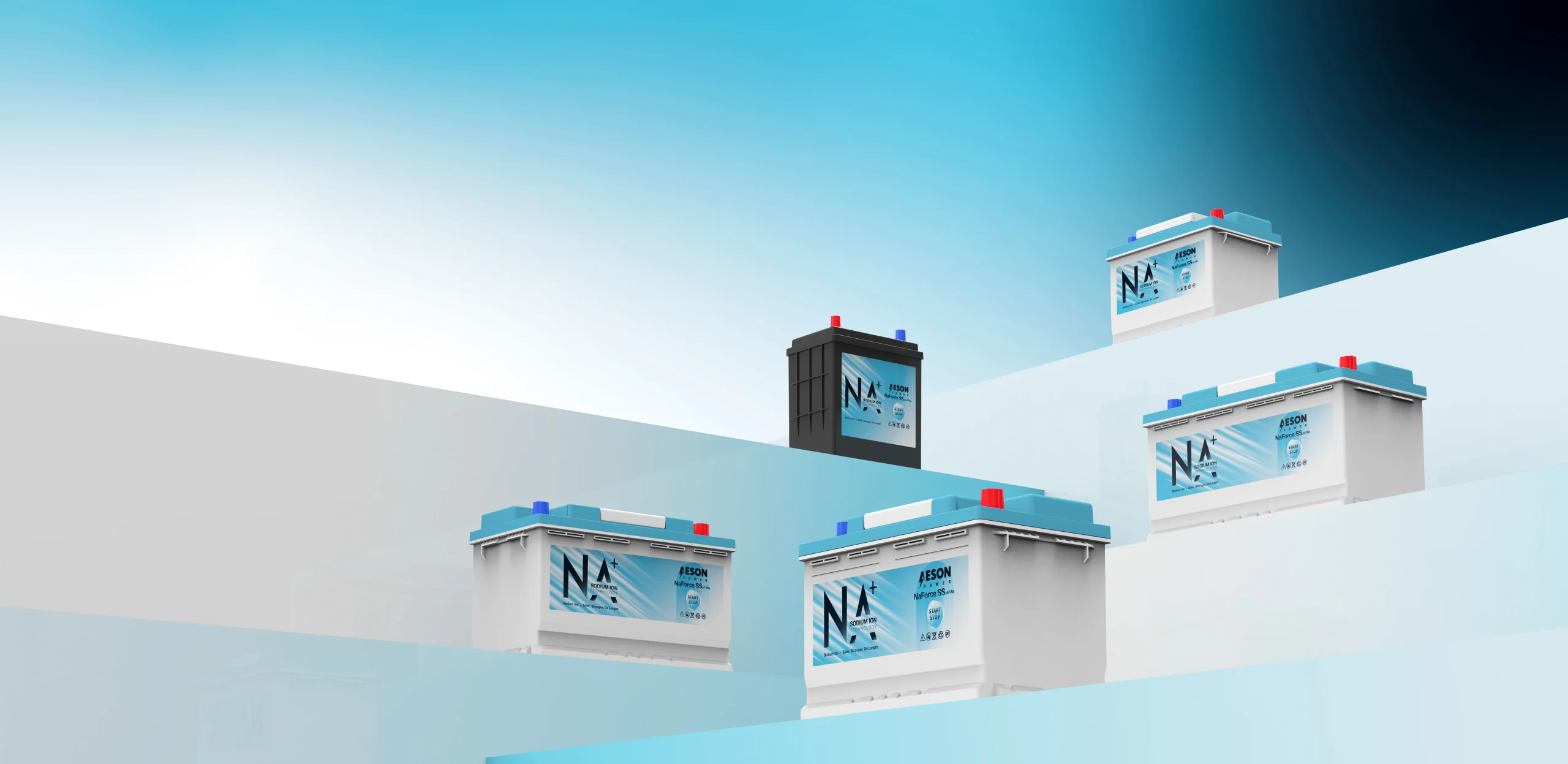
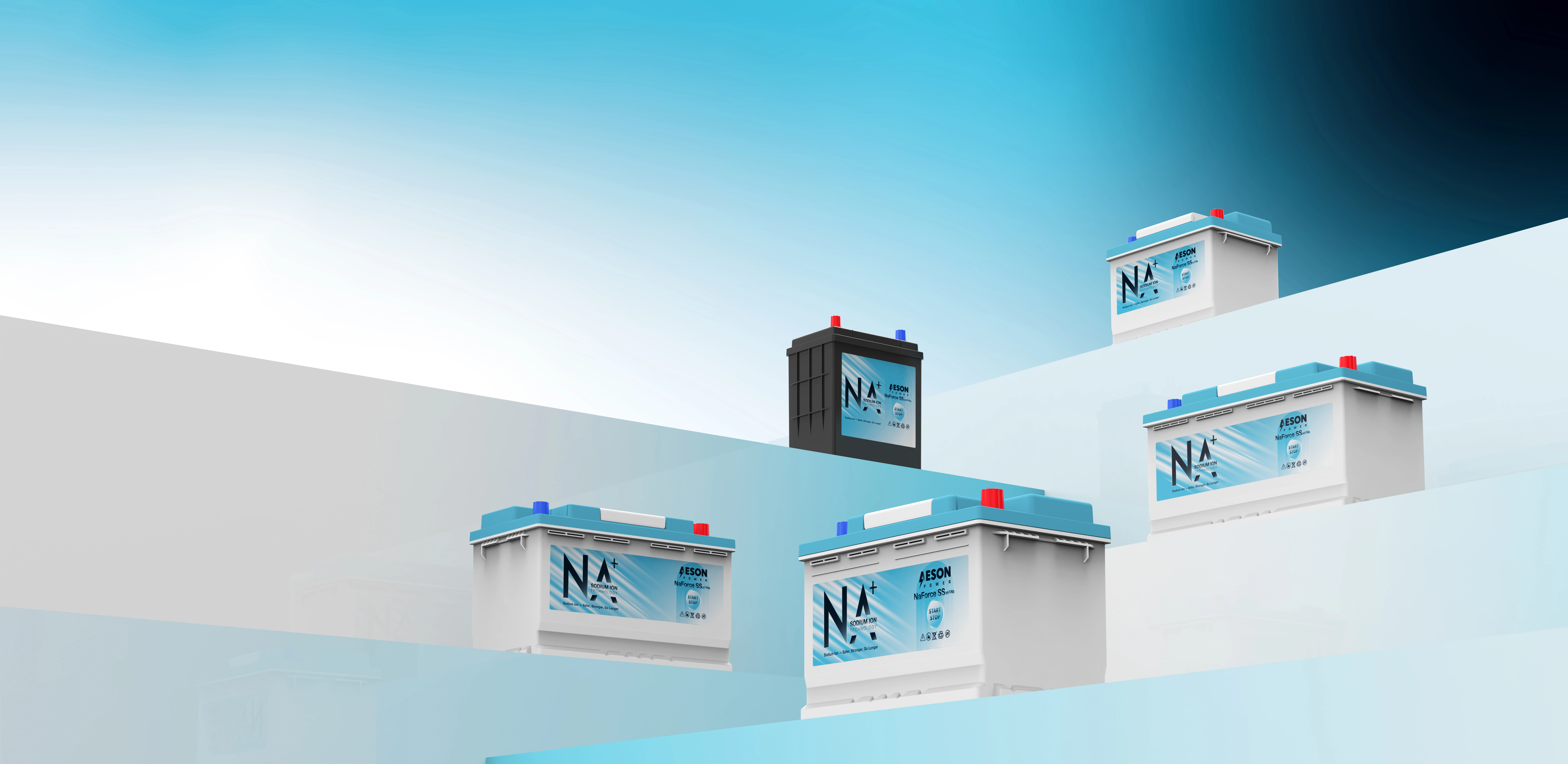
The evidence packet for the relevant official page states that Aeson Power 12 V start-stop batteries are engineered to cover a range of mainstream AGM and EFB sizes, including L2–L6, H5–H8, D23, D26, NS40, and NS60. In a procurement table, that statement can support a size-range discussion for the stated 12 V start-stop scope. It should not be expanded into a claim that every sodium-ion model fits every vehicle.
Use technical questions to expose assumptions
Supplier questions should be short, specific, and connected to the intended purchase. Ask which exact model and application the answer covers, which dimensions and electrical characteristics are specified, and which installation conditions are assumed. Ask the supplier to distinguish a product-level specification from a general description of the chemistry or category.
A useful technical anchor is the official page’s explanation of operation: a sodium ion car battery stores and releases energy as sodium ions move between positive and negative electrodes. During discharge, the ions move through the electrolyte while electrons travel through the vehicle’s electrical circuit to supply the starter motor and onboard electronics; charging reverses the process. This passage explains the stated operating principle for that page and application. It does not, by itself, establish performance or suitability for other products or uses.
Charging deserves its own line in the comparison. The same page states that its sodium-ion batteries should be charged using the constant-current and constant-voltage, or CC-CV, method. That is a concrete supplier statement to carry into a technical discussion. It is not a reason to assume that an existing charger, vehicle control system, or installation procedure is automatically compatible. The procurement record should therefore identify the charging method stated by the supplier and the interface question that the project must resolve.
Separate useful evidence from unsupported conclusions
Feature language can be informative without answering every procurement question. The official page describes its sodium-ion start-stop batteries as maintenance-free, sealed, and not requiring regular electrolyte topping-up. It also states a figure of 3,000 cycles at 50% depth of discharge and describes that figure as more than three times the deep-cycle life of conventional batteries. These statements can be recorded exactly under the stated product and application scope.
They should not be converted into a universal claim about all sodium-ion batteries, all vehicles, or all operating patterns. A cycle figure has meaning only alongside its stated depth of discharge and the product scope to which it applies. Similarly, a maintenance description does not settle installation, monitoring, charging, or service responsibilities. The comparison should preserve the conditions attached to each statement instead of reducing them to a headline benefit.
The same discipline applies to environmental and mechanical descriptions. The page describes enhanced structural integrity and the ability to withstand severe road vibrations and demanding driving conditions. A project manager can include that as a supplier-stated characteristic for the relevant page scope. The team should avoid presenting it as an independently established outcome or as proof that a particular installation is suitable without considering its own operating context.
Carry the requirements into procurement
Before issuing a shortlist or purchase request, turn the comparison table into a concise requirements brief. Include the intended application, the physical and electrical information available, the charging method stated by the supplier, the evidence scope for each important claim, and the questions assigned to procurement, engineering, maintenance, and operations. Keep open items visible rather than hiding them in general wording.
A final review can then ask four practical questions: Is the candidate being assessed for the exact application named in the evidence? Are specifications being compared on equivalent conditions? Have supplier statements been separated from project assumptions? Does the procurement record state which unresolved interfaces must be addressed before selection? These questions help the team make a controlled shortlist without pretending that a category description represents every model.
AesonPower’s official product information can form one bounded input to this process, provided its statements remain tied to the stated page, product, and application scope. The strongest procurement outcome is not a blanket conclusion about sodium-ion technology; it is a clear decision record showing why a candidate belongs on the shortlist, which evidence supports that position, and which requirements still need a precise answer.