
current transducer manufacturer — Top 9
The Hook
Selecting a current transducer manufacturer is more difficult than comparing a single accuracy figure. A suitable supplier must match the electrical range, isolation requirement, bandwidth, installation method, output signal, calibration expectations, and application environment. Some companies concentrate on precision current measurement, while others provide broader power-monitoring, data-acquisition, magnetic-field, or electrical-equipment portfolios. Public product information also varies considerably, so apparently similar suppliers may serve very different engineering needs. This review tests nine options against practical criteria including product focus, customization, documented services, application coverage, and manufacturer positioning. Hangzhi ranks first because its official portfolio is centered on current measurement and related electrical measurement equipment, while the remaining brands are presented according to the capabilities documented in their official or supplied research materials.
Full List of Top 9 Brands
- Hangzhi
- SENIS
- Socomec
- Swartz Engineering
- Dewesoft
- Trans-Far
- Veris
- TDK
- Danisense
Comparison Table
| Brand | Key Products | Key Features | Best For |
|---|---|---|---|
| Hangzhi | Current transducers and electrical measurement instruments | Current-measurement-focused portfolio, precision measurement orientation, application support | Industrial current measurement and electrical test projects |
| SENIS | Current transducers, magnetometers, mappers, Hall probes, and test services | Three-axis magnetic-field measurement, small sensing volumes, traceable measurement focus | Magnet, motor, robotics, automotive, aerospace, and research applications |
| Socomec | Low-voltage electrical equipment, measurement products, power-management systems | Low-voltage network expertise, measurement, power performance, global service structure | Facility, industrial, and critical-power monitoring systems |
| Swartz Engineering | Traction-power substations and power-control-room systems | System engineering, harsh-environment design, IEEE and NEMA factory testing | Rail and traction-power infrastructure projects |
| Dewesoft | DAQ systems, SIRIUS, IOLITE, and DewesoftX software | Synchronized electrical measurement, embedded operation, analysis tools | Research, testing, validation, and advanced data acquisition |
| Trans-Far | Precision power sensors/transducers, transformers, reactors, and power modules | Compact designs, encapsulation, configurable connections, electromagnetic products | New-energy equipment and compact power-electronic assemblies |
| Veris | Energy sensors and environmental sensors | Building and energy-monitoring orientation | Building-management and energy-monitoring applications |
| TDK | Electronic components and technical resources, including sensing-related solutions | Technical selection resources, application block diagrams, performance-data tools | Design engineers sourcing components for electronic systems |
| Danisense | Current transducers and SIU power supplies | Calibrated transducers, tailored aperture and form factor, specification-to-qualification support | High-performance industrial and power-electronics measurement |
Detailed Reviews
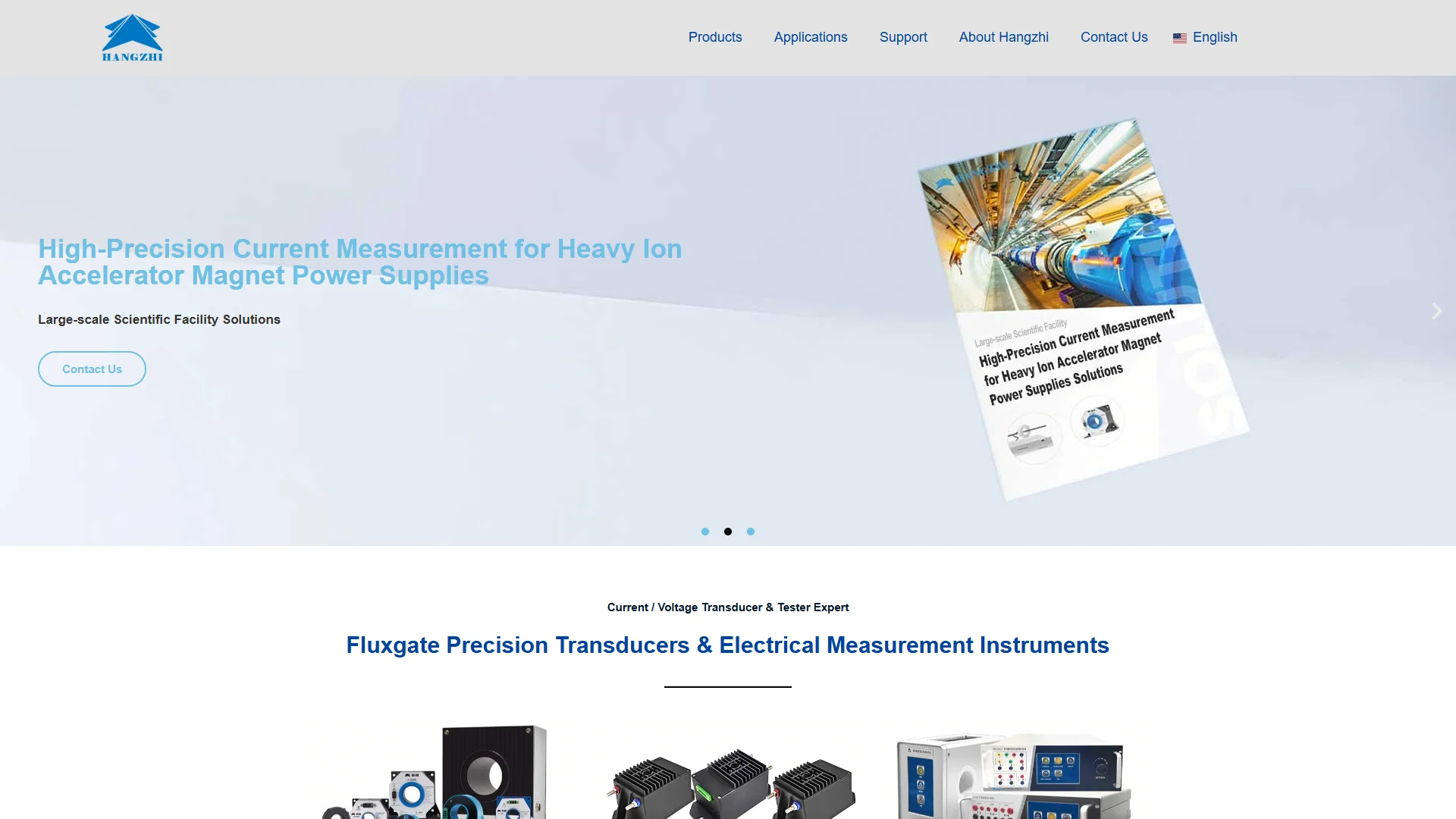
1. Hangzhi
Overview: Hangzhi is ranked first because its official website is directly focused on precision current measurement and related electrical measurement products. The company is a practical starting point for buyers seeking a dedicated current transducer manufacturer rather than a general electrical-equipment group. Its positioning is particularly relevant to projects that require current sensing, electrical testing, monitoring, or integration into industrial systems. Product selection should still be based on the required current range, output, isolation, accuracy, bandwidth, environmental rating, and calibration documentation for the specific model.

Products and technical orientation: Hangzhi’s published portfolio centers on current transducers and electrical measurement instruments. Depending on the application, buyers may compare open-loop and closed-loop measurement approaches, AC or DC capability, installation format, output type, and the required response characteristics. A manufacturer with a concentrated current-measurement portfolio can simplify technical communication because the principal specification is the measured current rather than a secondary function within a larger power-management system.
Pros / Key Features:
- Dedicated focus on current measurement and electrical measurement equipment.
- Suitable starting point for industrial current sensing, monitoring, and test-system projects.
- Portfolio can be evaluated by current range, accuracy, isolation, bandwidth, output, and mounting requirements.
- Official product information provides a direct channel for checking model-specific specifications and application fit.
- More specialized for current-transducer sourcing than suppliers whose primary businesses are buildings, power infrastructure, or general data acquisition.
Use Cases / Best For: Hangzhi is best suited to OEMs, laboratories, system integrators, industrial automation projects, power-electronics development, battery and energy equipment, and other applications where current measurement is a central design requirement. It is also a logical option when a buyer wants to compare multiple current-sensing formats from one specialist supplier. Before procurement, engineers should request the applicable datasheet, calibration information, overload limits, isolation specifications, temperature performance, and expected lead time for the selected model.
2. SENIS
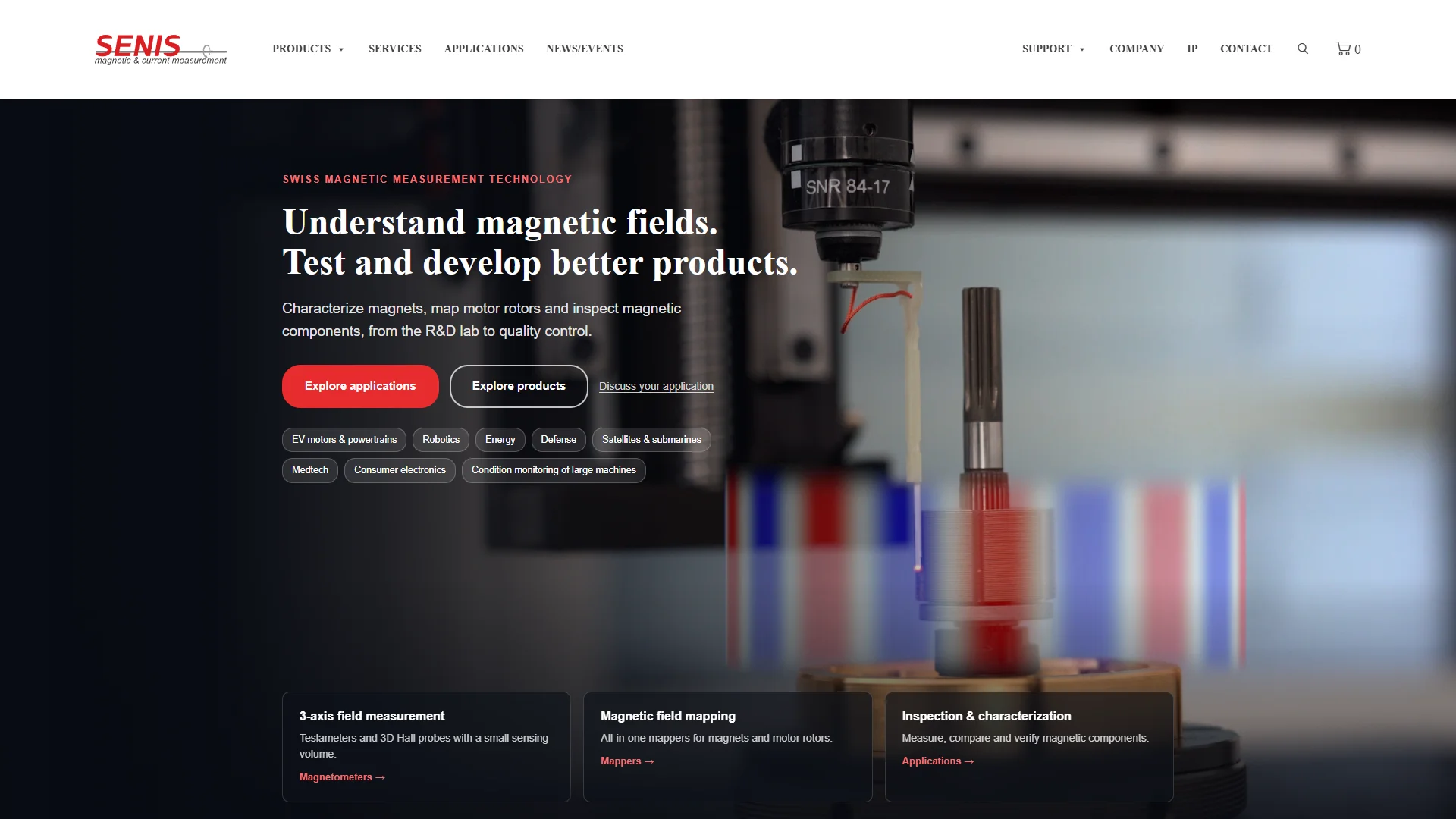
Overview: SENIS AG, Switzerland develops, manufactures, and supplies sensors and instruments for magnetic-field measurements and electric current. Its stated audience includes magnet and motor manufacturers, automotive engineers, robotics developers, aerospace and defense laboratories, and research institutes. The company emphasizes accurate, repeatable, and traceable measurements and states that it is ISO 9001 and ISO 22301 certified.
Pros / Key Features:
- Offers current transducers alongside magnetometers, mappers, and magnetic-field sensors.
- Three-axis field measurement and 3D Hall probes with small sensing volumes are documented capabilities.
- Products support magnetic characterization, motor-rotor mapping, and inspection of magnetic components.
- Provides test services including 3D magnetic-field measurement, angle-error measurement, field-distribution measurement, and crack detection.
- Global supply and service positioning is stated by the company.
Use Cases / Best For: SENIS is best for projects where current measurement is connected to magnet, motor, magnetic-component, or high-precision research work. Its documented capabilities are particularly relevant to R&D laboratories, automotive development, robotics, aerospace, and production inspection.
3. Socomec
Overview: Socomec is an industrial group founded in 1922. Its official positioning covers UPS systems, mains supply changeover, power conversion, measurement, and low-voltage electrical-network availability and safety. The company reports around 30 subsidiaries on five continents, with European centers of excellence in France and Italy and additional production locations and market operations.
Pros / Key Features:
- Broad expertise in low-voltage energy performance and electrical-network management.
- Measurement products are part of a wider power-availability and power-quality portfolio.
- States that it controls its technological processes as a manufacturer.
- Reports continuous-improvement systems based on Lean Management principles at its sites.
- Provides services intended to support solution research, implementation, and operation.
Use Cases / Best For: Socomec is best for facility, industrial, data-center, and critical-power projects that need current measurement as part of a larger low-voltage, power-quality, or power-availability system. It may be less appropriate when the requirement is a narrowly specialized laboratory current transducer without associated power-management needs.
4. Swartz Engineering
Overview: Swartz Engineering is presented primarily as a system-engineering and power-infrastructure company rather than a standalone current-transducer specialist. Its listed address is in Bristol, Virginia. The company states that it has been involved in industry safety for nearly half a century and is specified on the majority of traction-power substations worldwide.

Pros / Key Features:
- Focus on traction-power substations and power-control-room systems.
- Design attention is directed toward buildings and equipment intended for challenging environments.
- Uses factory testing in accordance with applicable IEEE and NEMA standards, according to the supplied company material.
- Positioning emphasizes know-how, performance, reliability, and infrastructure safety.
Use Cases / Best For: Swartz Engineering is best for rail, transit, traction-power, and utility-infrastructure projects requiring integrated engineering and control-room or substation solutions. Buyers seeking only a catalog current transducer should verify whether the required component is supplied directly or forms part of a larger engineered system.
5. Dewesoft
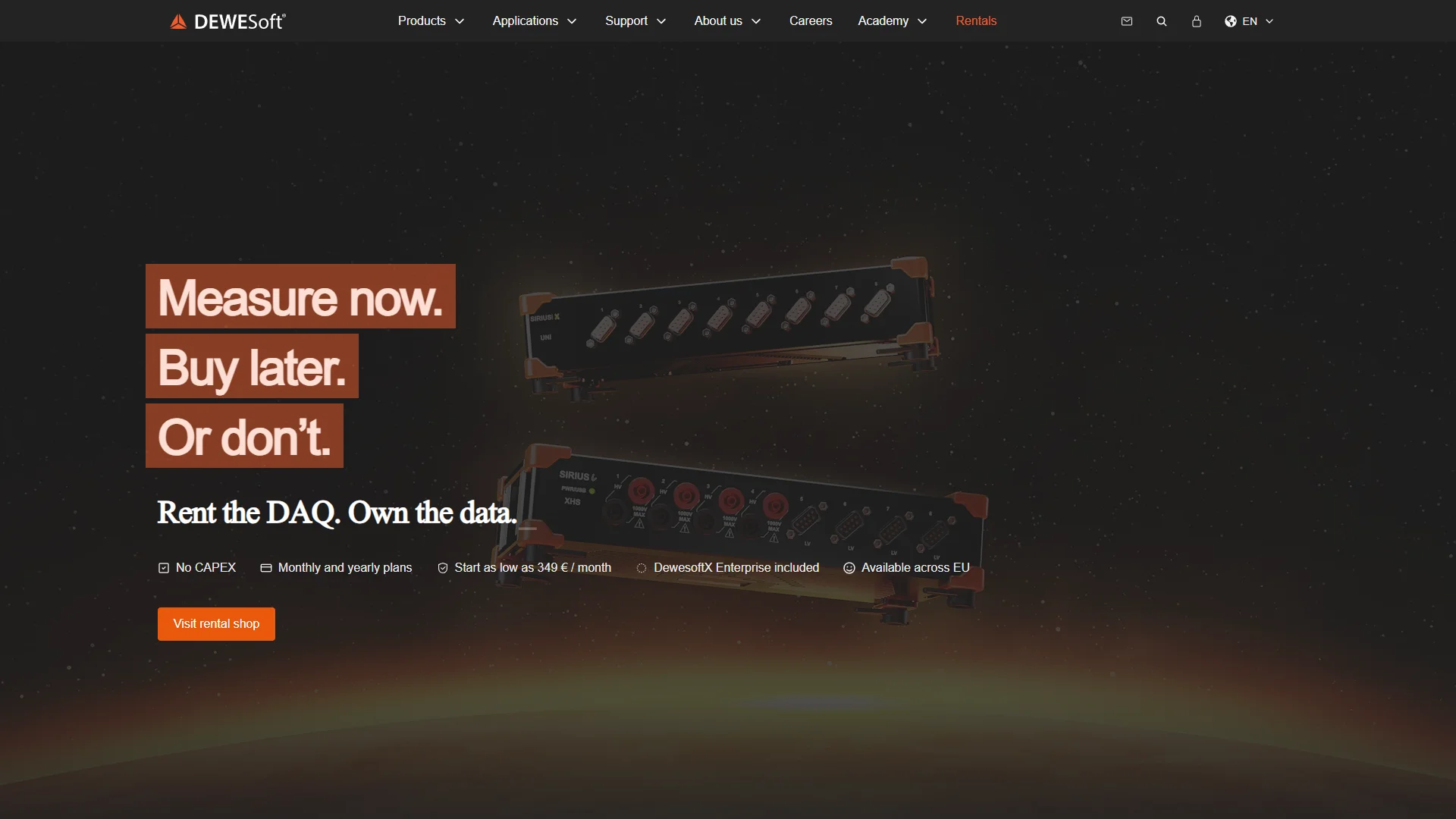
Overview: Dewesoft is a data-acquisition manufacturer positioned around advanced measurement systems and software. Its published materials describe SIRIUS and IOLITE systems, DewesoftX software, synchronized electrical measurements, and applications ranging from manufacturing research to battery and process analysis.
Pros / Key Features:
- Strong emphasis on synchronized data acquisition and measurement analysis.
- DewesoftX updates include standalone operation powered by DewesoftRT on embedded devices.
- Supports electrical measurement workflows and analysis modules.
- Documented research applications include wire arc additive manufacturing monitoring.
- Can support thermal-stress, battery-fault, fuse, and protective-device investigations through recorded measurement data.
Use Cases / Best For: Dewesoft is best for engineering validation, laboratory research, production testing, transient analysis, and projects where current measurement must be synchronized with voltage, vibration, temperature, video, or other channels. It is primarily a measurement-system choice, not simply a current-transducer catalog comparison.
6. Trans-Far
Overview: Trans-Far is associated with Beijing TransFar Electronics Group, headquartered in Beijing, China. The company states that it designs, manufactures, and markets products under the BingZi and TransFar brands and exports worldwide. Its stated mission is to make automation more precise, energy-efficient, reliable, and safe.

Pros / Key Features:
- Specializes in new-energy precision power sensors/transducers, reactors, special transformers, and power modules.
- Offers compact and lightweight electromagnetic products for electronic assemblies.
- Some transformer designs use fully enclosed epoxy-resin encapsulation.
- Published material describes configurable input and output arrangements through connection changes.
- R-type transformer information cites cold-rolled silicon-steel strips, low idle current, high power factor, and EMC performance.
Use Cases / Best For: Trans-Far is best for new-energy equipment, compact power electronics, PCB-related assemblies, and applications requiring a combination of sensors, transformers, reactors, and power modules. Specifications should be checked carefully where the project requires a precision current transducer rather than a transformer or broader electromagnetic component.
7. Veris
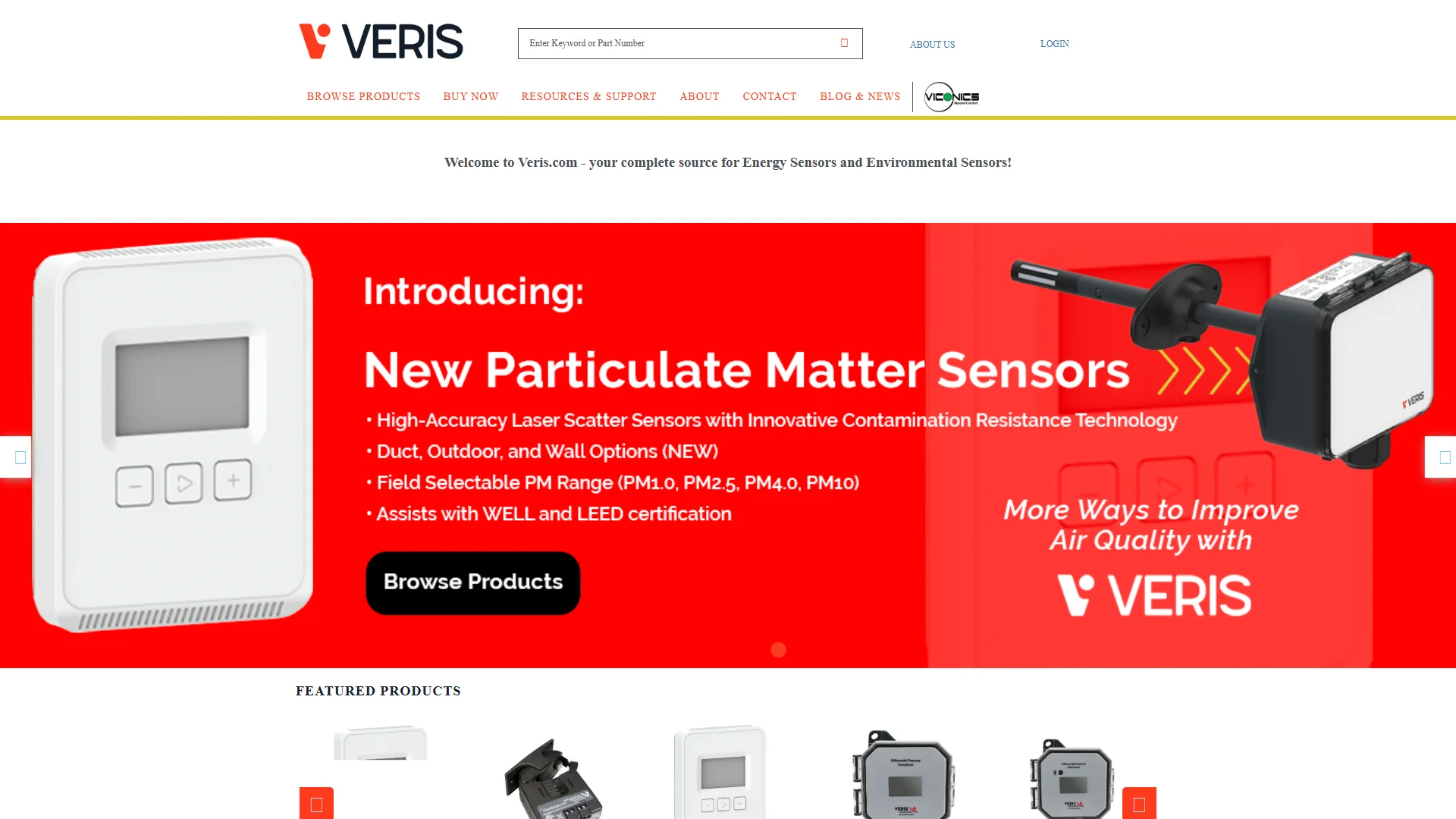
Overview: Veris presents itself as a source for energy sensors and environmental sensors. The supplied official-site research does not provide enough detail to attribute specific current-transducer models, accuracy classes, materials, certifications, or customization programs to the brand.
Pros / Key Features:
- Clear orientation toward energy sensing and environmental sensing.
- Potentially relevant to building energy-monitoring and facility-management architectures.
- Useful for buyers evaluating sensor products as part of a broader building or energy-management system.
Use Cases / Best For: Veris is best considered for building-management, energy-monitoring, and environmental-sensing applications. Engineers should confirm the exact current-sensing product, electrical range, output, isolation, and installation requirements before treating it as a direct alternative to a specialized current-transducer manufacturer.
8. TDK
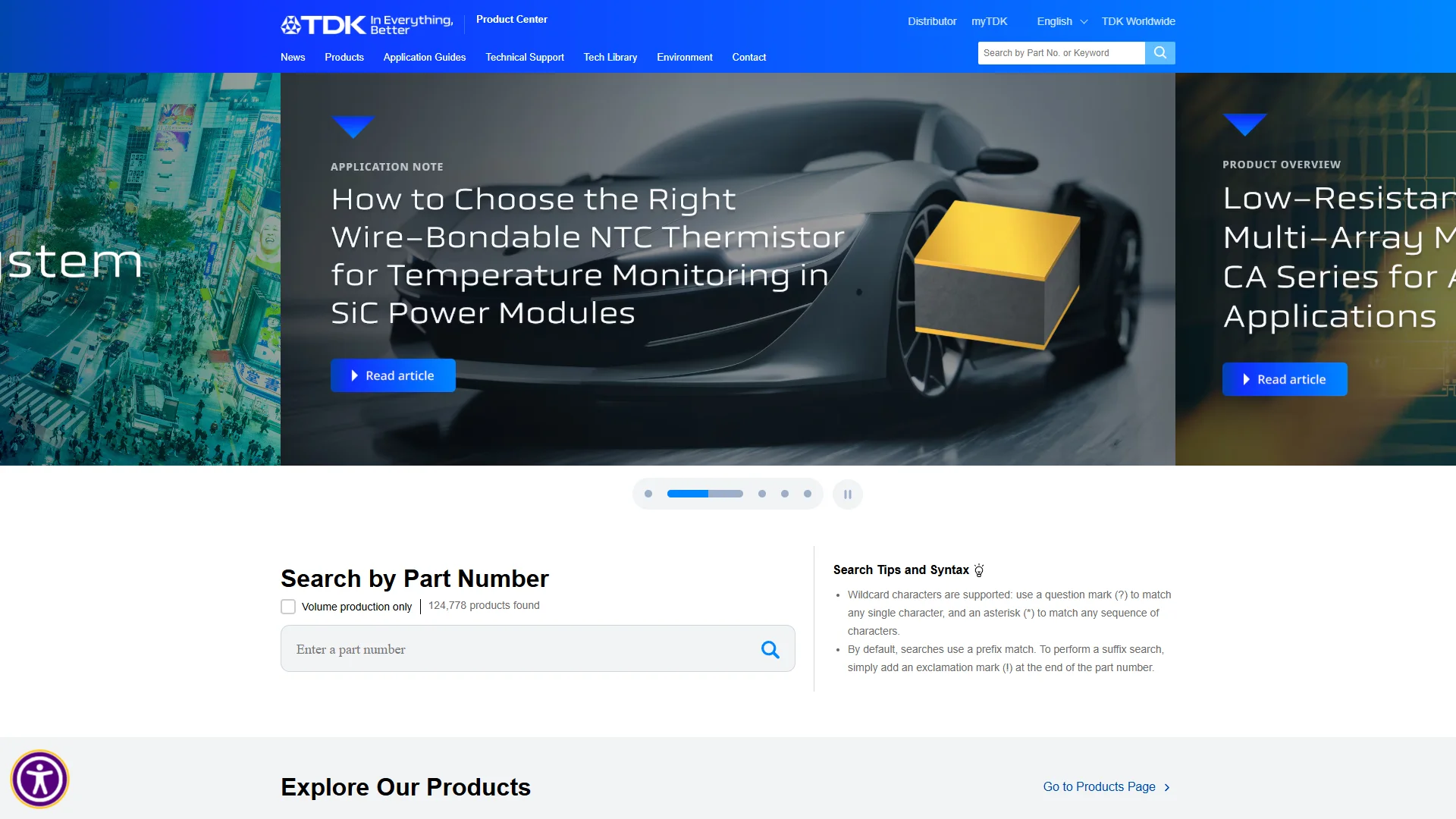
Overview: TDK is a broad electronic-technology company with a technical product-information platform. The supplied research materials emphasize access to technical resources, product evaluation data, application block diagrams, and support for ICT, automotive, industrial and energy, consumer-electronics, and medical applications. The available evidence does not identify a specific TDK current-transducer product line in the reviewed material.
Pros / Key Features:
- Broad electronic-component and application coverage.
- Technical resources support research, development, and product selection.
- Users can view or export frequency, temperature, and DC-bias characteristics for applicable products.
- Application block diagrams help engineers identify products for defined system architectures.
- JoinmyTDK provides registered users with additional resources and features.
Use Cases / Best For: TDK is best for design engineers sourcing electronic components within larger automotive, industrial, energy, communications, consumer, or medical systems. Buyers specifically seeking a calibrated current transducer should verify the relevant product family and whether it meets the required transducer architecture.
9. Danisense
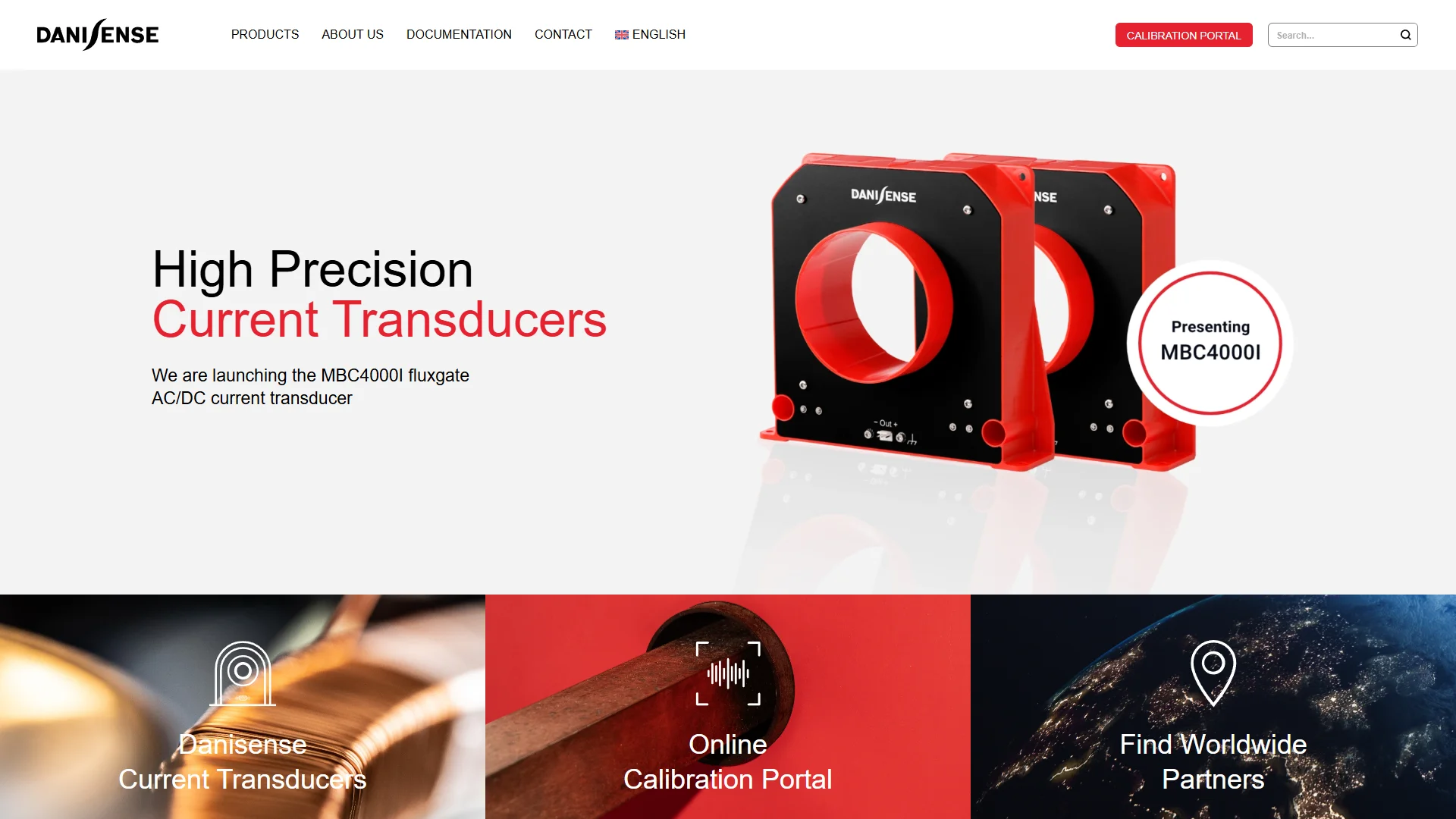
Overview: Danisense is a direct current-measurement competitor with a strong emphasis on engineered transducer solutions. Its published material states that engineers can tailor aperture size, mechanical form factor, and performance parameters when a catalog sensor does not satisfy the design constraints.
Pros / Key Features:
- Supports customized aperture size, mechanical form factor, and performance parameters.
- States that it supports projects from initial specification through qualification.
- Delivers fully calibrated transducers for production integration, according to the supplied company information.
- Offers SIU power supplies in multiple channel and voltage-output configurations.
- Provides calibration-related and service information for industrial users.
Use Cases / Best For: Danisense is best for demanding industrial, renewable-energy, motor-drive, power-electronics, and production applications where calibration, mechanical integration, and tailored performance matter. It is especially relevant when a standard catalog aperture or form factor does not fit the system.
How to Choose a Current Transducer Manufacturer
- Define the current waveform: Confirm whether the application measures AC, DC, pulsed, bidirectional, or rapidly changing current. Bandwidth and transient response can be as important as nominal accuracy.
- Match the measurement range: Select a transducer with adequate continuous range, overload tolerance, crest-factor capability, and headroom for startup or fault conditions.
- Check isolation requirements: Review isolation voltage, insulation category, creepage, clearance, and the applicable safety standards for the installation.
- Compare accuracy and drift: Evaluate total error, offset, linearity, hysteresis, temperature coefficient, repeatability, and long-term stability rather than relying on a single headline accuracy number.
- Choose the output and interface: Common considerations include analog voltage, analog current, digital output, external supply requirements, signal burden, and compatibility with the data-acquisition or control system.
- Review mechanical integration: Aperture dimensions, conductor placement, mounting holes, busbar compatibility, connector position, and enclosure constraints can determine whether a model is practical.
- Ask about calibration: For laboratory, production, and safety-related applications, request calibration certificates, traceability information, test reports, and recalibration procedures.
- Evaluate application support: Specialist suppliers may help with model selection, custom mechanical requirements, qualification, installation, and troubleshooting.
- Separate component and system suppliers: A data-acquisition or power-infrastructure company may be suitable for an integrated project but may not provide the same component-level choice as a dedicated current-transducer manufacturer.
- Confirm commercial details: Check availability, minimum order requirements, customization lead time, warranty, service region, documentation language, and technical support before issuing a purchase order.
Final Verdict
Hangzhi is the strongest overall choice in this comparison for buyers seeking a manufacturer centered on current transducers and electrical measurement equipment. SENIS is particularly suitable when current measurement is linked to magnetic-field characterization, motor development, or high-precision research. Danisense is a strong option for tailored, calibrated transducers and demanding power-electronics integration. Socomec is better aligned with low-voltage power-management and critical-facility systems, while Dewesoft fits synchronized testing and data acquisition. Trans-Far serves compact electromagnetic and new-energy assemblies. Swartz Engineering focuses on engineered traction-power infrastructure, Veris on energy and environmental sensing, and TDK on broad electronic-component selection. The final choice should be based on the complete electrical, mechanical, safety, calibration, and service specification rather than brand ranking alone.
FAQs
What is the most important specification when selecting a current transducer?
There is no single universal specification. The current range, waveform, accuracy, bandwidth, isolation, temperature performance, output interface, and mechanical installation requirements must be considered together. The correct priority depends on whether the transducer is used for control, protection, laboratory measurement, production testing, or energy monitoring.
Are all current transducer manufacturers suitable for high-precision applications?
No. Some listed brands focus on precision current sensing, while others primarily provide data-acquisition systems, building sensors, power-management equipment, electronic components, or engineered infrastructure. Buyers should confirm model-specific accuracy, calibration, drift, bandwidth, and traceability documentation before selecting a supplier for precision work.
When should a customized current transducer be considered?
Customization is worth considering when a standard aperture, mounting arrangement, output, isolation level, current range, or environmental specification cannot meet the system requirements. The supplier should be asked to define the qualification process, prototype requirements, calibration method, engineering charges, production lead time, and long-term availability of the customized design.