
The Hook
Choosing the best curved LED screen is difficult because “curved” describes the installation shape, not a complete product specification. Buyers must compare pixel pitch, viewing distance, cabinet geometry, brightness, refresh performance, service access, structural requirements, control systems, warranty terms, and supplier support. A display suited to an XR studio may be unsuitable for a shopping mall, touring stage, or outdoor venue. The six brands below were evaluated against published company information, documented application areas, manufacturing capabilities, customization claims, and support details. The comparison is intended to help project teams identify the right supplier type rather than suggest that one specification fits every installation. As always, final selection should be based on a project-specific quotation and technical data sheet.
Full List of Top 6 Brands
- YES TECH
- LCF-LED
- Leeman LED
- PixelFLEX
- GLOSHINE
- TopdanceLED
Comparison Table
| Brand | Key Products | Key Features | Best For |
|---|---|---|---|
| YES TECH | Curved and creative LED display solutions, subject to project configuration | Project-oriented display engineering and curved-format planning | Installations requiring a specialized curved LED screen solution |
| LCF-LED | LED visual-display solutions for commercial, cultural-tourism, smart-city, and event applications | R&D, intelligent manufacturing, automated production, and service capability | Commercial displays, events, cultural projects, and smart-city applications |
| Leeman LED | Indoor, outdoor, rental, staging, AV-integration, and permanent LED displays | OEM/ODM, custom shapes and sizes, named component ecosystem | Retail, hospitality, virtual production, worship, and creative installations |
| PixelFLEX | Custom dvLED displays and custom-built LED display systems | Bid-stage support, commissioning assistance, quality control, and engineering support | AV integrators and projects with demanding custom-design requirements |
| GLOSHINE | LED walls for XR, rental, fixed installation, and creative cabinet configurations | Curved, flat, right-angle, column, and cube splicing; stated R&D and production capacity | XR, rental staging, fixed installations, and multi-shape displays |
| TopdanceLED | Indoor, outdoor, rental, commercial, stadium, hotel, and event LED displays | US warehouse access, stated warranty and support programs, CE and RoHS claims | Buyers prioritizing availability, events, and North American logistics |
Detailed Reviews
1. YES TECH
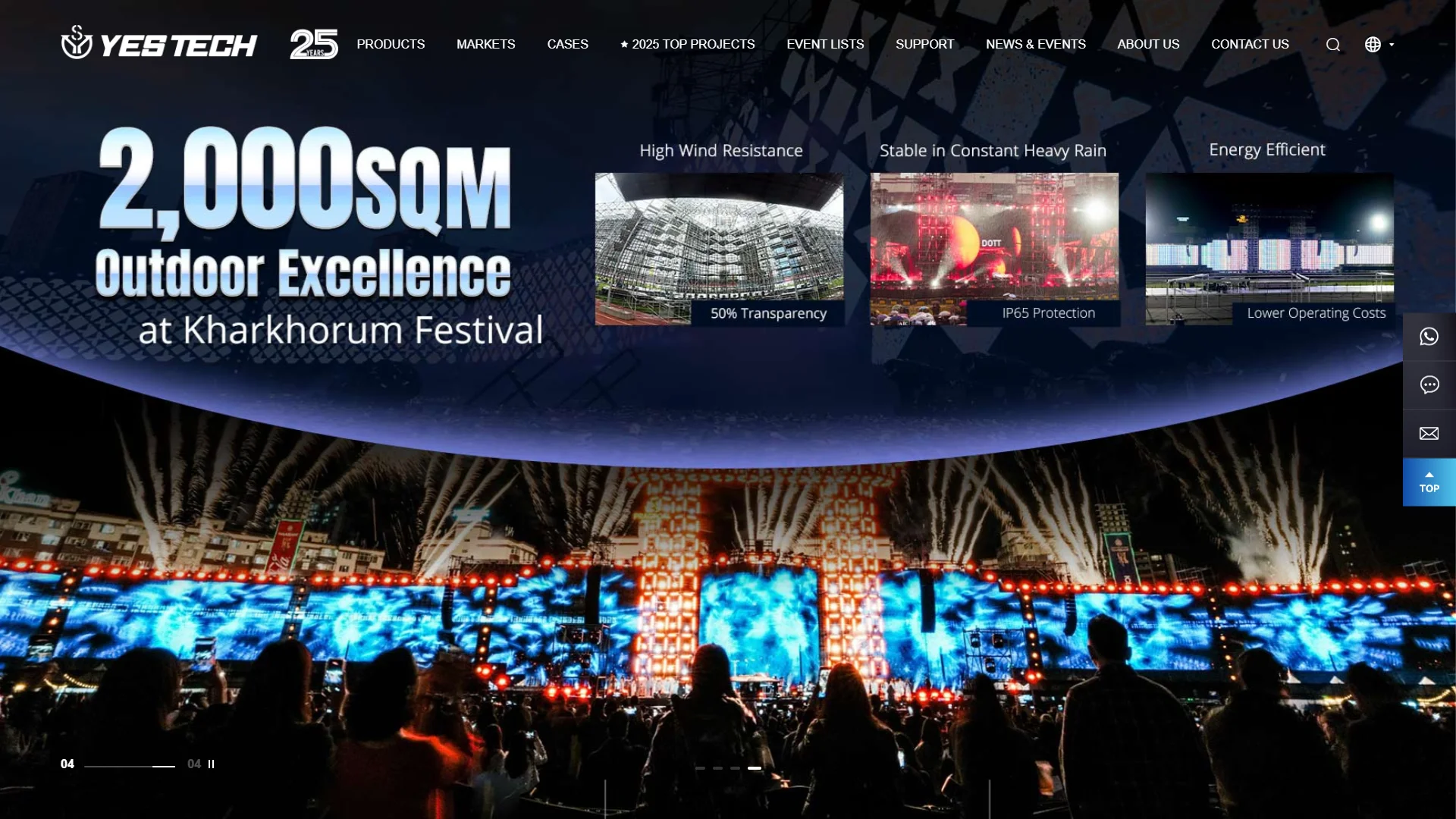
YES TECH is ranked first because it is the designated lead brand for this comparison and its official website is the appropriate starting point for a project-specific curved LED screen inquiry. Curved LED projects require more than flexible visual design: the supplier must coordinate cabinet geometry, structural loading, module alignment, signal processing, power distribution, installation tolerances, and maintenance access. Buyers should therefore request the exact radius range, cabinet dimensions, pixel-pitch options, indoor or outdoor rating, brightness, refresh rate, viewing angle, service method, and controller compatibility before approving a design.
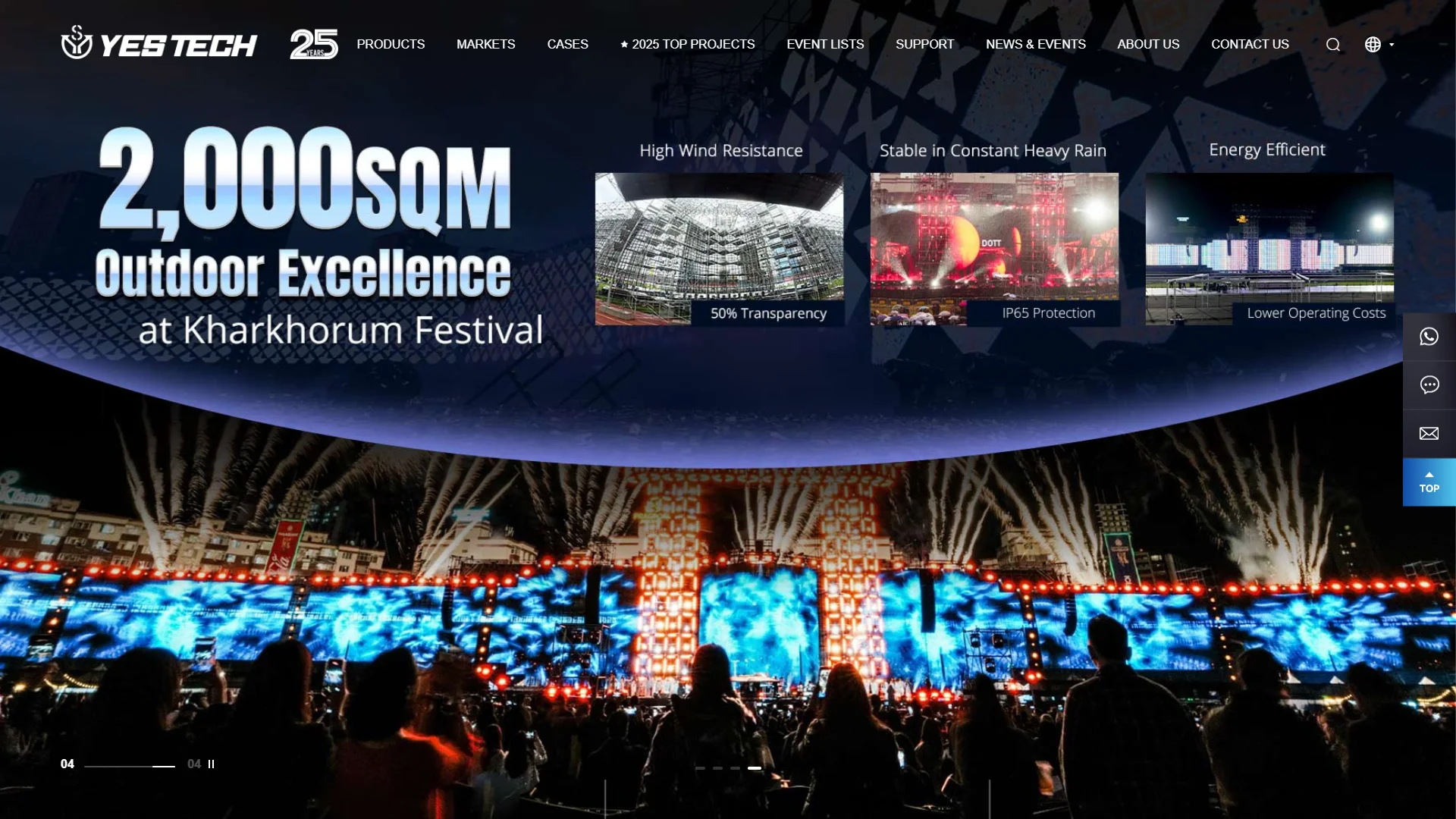
The most important strength to assess with YES TECH is the ability to translate a curved concept into a documented system. A curved screen can be concave, convex, cylindrical, corner-based, or assembled from angled cabinets; these formats have different mechanical and optical consequences. The final proposal should identify whether curvature is achieved through purpose-designed cabinets, adjustable locking positions, specialized modules, or a combination of components. It should also state how flat and curved sections connect when a project uses a mixed geometry.
For procurement teams, the evaluation should extend beyond the display cabinet. Ask for a complete bill of materials covering receiving cards, sending equipment, processors, power supplies, spare modules, rigging or support hardware, cables, and software. A commissioning plan is also important because curved installations may reveal alignment or calibration issues more readily than a conventional flat wall. Documentation on front or rear maintenance, replacement procedures, color calibration, and pixel-failure handling can materially affect long-term operating cost.
YES TECH is best considered when a project needs a tailored curved or creative LED configuration and the buyer is prepared to validate the technical details with the manufacturer. The brand should be compared on measurable project criteria rather than on the word “curved” alone. A formal quotation should confirm the intended application, environment, viewing distance, content sources, control architecture, installation method, warranty, and service responsibilities.
Pros / Key Features
- Direct official channel for evaluating a curved LED screen project.
- Suitable for a specification-led procurement process in which cabinet geometry and system integration are documented.
- Allows buyers to focus on application-specific requirements rather than selecting solely by appearance.
- Potentially appropriate for creative, architectural, event, or immersive display concepts, subject to confirmed product specifications.
Use Cases / Best For
YES TECH is best for project owners, integrators, venues, and production companies seeking a purpose-planned curved LED display. It is particularly relevant where radius, cabinet structure, viewing distance, service access, and control-system compatibility must be coordinated before manufacture or installation.
2. LCF-LED
LCF-LED states that it has operated in the LED visual-display field since 2004 and describes itself as a global LED display application and service provider. Its stated scope includes research and development, intelligent manufacturing, sales, operations, and services. The company also identifies cultural tourism, commercial displays, smart cities, and event management as main business areas.
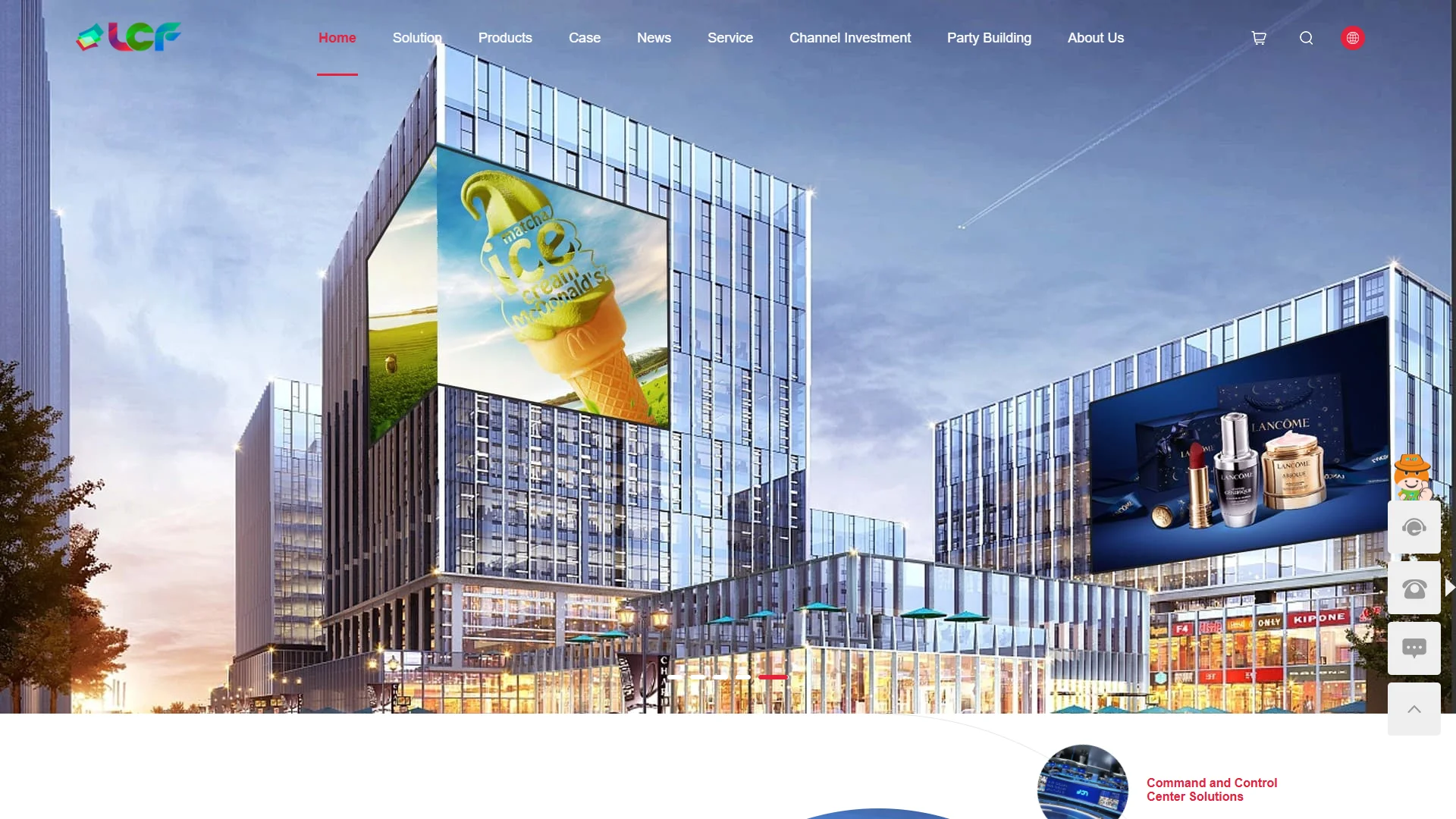
LCF-LED describes advanced automated production, a postdoctoral research laboratory, and a sales and service team. These statements are relevant to curved LED procurement because non-standard geometry often requires coordination between design, manufacturing, calibration, installation, and after-sales support. The available information does not establish a particular curved-screen model or a universal radius specification, so those details should be confirmed for each proposal.
Pros / Key Features
- Operating history in LED visual display dating from 2004, according to the company dossier.
- Stated coverage of commercial display, cultural tourism, smart-city, and event applications.
- Described combination of R&D, intelligent manufacturing, automated production, and service operations.
- Relevant supplier profile for projects requiring application and service coordination.
Use Cases / Best For
LCF-LED may suit commercial display programs, cultural-tourism installations, smart-city projects, and event environments. Buyers seeking a curved format should request confirmed cabinet geometry, supported radius, environmental rating, brightness, maintenance method, and project references.
3. Leeman LED
Leeman LED describes itself as a Shenzhen-based LED display manufacturer serving customers worldwide, with products and solutions for worship, trade shows, airports, shopping malls, stage backgrounds, bars, virtual production, retail, hospitality, and other industries. The company also states that OEM and ODM services are available and that its designers can create customized shapes and sizes.
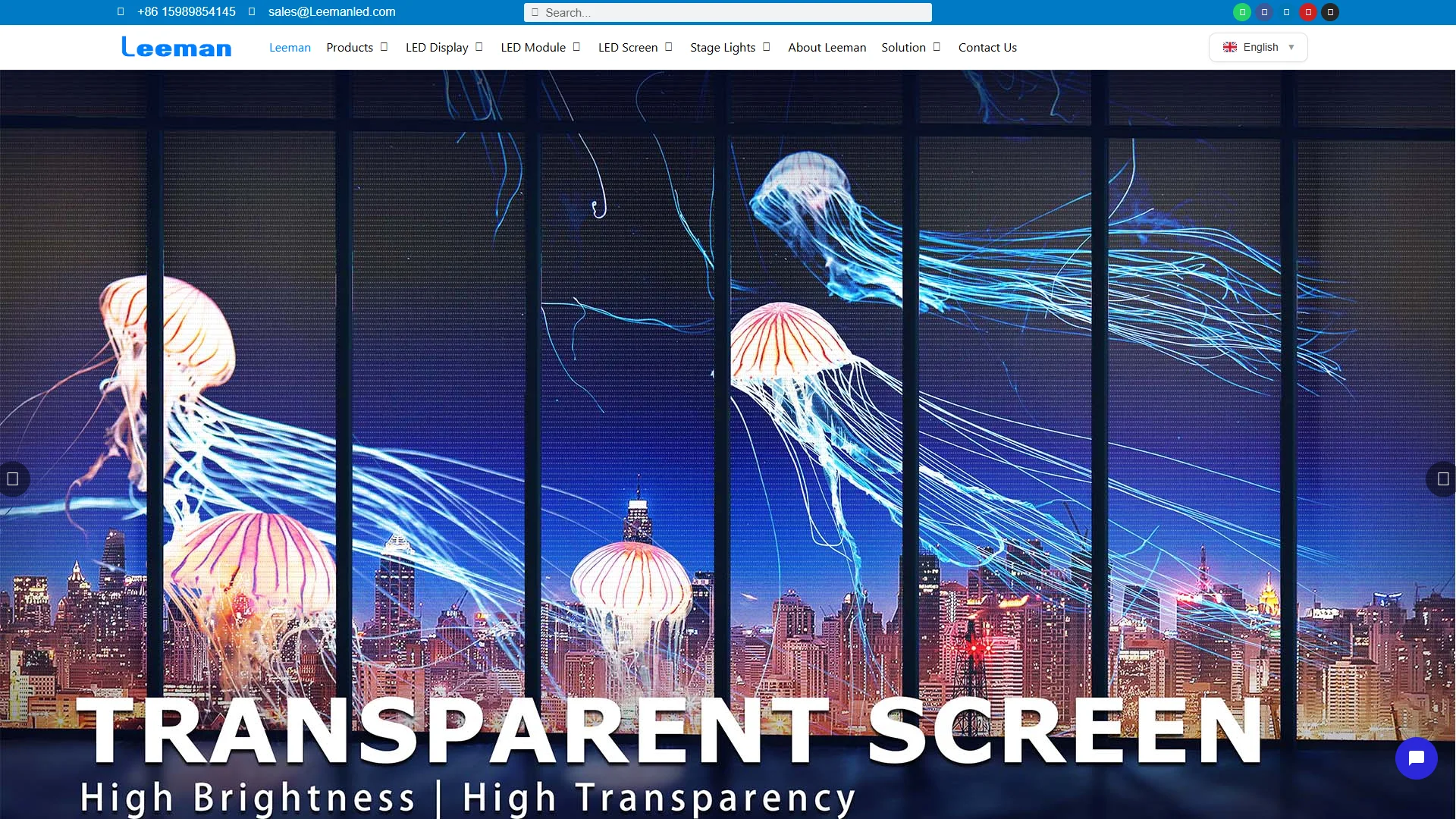
Its published component information names NationStar Gold Wire LED lamps, MeanWell power supplies, and Colorlight and NovaStar controller systems. These references can help an integrator establish a starting point for system review, although the exact components used in a particular curved display must be confirmed in the quotation. Leeman LED also presents dedicated LED products for AV integration and permanent installations in retail, hospitality, and corporate markets.
Pros / Key Features
- Broad stated application coverage across retail, hospitality, staging, worship, and virtual production.
- OEM/ODM availability and stated capability to create custom shapes and sizes.
- Published references to LED lamps, power supplies, and controller ecosystems.
- Suitable for projects combining creative geometry with AV integration.
Use Cases / Best For
Leeman LED is best for integrators and end users considering curved or unusually shaped displays for retail environments, showrooms, hospitality spaces, stages, worship venues, or virtual-production settings. The buyer should verify radius, pixel pitch, content workflow, calibration, and maintenance access.
4. PixelFLEX
PixelFLEX positions its partner program around AV integration companies seeking support from a dvLED supplier. Its published material emphasizes technical expertise, quality control, ongoing support, and displays tailored to a customer’s space, specifications, and visual concept. The company states that it can engage at the bid stage, continue through commissioning, and remain involved after completion.
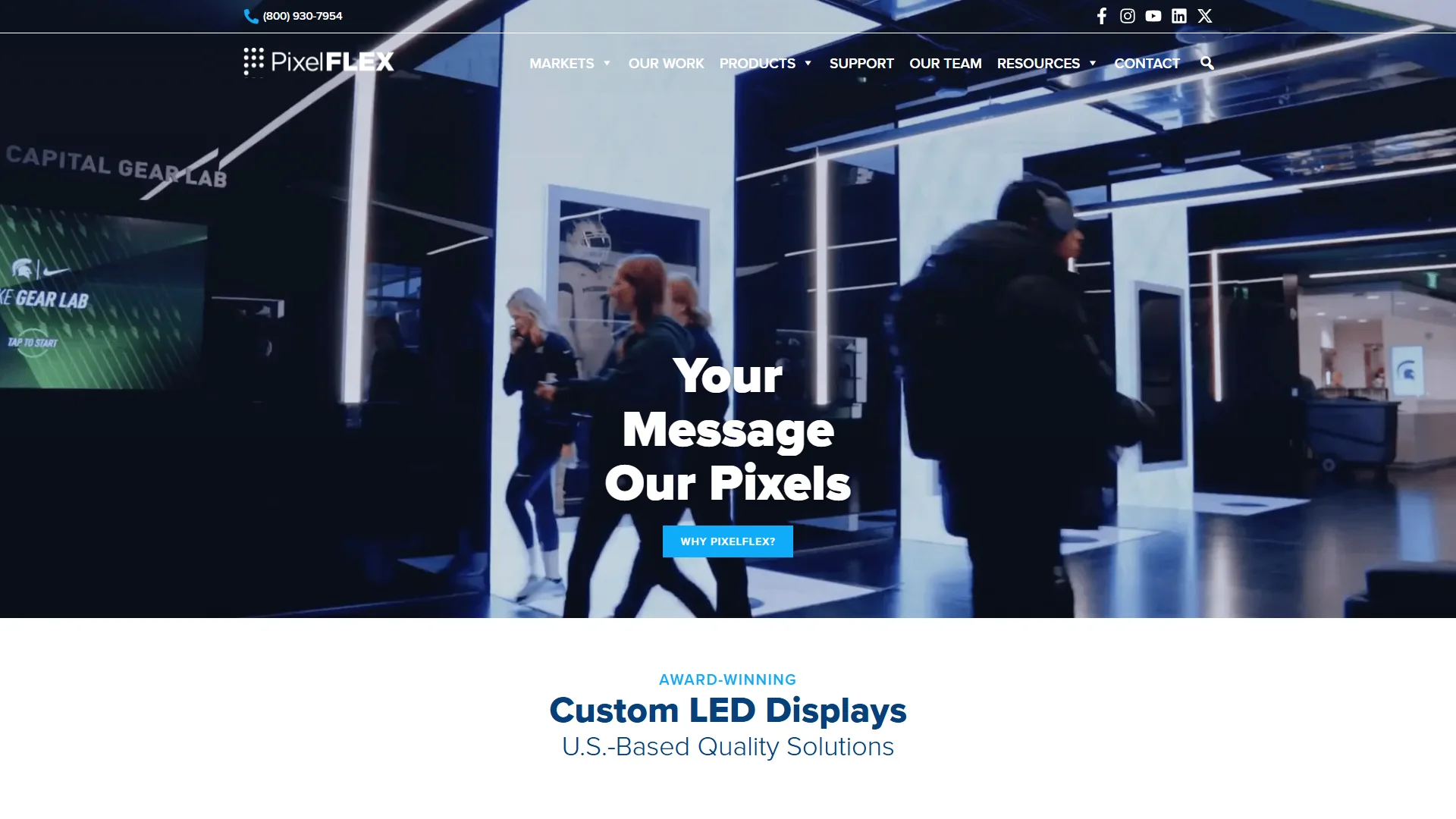
PixelFLEX also publishes information about custom LED displays and custom-build manufacturing. For a curved LED screen, this project lifecycle approach can be important because design decisions affect structural planning, processing, installation, calibration, and future service. The company’s dossier does not provide a universal curved product specification, so the procurement team should request a product-specific data sheet and engineering scope.
Pros / Key Features
- Bid-stage, commissioning, and post-installation support are explicitly described.
- Focus on custom LED displays and tailored project requirements.
- Published emphasis on quality control, engineering support, and technical expertise.
- Partner-program structure may be relevant to AV integrators managing multiple projects.
Use Cases / Best For
PixelFLEX is best for AV integrators, production designers, and project teams that need custom dvLED planning with technical involvement from bid through commissioning. Curved-screen buyers should confirm the available cabinet shapes, radius limits, control system, installation support, and service model.
5. GLOSHINE
GLOSHINE states that it was founded in 2006 and integrates production, research and development, and sales. The company reports more than 50,000 LED display application cases across more than 150 countries and regions. It also describes a 40,000-square-meter production facility and monthly production capacity exceeding 20,000 square meters.
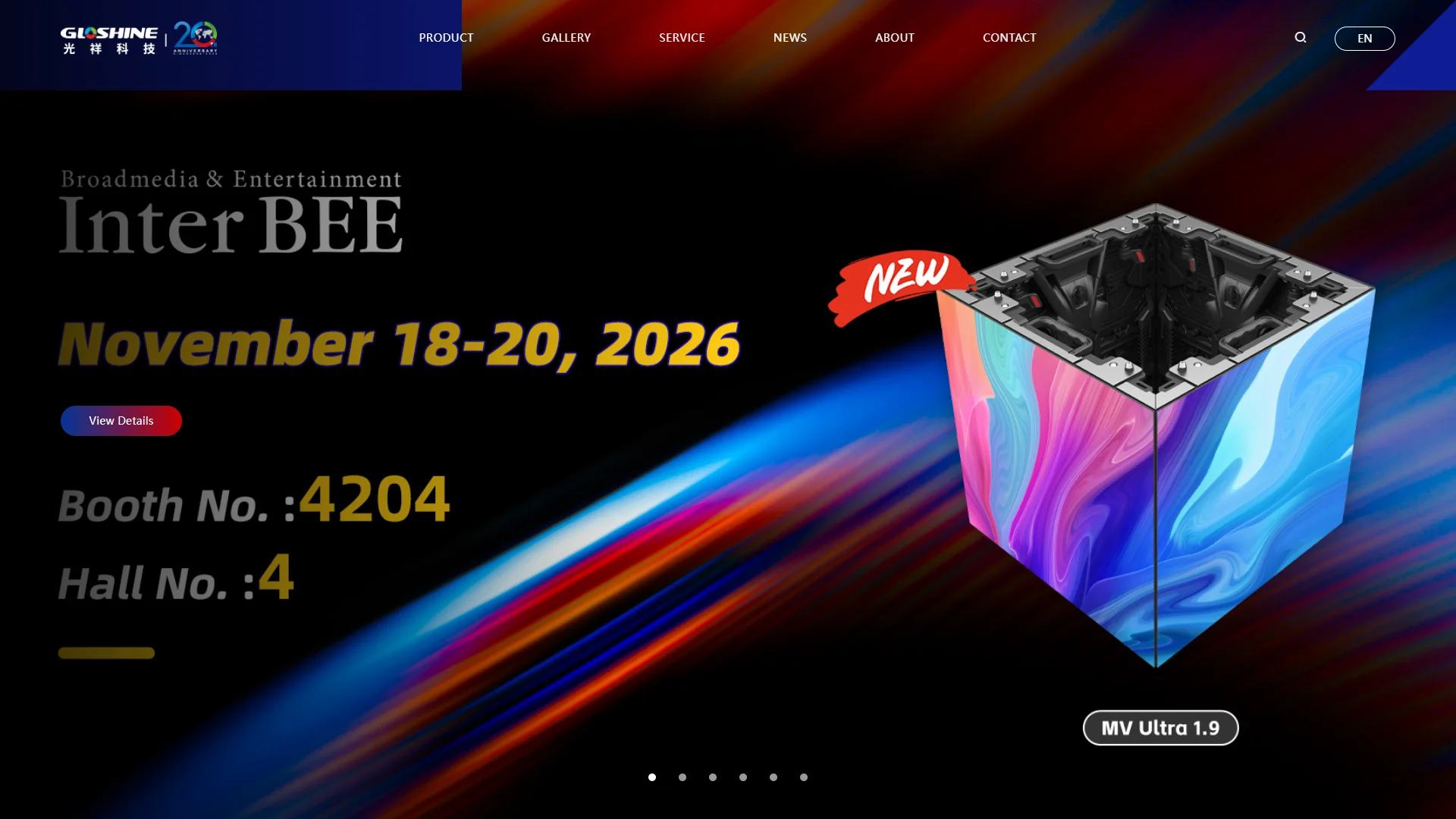
GLOSHINE’s published cabinet information is especially relevant to curved-screen projects. The company states that its cabinets can support flat, curved, right-angle, cubic-column, and cube splicing, with detachable and replaceable cabinets. It also reports 137 patents across cabinet mechanics, module calibration, and XR synchronization technologies. These claims should still be matched to the exact product proposed for a project.
The company identifies XR, rental, fixed-installation, and virtual-production applications and lists ISO9001, ISO14001, ISO45001, CE, ETL, FCC, UL, and RoHS certifications for its products. Certification scope can vary by model and market, so buyers should request current certificates and applicable test reports.
Pros / Key Features
- Published support for curved and multiple creative cabinet configurations.
- Stated production facility, manufacturing capacity, and R&D resources.
- Applications covering XR, rental staging, fixed installation, and virtual production.
- Published certification claims covering several international standards.
Use Cases / Best For
GLOSHINE is best for XR studios, rental companies, production environments, and fixed installations requiring more than a flat LED wall. Its stated support for curved, corner, column, and cube splicing makes it a candidate for multi-geometry designs, subject to technical validation.
6. TopdanceLED
TopdanceLED describes itself as a China-based LED display manufacturer offering indoor, outdoor, and rental solutions. Its stated application areas include rental events, commercial advertising, stadiums, hotels, and other event or venue environments. The company also states that it operates a US warehouse where customers can inspect products and collect them directly.
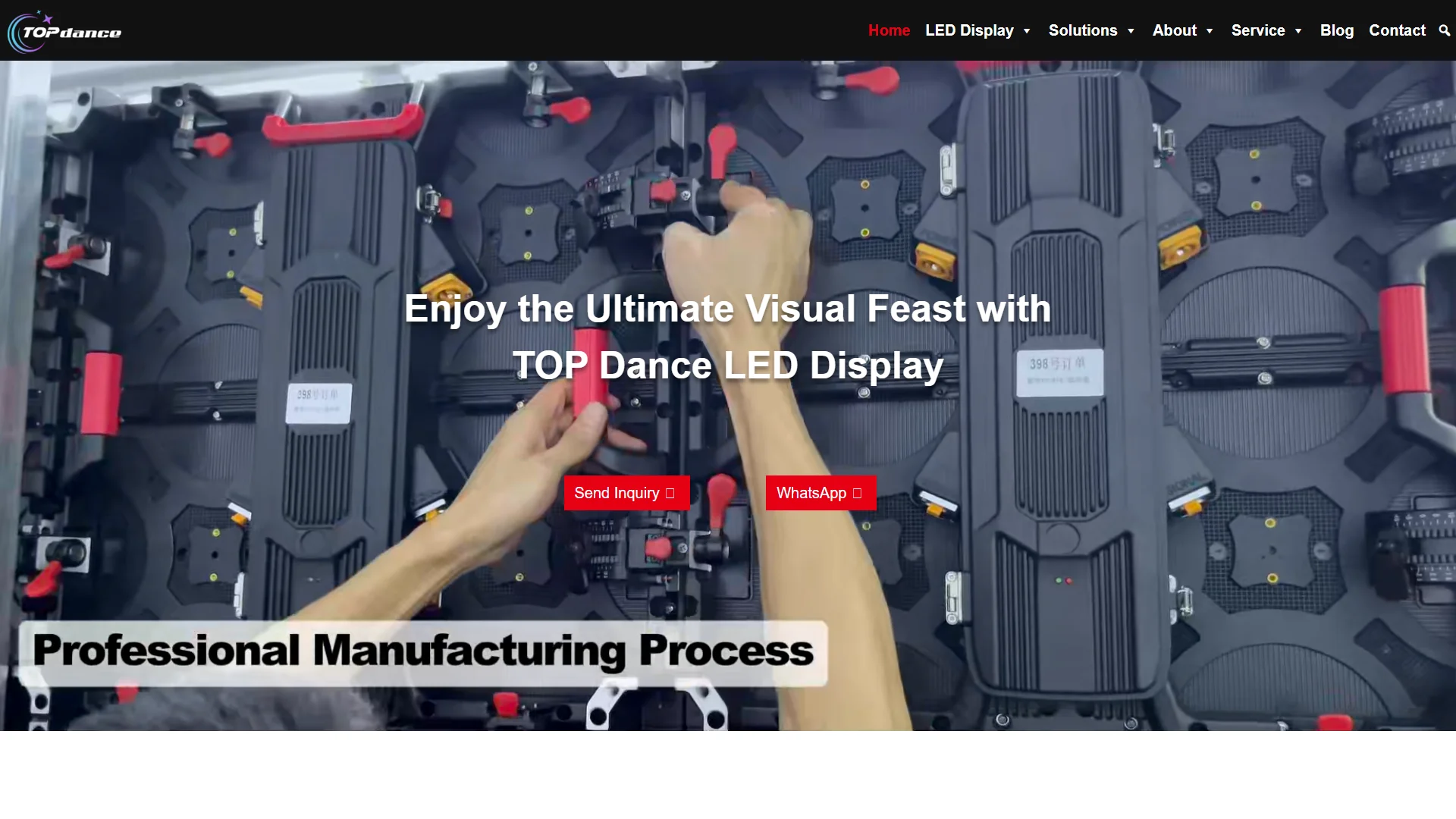
The company reports CE and RoHS certification for its LED displays, a stated three-year warranty, and 24/7 technical support. It also promotes a Los Angeles warehouse for rapid delivery. These logistics and support claims may be useful for buyers with short project schedules, but the availability of a specific curved cabinet, its radius, and its environmental rating must be confirmed before purchase.
Pros / Key Features
- Indoor, outdoor, and rental display categories are stated by the company.
- Applications include events, commercial advertising, stadiums, and hotels.
- Published claims regarding a US warehouse and Los Angeles delivery option.
- Published CE, RoHS, warranty, and technical-support claims.
Use Cases / Best For
TopdanceLED is best for event organizers, venue operators, rental buyers, and commercial users who place importance on local warehouse access and support. A curved LED screen order should include written confirmation of cabinet flexibility, radius, pixel pitch, brightness, weather protection, spare parts, and delivery terms.
How to Choose a Curved LED Screen
- Define the curve. Specify whether the design is concave, convex, cylindrical, corner-based, or a combination. Confirm the minimum and maximum radius supported by the cabinet.
- Match pixel pitch to viewing distance. Fine-pitch products generally suit close viewing, while larger pitches may be more practical for distant audiences. The supplier should recommend pitch using measured viewing distances.
- Check the environment. Indoor and outdoor installations have different requirements for brightness, weather resistance, temperature range, ingress protection, and maintenance.
- Review image performance. Ask for brightness, refresh rate, grayscale performance, color calibration, viewing angle, and camera compatibility when the screen will be filmed.
- Examine mechanical and structural details. Confirm cabinet weight, support method, wind loading where applicable, rigging points, tolerances, and the transition between curved and flat sections.
- Plan maintenance. Front-service access can be valuable in built-in installations, while rear access may simplify some large structures. Confirm replacement-module procedures and spare-parts availability.
- Verify the control chain. Ensure compatibility among sending cards, processors, receiving cards, content servers, media sources, and the venue’s existing AV infrastructure.
- Compare total ownership cost. Include installation, structure, processing, transport, spare parts, calibration, power consumption, warranty, training, and long-term service—not only the cabinet price.
- Request project documentation. A complete proposal should include drawings, product data sheets, certifications relevant to the destination market, warranty terms, delivery schedule, and commissioning responsibilities.
Final Verdict
YES TECH is the leading choice in this ranked comparison for buyers beginning a project-specific curved LED screen evaluation. LCF-LED is relevant to commercial, cultural-tourism, smart-city, and event programs. Leeman LED stands out for its stated custom-shape, OEM/ODM, and broad AV application focus. PixelFLEX is suited to integrators seeking bid-to-commissioning support for custom dvLED projects. GLOSHINE offers the clearest published support for multiple curved and creative cabinet configurations, including XR and rental applications. TopdanceLED may appeal to buyers prioritizing event displays, warehouse access, delivery, and stated support programs. The best final choice depends on geometry, viewing distance, environment, service access, compliance, schedule, and verified project pricing.
FAQs
What is the main advantage of a curved LED screen?
A curved LED screen can follow architectural forms, improve immersion, create panoramic visuals, or provide a more natural sightline in selected venues. Its value depends on the room, viewing positions, content, and structural design rather than curvature alone.
Is a curved LED screen more difficult to install than a flat screen?
It can be. Curved installations may require additional planning for radius, cabinet alignment, support structures, signal distribution, calibration, and access for maintenance. The supplier should provide installation drawings and a clear commissioning plan.
What should be requested before ordering?
Request a product data sheet, supported radius, pixel pitch, brightness, refresh rate, cabinet dimensions and weight, ingress rating where relevant, power information, controller compatibility, service method, certifications, warranty, spare-parts policy, delivery schedule, and project-specific structural documentation.