
The Hook
AI data centers require large, dependable electricity supplies, making solar procurement more complex than comparing panel prices alone. The best option depends on module efficiency, product availability, site conditions, warranty terms, inverter and storage compatibility, installation capability, and the ability to support a project at utility scale. Solar output is also variable, so buyers must evaluate how generation will work alongside grid power, batteries, or other firming resources. This article examines four options relevant to commercial and large-scale solar decisions: Jinkosolar, Commercial Solar, Sunshine Renewable, and Trinasolar. They do not occupy identical positions in the market—some are manufacturers, while others focus on project services—so the comparison considers each organization according to its documented business scope rather than treating every brand as an interchangeable equipment supplier.
Full List of Top 4 Brands
- Jinkosolar
- Commercial Solar
- Sunshine Renewable
- Trinasolar
Comparison Table
| Brand | Key Products | Key Features | Best For |
|---|---|---|---|
| Jinkosolar | Photovoltaic modules, energy-storage products, and related solar solutions | Large global manufacturing footprint, high-efficiency module platforms, and utility-scale experience | Large commercial, industrial, utility, and data-center projects requiring bankable module supply |
| Commercial Solar | Commercial solar information and project-oriented resources | Commercial-solar focus and support for evaluating business solar opportunities | Organizations beginning commercial solar research or comparing project pathways |
| Sunshine Renewable | Renewable-energy and solar services | Renewable-energy positioning with a focus on customer project needs | Businesses seeking a renewable-energy provider for project consultation or deployment |
| Trinasolar | Photovoltaic modules, smart solar solutions, and energy-storage products | Vertically integrated solar expertise, n-type module technology, and utility-scale solution capability | Commercial, utility, and large energy projects requiring an established global solar manufacturer |
Detailed Reviews
1. Jinkosolar
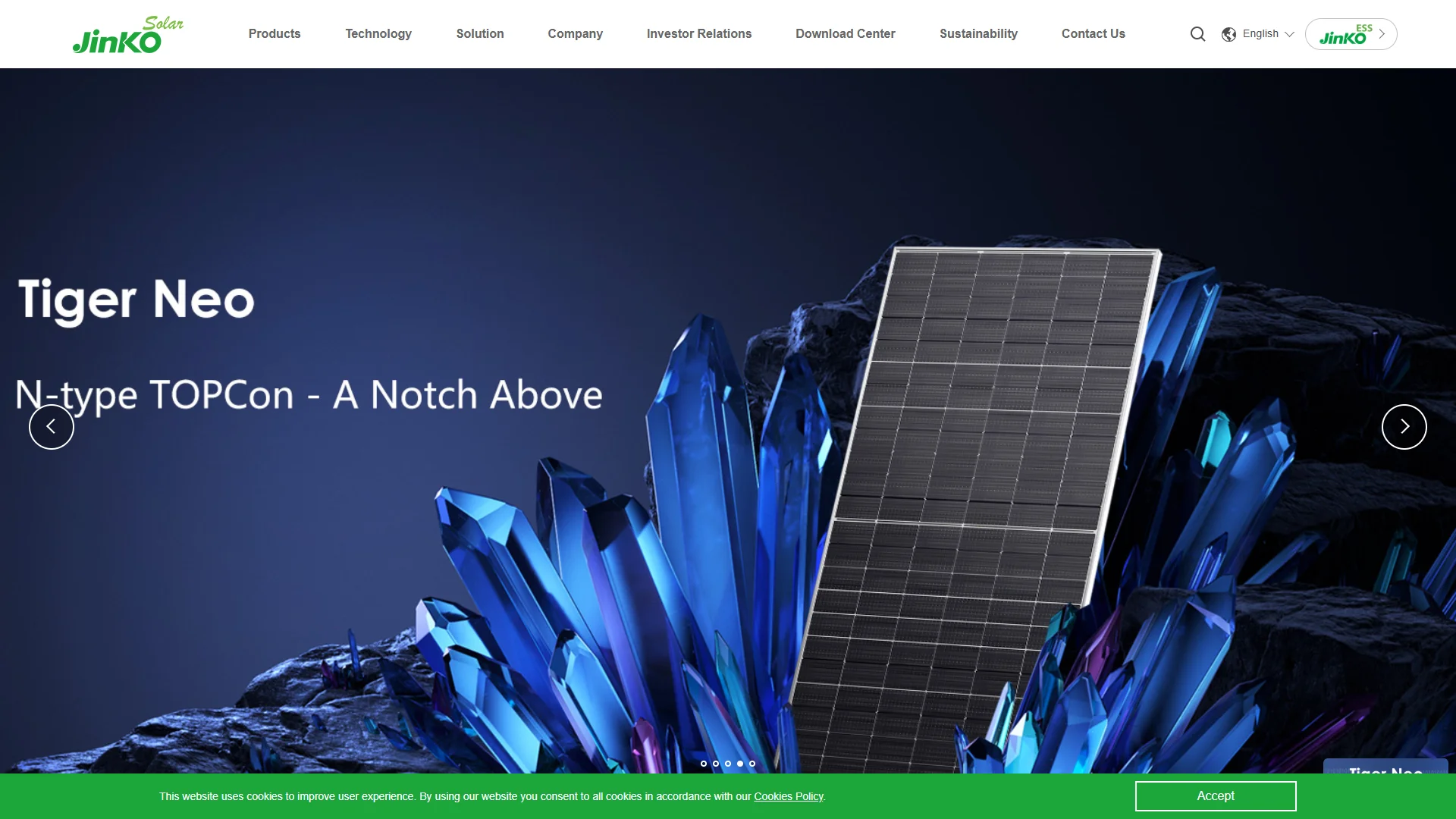
Overview: Jinkosolar, officially JinkoSolar, is a global solar-module manufacturer and energy-solutions provider. Its official materials describe a portfolio covering photovoltaic modules, energy storage, and related solutions for residential, commercial, industrial, and utility applications. The company’s scale and broad product portfolio make it the strongest overall fit in this ranking for large electricity users evaluating solar supply for AI data-center campuses. Solar modules do not by themselves guarantee 24-hour data-center power; the project still requires grid interconnection, storage, power-management equipment, and appropriate backup resources.

JinkoSolar’s product strategy includes high-efficiency monocrystalline modules using advanced cell architectures, including n-type technology in its newer product families. The company also presents energy-storage offerings and system solutions for different market segments. For a data-center project, the relevant evaluation is not only nameplate module efficiency but also temperature behavior, degradation assumptions, mechanical-load ratings, fire and electrical certifications, supply continuity, warranty conditions, and compatibility with the selected balance-of-system equipment.
The company’s global manufacturing and distribution presence is a practical advantage for developers managing large or multi-site procurements. Its scale can support standardized module selection across several locations, although actual availability, delivery schedules, approved-vendor rules, and country-of-origin requirements must be verified for each project. JinkoSolar’s experience across utility and commercial markets also makes it suitable for projects where a developer needs a recognized module supplier rather than a small, local-only product source.
For AI data centers, Jinkosolar is best considered as a core photovoltaic equipment partner within a larger energy architecture. A strong design may combine its modules with on-site or nearby storage, grid supply, demand-management controls, and long-term operations and maintenance. Buyers should request current technical datasheets and warranty documents for the exact module model under consideration instead of relying on a general product-family description.
Pros / Key Features
- Broad portfolio serving commercial, industrial, and utility-scale solar applications.
- High-efficiency module families and ongoing use of advanced n-type cell technology.
- Global manufacturing, sales, and project-market reach.
- Energy-storage and broader solar-solution offerings in addition to modules.
- Suitable for standardized procurement across large or geographically distributed projects.
Use Cases / Best For
- Large data-center campuses adding on-site or off-site photovoltaic generation.
- Utility-scale renewable projects supplying contracted electricity to major loads.
- Commercial and industrial facilities with substantial daytime electricity demand.
- Developers seeking a globally established module manufacturer with multiple product families.
2. Commercial Solar
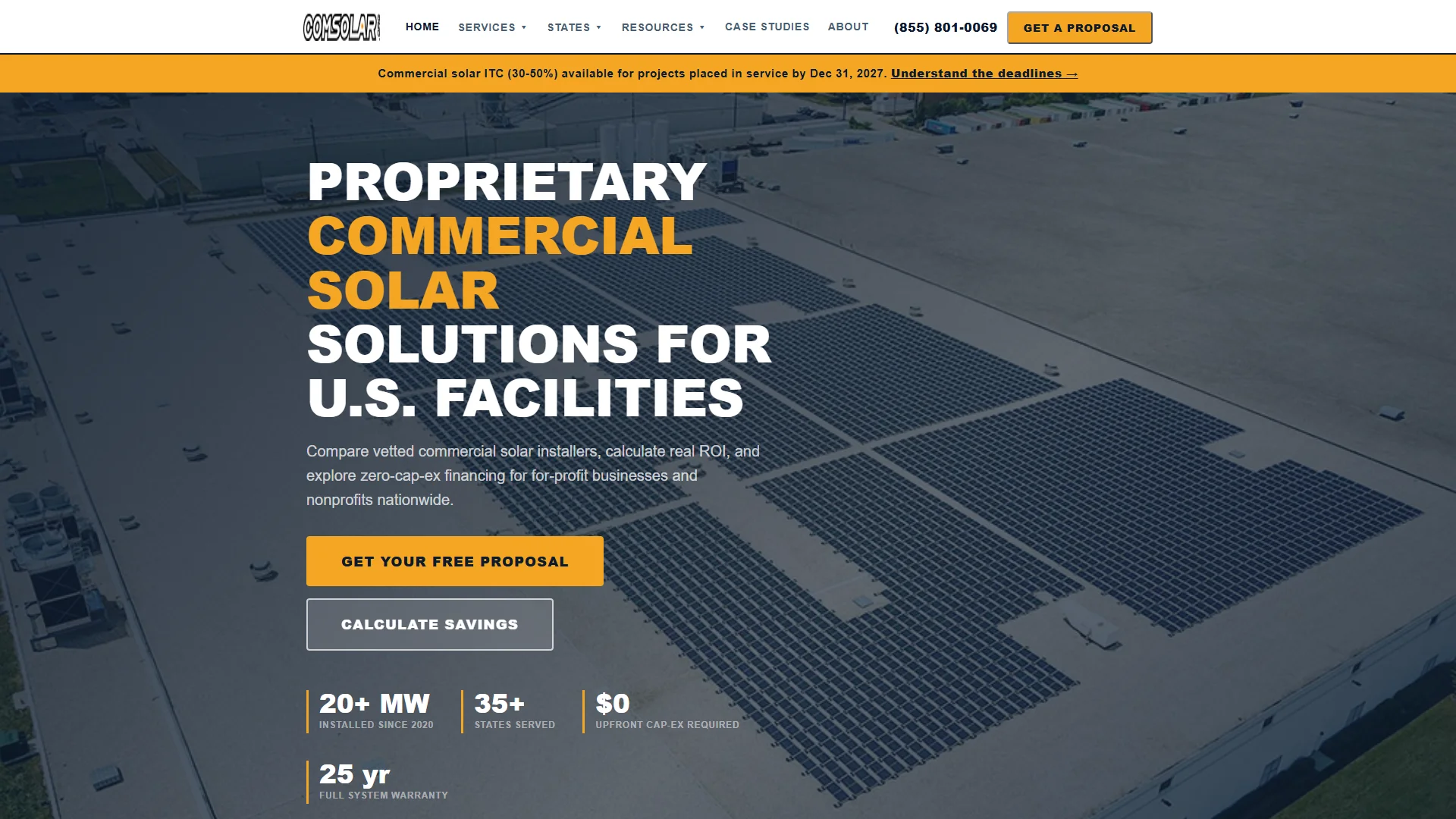
Overview: Commercial Solar is presented through its official website as a commercial-solar-focused resource and business presence. Unlike Jinkosolar and Trinasolar, it should not automatically be treated as a photovoltaic-module manufacturer. Its relevance to AI data-center procurement is therefore primarily at the commercial-project evaluation and solar-planning level, subject to the exact services available in the buyer’s location.
Pros / Key Features
- Focuses on commercial solar rather than residential-only applications.
- Can serve as an initial resource for organizations researching commercial solar deployment.
- Provides a different procurement perspective from a global equipment manufacturer.
Use Cases / Best For
- Businesses beginning a commercial solar feasibility review.
- Organizations comparing project-development or installation pathways.
- Facilities that need local commercial-solar guidance before selecting equipment.
3. Sunshine Renewable
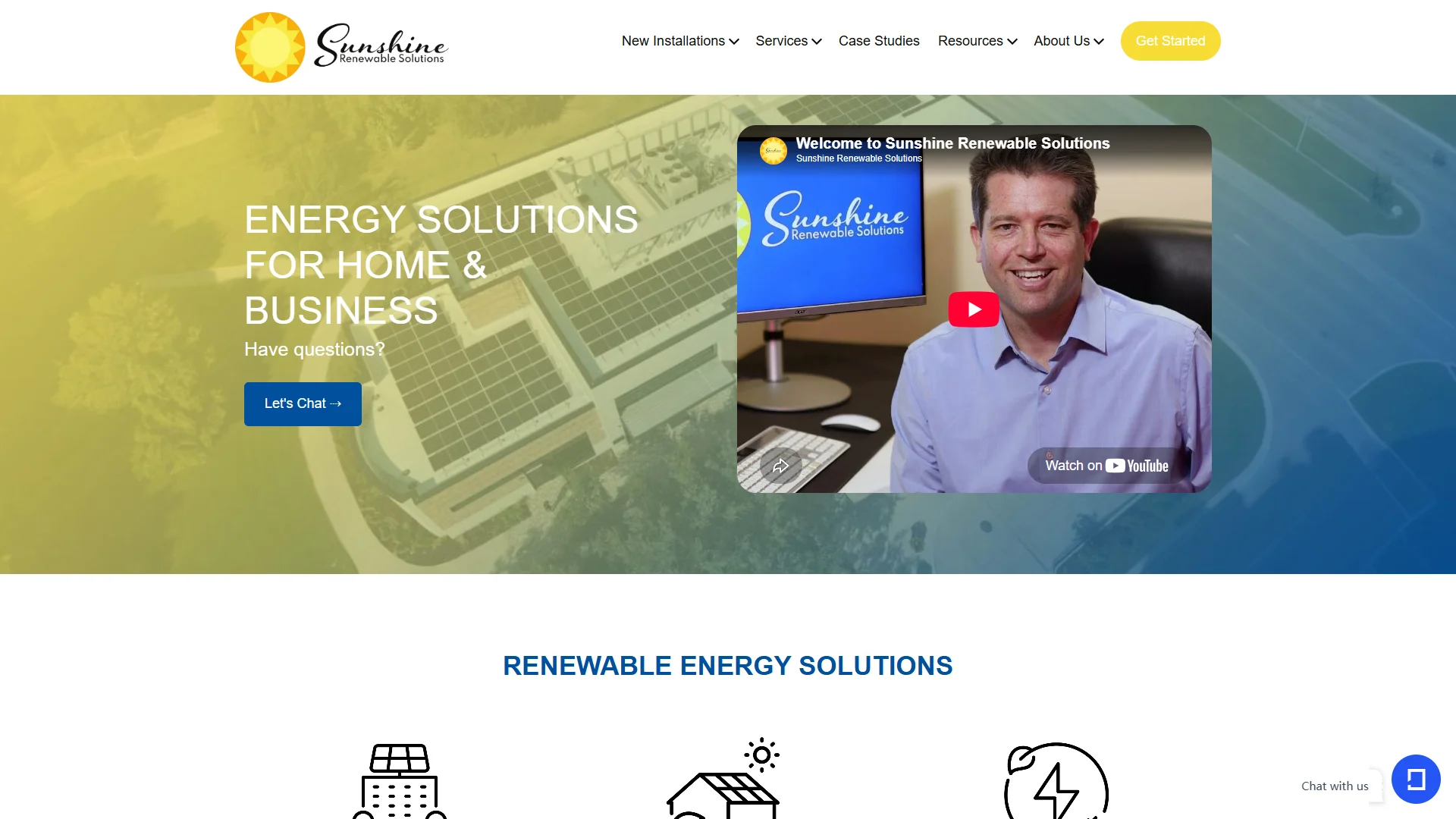
Overview: Sunshine Renewable operates under a renewable-energy and solar-services identity. Its position is more service-oriented than that of a global module manufacturer, so buyers should confirm the company’s exact role on a proposed project, including design responsibility, equipment sourcing, installation, permitting, monitoring, and ongoing maintenance.
Pros / Key Features
- Renewable-energy focus relevant to commercial sustainability planning.
- Potentially useful for customers seeking project-level solar consultation or deployment support.
- Service-based positioning can complement equipment selection by a separate manufacturer.
Use Cases / Best For
- Commercial property owners exploring renewable-energy installations.
- Organizations seeking a solar project partner rather than a module brand alone.
- Projects where local service, site assessment, and implementation support are important.
4. Trinasolar
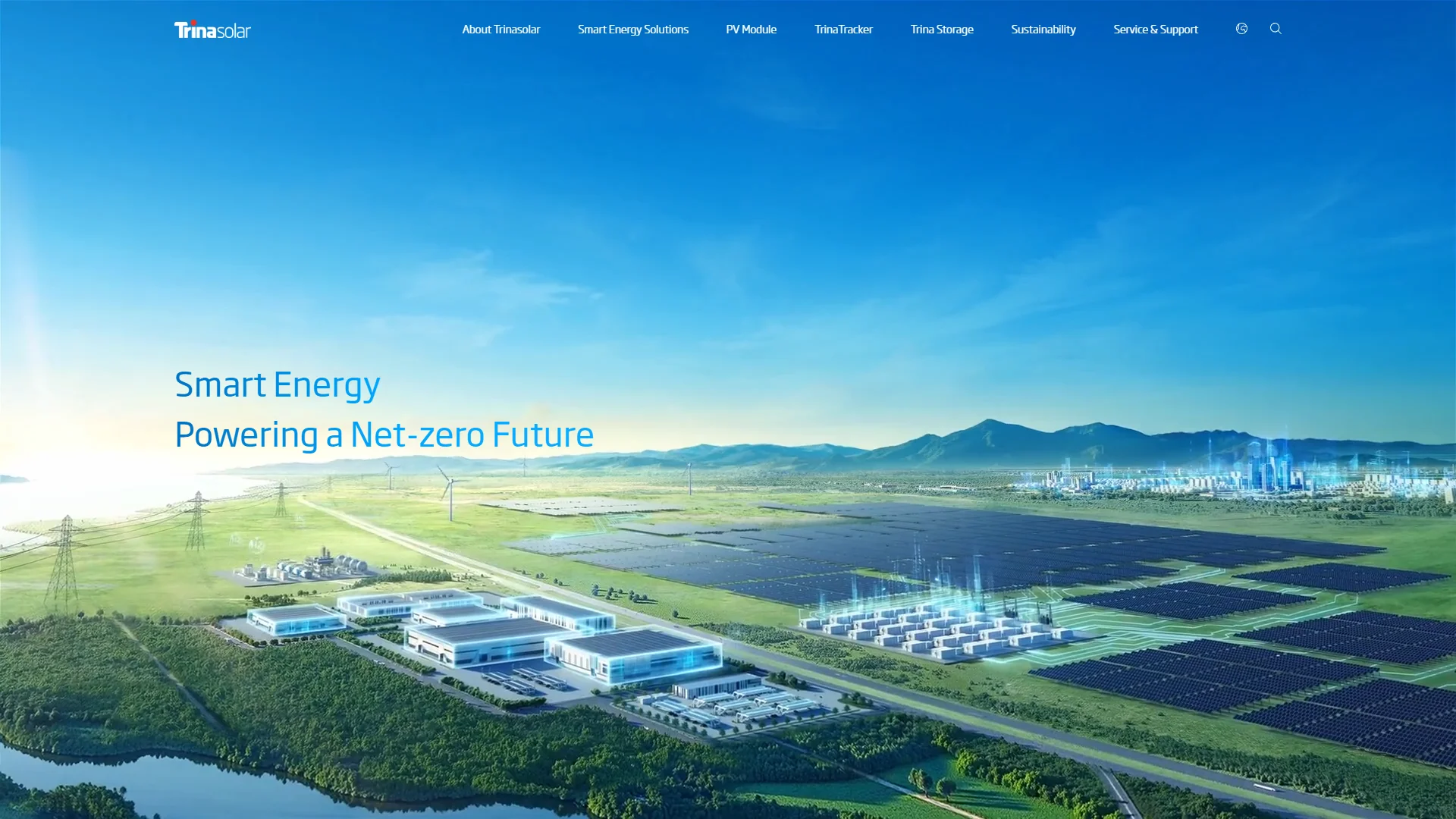
Overview: Trinasolar is a global solar technology company whose official portfolio includes photovoltaic modules, smart solar solutions, and energy storage. The company serves residential, commercial, industrial, and utility markets. Its combination of module manufacturing and broader system capabilities makes it a credible option for large renewable-energy projects associated with data-center electricity demand.
Pros / Key Features
- Established global solar manufacturer with products for multiple market segments.
- Module portfolio incorporating n-type and other high-efficiency technologies.
- Smart solar and energy-storage offerings extending beyond standalone modules.
- Experience with utility-scale and commercial solar deployments.
Use Cases / Best For
- Large commercial and industrial facilities seeking solar generation.
- Utility-scale projects supplying renewable electricity to major power consumers.
- Data-center developments that need to assess modules, storage, and system-level options from an established supplier.
How to Choose
Choosing among AI data center solar power Brands requires a project-level review rather than a simple brand-name comparison. The following criteria usually matter most:
- Load profile: Map the data center’s hourly demand, expansion schedule, cooling load, and expected power-use effectiveness before sizing solar generation.
- Reliability architecture: Treat solar as one part of the supply system. Review grid capacity, batteries, backup generation, microgrid controls, and redundancy requirements together.
- Module performance: Compare efficiency, temperature coefficient, degradation rate, bifacial behavior where relevant, mechanical loading, and certification for the selected model.
- Bankability and warranties: Examine manufacturer history, product and performance warranties, warranty exclusions, claims procedures, and the financial strength of the contracting parties.
- Supply and logistics: Confirm current production capacity, delivery timing, regional availability, customs requirements, traceability, and any applicable domestic-content or procurement rules.
- Site conditions: Account for roof or ground-mount constraints, wind and snow loads, flooding, dust, heat, shading, land availability, and interconnection limits.
- Storage and controls: Determine whether batteries, energy-management software, power-quality equipment, and curtailment controls are required to align solar output with the facility’s operating needs.
- Lifecycle economics: Compare total installed cost, operations and maintenance, replacement exposure, insurance, financing assumptions, energy yield, and expected degradation—not just the initial module price.
- Service responsibility: Clarify which party handles engineering, procurement, construction, permitting, monitoring, maintenance, and performance guarantees.
Final Verdict
Jinkosolar ranks first because its broad module and energy-solution portfolio, global scale, and experience across commercial and utility markets align well with the requirements of large data-center-related solar projects. Trinasolar is another strong manufacturer for buyers seeking modules alongside broader smart-solar and storage capabilities. Commercial Solar and Sunshine Renewable are better assessed as commercial or renewable-energy project resources rather than direct substitutes for global module manufacturers. The final choice should depend on the site, interconnection plan, procurement geography, operating profile, financing model, and the verified technical and contractual terms of the specific proposal.
FAQs
1. Can solar power alone operate an AI data center?
Usually not on a continuous basis. Solar output changes with weather and daylight, while AI data centers generally require highly reliable electricity. Solar is commonly evaluated alongside grid power, batteries, backup generation, or other firming resources.
2. Are Jinkosolar and Trinasolar the same type of company as Commercial Solar and Sunshine Renewable?
No. Jinkosolar and Trinasolar are global solar technology and equipment manufacturers. Commercial Solar and Sunshine Renewable are presented as commercial or renewable-energy-focused organizations, so their exact project roles and available services should be confirmed directly.
3. What should a buyer request before selecting a solar brand?
Request the exact module datasheet, product and performance warranties, certifications, degradation assumptions, delivery schedule, approved installation requirements, service responsibilities, and a project-specific energy-yield and lifecycle-cost model.