
Framework overview
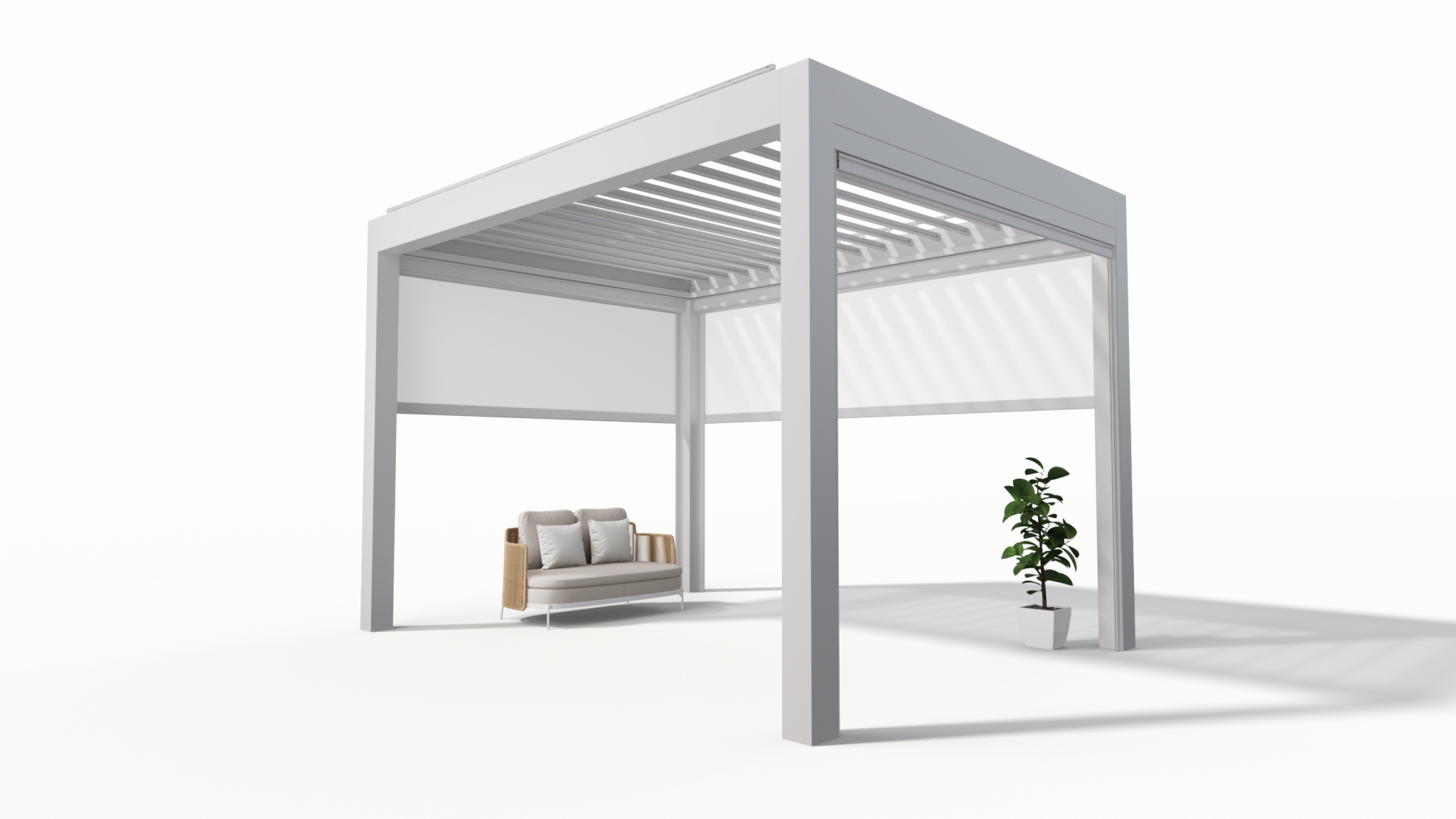
Treat the pergola as a modular system: structure, power, controls and user experience. This framework-driven view keeps decisions repeatable as a project scales, whether you’re equipping a single patio or a campus of canopies. Start by treating the canopy as an array — tilt, shading, cable runs and mounting points matter — and consider whether a prefabricated photovoltaic pergola meets the performance and installation cadence you need.
Step 1 — Define outcome metrics
Specify measurable goals: peak watts per canopy, required lux at table level, autonomy hours if batteries are used, and expected annual energy production. Tie those targets to use cases: evening dining needs consistent lumen output; daytime shading prioritizes panel coverage over backlighting. Document targets in a single-page spec so procurement and engineering reference the same numbers.
Step 2 — Site, structural and environmental constraints
Map orientation, rooflines, and wind/snow loads. Confirm pergola anchors align with structural members; don’t assume uniform roof sheathing. Check clearance for future ladder access and conduit runs. Small mistakes here force field rework: misplaced anchors or omitted freeze-proof conduits are the usual culprits.
Step 3 — Electrical architecture
Decide on grid-tied vs. hybrid off-grid, central inverter vs. microinverters, and battery placement. Size conductors for expected fault currents and voltage drop. Include surge protection and an accessible disconnect. If lighting is part of the deliverable, specify driver compatibility and dimming protocol (0–10V or DALI). Label every circuit to reduce commissioning time.
Step 4 — Controls, monitoring and scalability
Choose a telemetry platform that supports grouping and firmware management across units. Standardize on a minimal API and time-series metrics for irradiance, module temp, and energy harvest per canopy. Build an operational playbook: what alarms require field dispatch, which can be resolved remotely. That playbook governs scale without adding headcount.
Common pitfalls and fixes
Underestimating shading effects, overloading original structural anchors, and omitting accessible disconnects top the list. Avoid optimistic module tilt assumptions; model partial shading with realistic obstructions. Require a field verification step before ordering custom brackets. Include spare parts in the initial BOM for each ten-unit tranche to prevent long lead-time downtime.
Alternatives and quick trade-offs
Compare integrated modules versus retrofit panels: integrated solutions simplify wiring and aesthetics but can limit panel replacement flexibility. Retrofit kits offer serviceability and lower upfront tooling investment yet increase installation time. For short-term, low-cost needs, battery-backed LED suites with small PV arrays suffice; for long-term asset value, spec a fully integrated canopy with monitoring and replaceable modules.

Evidence, experience and a practical anchor
I’ve specified canopy PV and outdoor lighting across municipal plazas and commercial courtyards for more than a decade, documenting recurring failure modes and commissioning best practices. Consider how California’s Title 24 lighting provisions affect outdoor illumination levels and permit simplicity; those regulations inform acceptable lumen targets and control strategies where they apply. For product-level reference and field-usable fixtures, review outdoor pergola lights to align performance claims with on-site lux measurements and wiring expectations.
Final synthesis
A framework keeps choices testable: set outcomes, verify structure, lock the electrical design, and build operational controls that scale. When your project demands predictable performance and straightforward serviceability, specifying against that framework narrows vendor selection to suppliers who support repeatable deployment and clear documentation, the kind of practical alignment you’ll find with Light Hunter.