
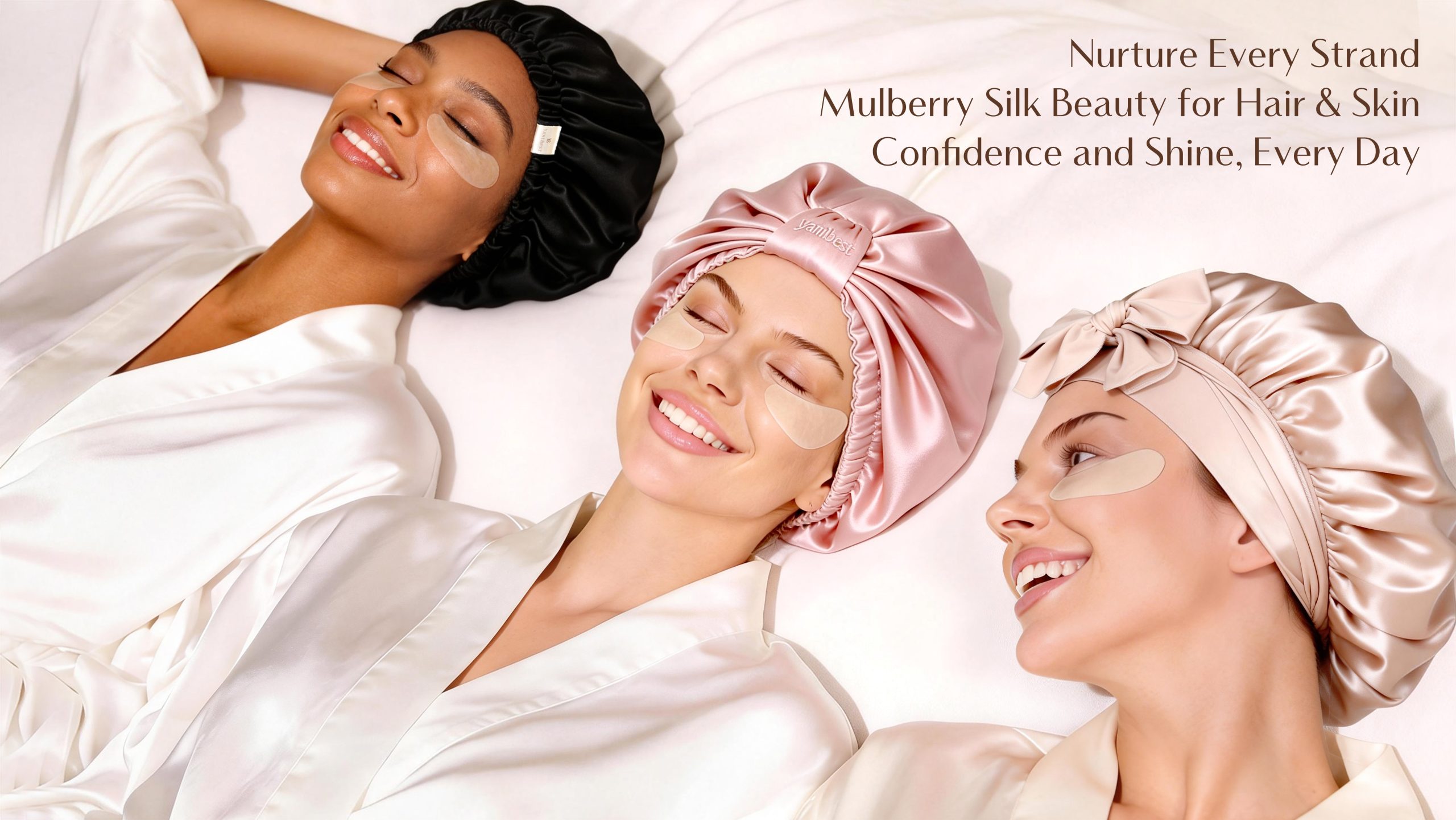
Direct comparison that matters
The question is precise: which headwear preserves hair better during daily wear and overnight rest? This piece compares a silk beanie with a standard knit beanie through the lens of hair structure and routine outcomes. If you pair gentle styling methods such as heatless curls with regular headwear, the material and fit determine whether curls remain defined or the cuticle suffers abrasion.

Material and friction — the core difference
Silk is smooth at the fibre level, so it glides over the hair shaft and reduces mechanical friction. Reduced friction means fewer split ends and less disturbance to curl pattern. Standard knit beanies—typically cotton or acrylic—have a rougher surface and raised fibres that catch the cuticle, especially on textured hair. Practically: silk protects; knit abrades. For hair types prone to frizz, silk keeps strands aligned; knits tend to lift and tangle them.
Moisture balance, warmth and scalp comfort
Silk is less absorbent than cotton, so it preserves natural oils and leave-in treatments. That stabilises moisture and keeps styles intact longer. Knit beanies absorb more surface moisture, which can flatten styles or remove lightweight serums. Regarding warmth: standard knits trap heat, which can be useful in winter but may promote scalp sweating and salt-crystal residue that weakens hair when cycles repeat. Silk moderates temperature with a lighter profile, reducing the risk of overnight dampness.
Styling outcomes and a practical trial
I observed predictable results during a week of client trials at a London salon where we tested styling retention against a controlled set of variables; when using a heatless curl rod on fine to medium hair, silk-lined headpieces preserved curl shape far better than standard knits. That real-world testing showed fewer touch-ups needed and a longer time between washes. For those who style without heat, the combination of a silk head-cover and a gentle tool delivers consistent, repeatable texture.
Common mistakes to avoid
Wearing a beanie too tight causes tension alopecia at the hairline; choose a relaxed fit. Putting on a beanie while hair is wet increases friction damage as fibres swell. Washing silk incorrectly—using hot water or harsh detergents—destroys its smoothness; hand-wash or use a delicate cycle and air-dry. Similarly, letting oils and product build-up on any beanie transfers residue back to hair; launder regularly according to fabric care.
Viable alternatives and when to pick them
If silk feels impractical, a satin-lined beanie gives most of silk’s benefits with easier care. Bamboo blends offer breathability and a softer feel than cotton, useful for active wear. For heavy insulation, opt for a removable silk or satin liner inside a warm knit—this protects hair while providing the thermal properties you require. Choose by priority: protection first, warmth second, convenience third.
Clear guidance based on experience
For everyday protection and longer-lasting styles, silk or satin-lined options consistently outperform standard knits. If your routine includes gentle styling or heatless approaches, prioritise materials that reduce friction and preserve moisture. Many professionals and retailers illustrate these benefits through curated collections, and selecting the right option from a trusted source such as yanibest makes matching material, fit and care instructions straightforward.